





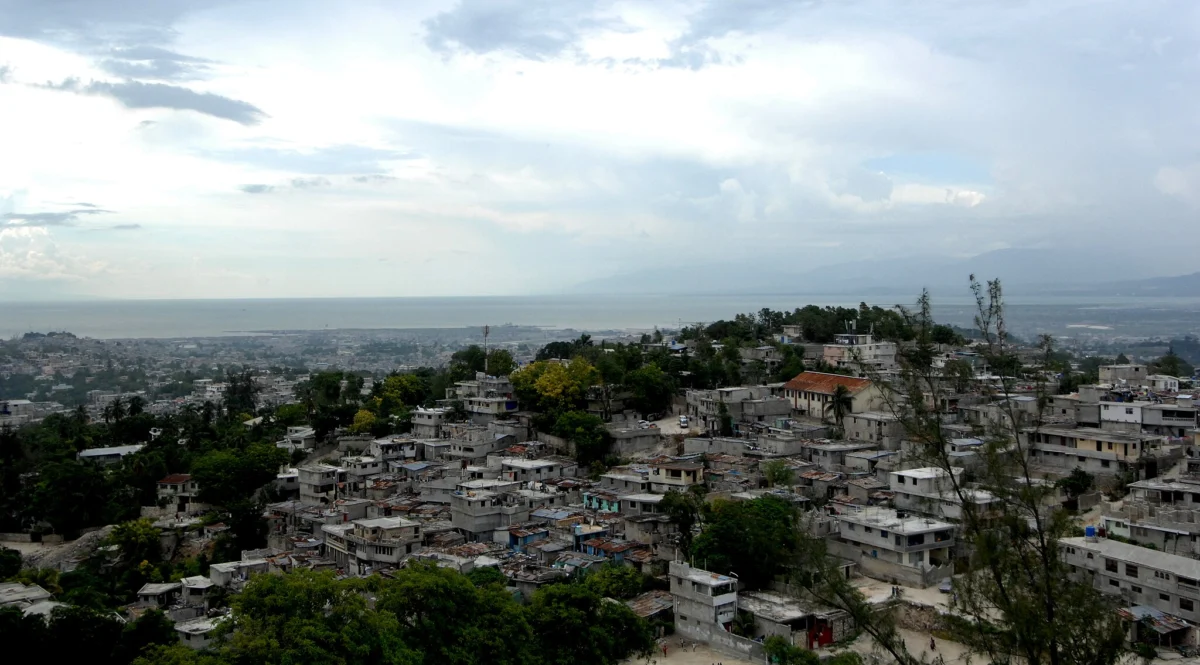
Main Facts: A Community Under Siege
In a harrowing development that underscores the deepening fragility of the Haitian state, Amnesty International has issued a stern call for immediate government accountability following a brutal gang-led massacre in the commune of Kenscoff. Early this week, armed criminal syndicates descended upon the area, traditionally viewed as a relative sanctuary, leaving a trail of devastation that has shocked the international community.
The preliminary death toll stands at 47 individuals, with an additional 22 people suffering from serious injuries. Perhaps most alarmingly, reports suggest that dozens of residents—many of whom were seeking refuge in a local church—have been abducted by the perpetrators. The assault, characterized by the systematic burning of residential properties, has transformed a once-peaceful hillside community into a site of carnage, with reports describing bodies abandoned in the streets by Monday morning.
This latest atrocity is not an isolated incident but represents a structural collapse of security that has left millions of Haitians vulnerable to the whims of emboldened criminal networks. Amnesty International has characterized the attack as a stark reminder of the "devastating human cost" resulting from the state’s prolonged inability to implement effective protection policies.
Chronology of the Kenscoff Attack
The events in Kenscoff unfolded with terrifying speed, catching both residents and local authorities off guard.
- Pre-Attack Atmosphere: Despite the broader instability in Port-au-Prince, Kenscoff had maintained a reputation as a relatively peaceful enclave, often serving as a secondary refuge for those fleeing violence in the low-lying capital districts.
- The Incursion: Under the cover of darkness, heavily armed gang members infiltrated the commune. Witnesses reported the coordinated use of arson, with criminal elements setting residential homes ablaze to force residents into the open.
- The Church Massacre: Seeking sanctuary, a large group of civilians congregated in a local church. This site, which should have been a place of safety, became the focal point of the violence, resulting in the majority of the reported casualties and kidnappings.
- The Hostage Crisis: By Monday, the scale of the carnage became clear. As bodies littered the streets, the situation escalated into a hostage crisis. A prominent gang leader issued a chilling ultimatum, threatening to execute the kidnapped civilians should security forces or rival factions strike against the gang’s personnel.
- Post-Attack: The aftermath has been marked by a humanitarian scramble as local organizations and international observers struggle to reach survivors in the volatile environment.
Supporting Data: The Statistics of a Humanitarian Collapse
The Kenscoff massacre occurs against a backdrop of historic violence that has left Haiti’s social fabric in tatters. Data from the United Nations and other humanitarian monitors paints a grim portrait of a nation in freefall.
The Q2 2026 Crisis Report
A recent quarterly report from the United Nations Integrated Office in Haiti (BINUH) highlights the sheer scale of the terror. Between April and June 2026 alone:
- Fatalities: Over 1,400 people were killed in gang-related encounters.
- Sexual Violence: At least 796 documented victims suffered from gang-related sexual violence. This tactic, which human rights groups label a "weapon of terror," is intentionally deployed to restrict access to humanitarian aid and exert psychological control over communities.
Global Standing
The humanitarian crisis in Haiti is currently classified as one of the most severe in the world. The weaponization of violence—combined with the systemic lack of a functional, centralized police force—has created a power vacuum. Criminal organizations, which were originally cultivated by political elites to serve as private enforcers, have long since outgrown their patrons. These groups now command more territorial authority and fire-power than the state, effectively operating as shadow governments that dictate the daily lives of millions.
Official Responses: From Condemnation to Calls for Reform
The international community has responded with urgent appeals for structural change, moving beyond mere condemnation to demand legal recourse.
Amnesty International’s Stance
Astrid Valencia, Deputy Regional Director for Research at Amnesty International, encapsulated the frustration of human rights defenders: "Sadly, we are once again witnessing another massacre in Haiti. This is a reminder of the devastating human cost of the absence of effective policies to protect the population."
Amnesty has formally urged the Haitian government to move beyond rhetorical statements and implement "urgent and sustainable measures" to break the cycle of impunity. The organization emphasizes that the state has an affirmative obligation to protect its citizens and that current failures constitute a breach of fundamental human rights protections.
The United Nations and Local Judicial Efforts
The UN has closely monitored the situation, with observers confirming that the tactical nature of the attack—specifically the burning of homes—points to a high level of coordination among the gangs.
In a move intended to address these systemic abuses, the Haitian government, with international support, inaugurated specialized courts in June 2026. These courts were designed to handle the massive backlog of human rights abuse cases, particularly those involving crimes against children and victims of sexual violence. However, the efficacy of these courts remains under intense scrutiny, as legal proceedings are frequently paralyzed by the very gangs they are meant to prosecute.
Implications: A Nation at the Brink
The Kenscoff massacre serves as a harbinger of the dangers inherent in a state where the monopoly on violence has been ceded to criminal cartels. The implications of this event are manifold:
1. The Death of "Safe Zones"
The targeting of Kenscoff, previously considered a stable refuge, suggests that no area in Haiti remains untouched by the violence. This will likely trigger a new wave of internal displacement as families realize that even the most remote or previously secure areas are no longer safe from gang infiltration.
2. The Failure of Political Patronage
The current crisis is the direct result of decades of "gang-sponsoring" by political elites. The transition of these gangs from political puppets to independent actors has left the current administration in a position of extreme weakness. Without a strong, centralized police force or an effective disarmament, demobilization, and reintegration (DDR) program, the state lacks the leverage to re-establish order.
3. Sexual Violence as a Strategic Tool
The systematic use of sexual violence to limit humanitarian access is a war tactic that requires a specific response from the international community. Humanitarian agencies are currently struggling to deliver aid to Kenscoff and surrounding areas because of the pervasive fear instilled by these gangs. This creates a feedback loop: violence prevents aid, and the lack of aid increases community reliance on the very gangs that are oppressing them.
4. The Urgent Need for Judicial Reform
While the establishment of specialized courts is a positive step, the Kenscoff attack highlights that legal infrastructure is insufficient without territorial control. For these courts to be effective, there must be a mechanism for witness protection and the secure apprehension of suspects. As it stands, the gangs remain the primary obstacle to the rule of law.
Conclusion: A Call for Sustainable Intervention
As the death toll from the Kenscoff massacre continues to haunt the nation, the mandate for the Haitian government is clear: the current security paradigm has failed. The international community, which has invested significant resources into Haitian stability, must now pivot toward strategies that prioritize the protection of civilians over the preservation of existing power structures.
Breaking the cycle of violence will require more than just specialized courts; it will require a fundamental dismantling of the symbiotic relationship between political power and criminal enterprise. Until the Haitian state can prove it is willing and able to protect its most vulnerable, the Kenscoff massacre will likely remain a grim chapter in an ongoing tragedy, rather than the final act of a dying era of instability. The world watches, but for the people of Kenscoff, the time for observation has long since passed—the time for decisive, protective action is now.
