





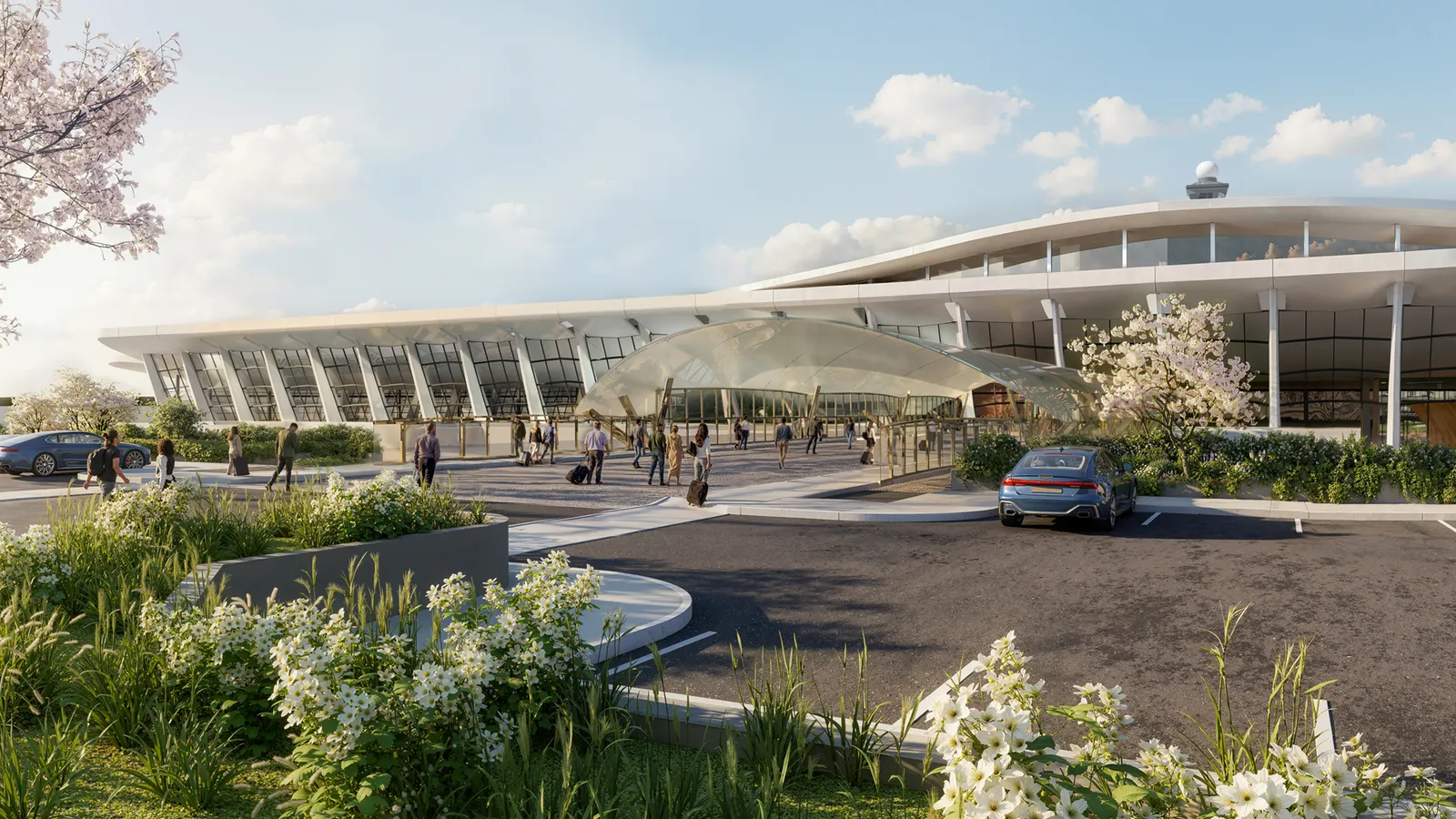
Executive Summary: A Massive Shift in Infrastructure Strategy
In a sweeping move to redefine the aerial gateway to the nation’s capital, Washington Dulles International Airport (IAD) is embarking on an unprecedented modernization program. The project, which has seen its budgetary projections balloon from an initial $7 billion to a staggering $22.5 billion, represents one of the most significant infrastructure investments in the mid-Atlantic region’s history.
The Metropolitan Washington Airports Authority (MWAA), in strategic coordination with the U.S. Department of Transportation (USDOT) and major airline partners—led prominently by United Airlines—has signaled a commitment to transforming Dulles into a premier global hub. While the project is framed as an evolution of the existing Dulles Master Plan, the sheer scale of the financial commitment and the integration of new terminal facilities suggest a departure from incremental upgrades toward a comprehensive, high-capacity redesign.
Chronology: From Master Plan to Mega-Project
The trajectory of the Dulles modernization program has been marked by shifting scopes and economic recalibrations.
- The Foundation: The original Dulles Master Plan was conceived as a long-term roadmap to address capacity constraints and aging infrastructure at the airport, which serves as a critical node for international travel. For years, the project was pegged at an estimated $7 billion, intended to phase in improvements to concourses and passenger processing facilities.
- The Escalation: Recent announcements from the MWAA and federal stakeholders indicate that the vision has expanded drastically. The leap from $7 billion to $22.5 billion reflects not only inflationary pressures on construction materials and labor but also a fundamental change in the project’s ambition. This includes the construction of entirely new concourses and terminal expansions designed to accommodate the next generation of wide-body aircraft and increased passenger throughput.
- The Federal Pivot: The accelerated timeline and expanded scope are bolstered by federal interest. Leadership at the MWAA has explicitly acknowledged the role of the Trump administration in pushing to expedite the project’s scope, moving the airport from a state of incremental maintenance to one of aggressive, large-scale construction.
Supporting Data: Financial Mechanics and Project Scope
The financing of a $22.5 billion infrastructure project of this magnitude requires a sophisticated assembly of capital instruments. According to the MWAA, the project will not rely on a single funding source but rather a hybrid model designed to minimize the direct tax burden while leveraging private-sector efficiency.
Municipal Bonds and Airline Partnerships
The primary mechanism for funding the new concourses and terminal facilities will be the issuance of municipal bonds. These bonds are typically backed by the revenue generated by the airport, including landing fees, concessions, and passenger facility charges. Because airlines are the primary tenants and users of these facilities, they are deeply involved in the financing structure. The collaboration between the MWAA and carriers like United Airlines ensures that the new facilities are designed to meet the specific operational needs of modern aviation while securing the long-term debt obligations.
Public-Private Partnership (P3) Opportunities
Beyond traditional bond financing, the project is structured to invite private-sector investment. The USDOT has signaled that the scale of the Dulles development opens the door for Public-Private Partnerships (P3s). In these arrangements, private entities may finance, build, and operate specific aspects of the airport infrastructure—such as parking facilities, cargo hubs, or specialized terminal services—in exchange for a long-term revenue stream. This approach shifts some of the risk away from the public authority while potentially accelerating the delivery of high-tech infrastructure.
Official Responses and Stakeholder Perspectives
The announcement has sparked significant discussion regarding the oversight and execution of such a colossal project.
MWAA Leadership
Jack Potter, President and CEO of the Metropolitan Washington Airports Authority, emphasized that the project is a collaborative evolution. "This new construction effort builds upon the multiyear Dulles Master Plan, developed in consultation with our airline partners, to modernize Washington’s main international airport," Potter stated. He further noted the importance of federal backing, adding, "We are grateful for the Trump administration’s interest in accelerating the pace and scope of our plans, and we look forward to building new facilities that will be a source of pride for our nation."
Federal Oversight and Transparency
Despite the official enthusiasm, the project faces scrutiny regarding the lack of a named primary contractor at this stage. Construction industry analysts point out that a project of this size will likely be broken into multiple large-scale contracts, potentially involving a consortium of top-tier engineering, procurement, and construction (EPC) firms.
The USDOT, when queried by media outlets regarding the timeline, contract bidding processes, and specific allocation of the $22.5 billion, has remained relatively opaque. As of the time of publication, the department had not provided detailed breakdowns of how the increased funding will be allocated across the various phases of the master plan. This silence has led to speculation among industry experts regarding whether the surge in budget is intended to cover cost overruns, advanced technology integration, or a complete overhaul of the original construction schedule.
Implications: The Future of Mid-Atlantic Aviation
The $22.5 billion modernization of Dulles carries profound implications for the region and the broader U.S. aviation network.
Economic Impact
The construction phase itself will serve as a massive engine for regional economic growth, necessitating thousands of high-skilled labor positions in architecture, engineering, and heavy construction. Once completed, the enhanced capacity is expected to attract additional international routes, cementing Dulles’s status as a primary competitor to other East Coast hubs like JFK and Newark.
Operational Challenges
Modernizing a major international airport while it remains fully operational is a logistical tightrope. The "Dulles experience" will likely be marked by years of construction-related disruptions, detours, and temporary terminal configurations. The MWAA faces the challenge of maintaining service quality and safety standards while simultaneously executing one of the most complex demolition and construction sequences in the history of civil aviation.
The Shift in Airport Design
Dulles has long been known for its iconic Saarinen-designed main terminal. The challenge for the current modernization program is to integrate ultra-modern concourses and high-tech passenger processing systems while respecting the architectural legacy of the airport. The move toward larger, more flexible concourses suggests that the designers are prioritizing "future-proofing"—ensuring that the airport can adapt to changes in aircraft size, security requirements, and passenger flow management for the next half-century.
Risks and Uncertainties
While the project is poised to elevate Dulles, it is not without risk. The massive reliance on municipal bonds makes the airport sensitive to interest rate fluctuations. Furthermore, the reliance on airline partnerships creates a dependency on the financial health of the carriers involved; if the aviation industry suffers a downturn, the revenue streams backing the bonds could be placed under significant strain.
Conclusion: A Transformation in Progress
The transition of the Dulles modernization program from a $7 billion plan to a $22.5 billion reality marks a pivotal moment for Washington, D.C.’s infrastructure landscape. It represents a bold bet on the future of international travel and the enduring importance of Dulles as a global hub.
As the MWAA, the USDOT, and their private-sector partners move toward the next phases of development, the industry will be watching closely to see how the project is tendered and managed. The ultimate success of this initiative will be measured not just by the ribbon-cutting of new facilities, but by the airport’s ability to maintain its operational integrity and fiscal stability throughout a decade of massive transformation. Whether this investment will successfully navigate the complexities of public-private financing and construction remains the defining question for the years to come.
