




In a significant move to fortify one of America’s most historic and vulnerable urban landscapes, the City of Boston has unveiled a comprehensive, multi-billion-dollar strategy to combat the accelerating threat of sea-level rise and extreme storm surges. Following the recent release of a landmark feasibility study by the U.S. Army Corps of Engineers (USACE), the city is now poised to embark on a massive infrastructure overhaul that could see the federal government shoulder 65% of a project estimated to cost nearly $10 billion.
The initiative represents a pivotal shift in urban planning, moving from reactive disaster management to proactive, long-term climate adaptation. By aligning local vision with federal funding mechanisms, Boston is positioning itself as a national leader in coastal defense, offering a blueprint for other cities grappling with the inevitable consequences of a changing climate.
The Core of the Strategy: Infrastructure and Economic Protection
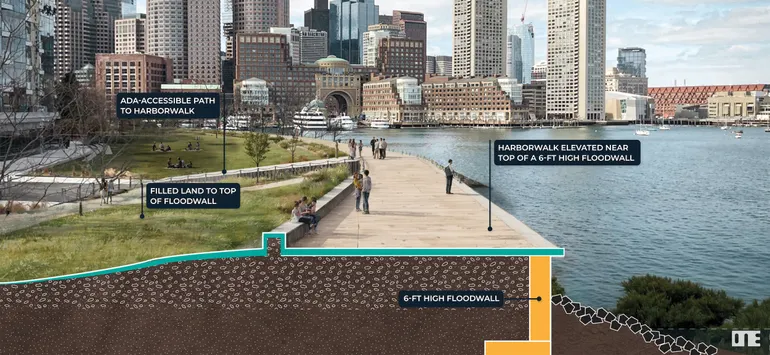
The draft report released by the Army Corps details an ambitious array of over 20 distinct infrastructure projects spanning 16 miles of Boston’s diverse coastline. These interventions, ranging from high-tech floodgates and storm-surge barriers to more traditional berms and floodwalls, are designed to create a comprehensive shield against the encroaching Atlantic.
The economic stakes are staggering. According to the USACE, the proposed suite of defenses is projected to prevent approximately $41 billion in potential property damage over the coming decades. For a city where one-sixth of the total land mass sits on filled tidelands—originally constructed under the now-obsolete assumption that sea levels would remain static—this investment is not merely a preference; it is an existential necessity.
"We recognized the significance of what we were facing—billions of dollars in infrastructure costs and massive amounts of our population at risk, with 40% of Boston residents living in areas that are projected to flood in the latter half of this century," says Brian Swett, Boston’s Chief Climate Officer. "We thought that justified federal interest."
A Chronology of Resilience: From "Near-Miss" to Strategic Planning
The impetus for this massive undertaking can be traced back to 2012, when Hurricane Sandy narrowly skirted the Massachusetts coast. While Boston escaped the catastrophic destruction seen in New York and New Jersey, the event served as a wake-up call for city officials. The realization that the city’s historic core was dangerously susceptible to major storm surges spurred a fundamental change in municipal policy.
Key Milestones in Boston’s Climate Journey:
- 1991–2012: A period defined by vulnerability, marked by 24 federal or state disaster declarations, 14 of which were directly linked to major flooding events.
- 2012: The "near-miss" of Hurricane Sandy serves as the catalyst for a new era of climate awareness.
- 2016: The publication of Climate Ready Boston, an foundational initiative that identified specific flood-risk zones and began the process of cataloging potential prevention infrastructure.
- 2022: The City of Boston formally sponsors the U.S. Army Corps of Engineers coastal storm risk management feasibility study, a mandatory step for unlocking federal cost-sharing.
- 2024: The release of the first draft of the USACE feasibility study, outlining the $10 billion roadmap.
- 2028: The expected date for the finalization of the report and the beginning of the procurement and implementation phase.
Supporting Data and Regulatory Innovation
Boston’s commitment to resilience is not just theoretical; it is embedded in the city’s regulatory framework. The city is currently the only major municipality in the United States to mandate that new construction projects adhere to future flood standards, which project a 40-inch rise in sea levels by the year 2070.
This forward-looking stance has enabled the city to build a "vocabulary of risk." By engaging in extensive design sessions and community charrettes, the city has successfully socialized the concept of climate defense among the business community and local residents. Nayeli Rodriguez, deputy director of the Mayor’s Office of Climate Resilience, notes that this community buy-in allowed the city to guide the Army Corps toward solutions that were already tailored to the unique needs of Boston’s neighborhoods.
"We’ve developed not only a vocabulary about Boston’s risk profile and why we need to address this problem, but also the specific solutions we’re building toward," Rodriguez explains. "That allowed us to guide the Corps throughout the process toward the things that we already knew the community wanted."
The Federal Partnership: The "Two-for-One" Match
The financial engine behind this project is the 1986 Water Resources Development Act. Under this federal statute, the U.S. Army Corps of Engineers is authorized to cover 65% of the costs for approved coastal storm risk management projects. The remaining 35%—a significant sum in the billions—must be sourced through a combination of city, state, private, and philanthropic funding.
This 35% gap has spurred a wave of financial innovation within the city. The Green Ribbon Commission, a prestigious advisory group composed of Boston’s largest institutional employers, is currently evaluating various revenue streams. These include:
- Resilience Improvement Districts (RIDs): Similar to tax increment financing, these districts would allow for the collection of local levies in areas directly protected by the new infrastructure.
- Tourism and Development Fees: Targeted charges, such as cruise ship landing fees or specialized hotel taxes, could be leveraged to protect the waterfront assets that drive the city’s tourism sector.
- Capital Reserves: Mayor Michelle Wu’s fiscal year 2027-2031 capital plan has already allocated $75 million to a "Coastal Resilience Reserve." This fund is explicitly designed to serve as the local matching component for federal and state grants.
Official Responses and Strategic Implications
The project has garnered broad support, with stakeholders viewing it as more than just a defensive measure. For city officials, the investment is an opportunity to revitalize the waterfront. "It’s also a conversation about this once-in-a-generation opportunity to invest in the waterfront, which is not only preventing damage but also an opportunity to enhance and invite economic opportunity and development," Rodriguez adds.
The implications for Boston are significant. As climate change becomes a permanent fixture of municipal risk management, the ability to secure federal partnership is the gold standard for city survival. Rising insurance rates, the volatility of municipal bond markets, and the shifting calculus of corporate relocation are all driving forces behind the current sense of urgency.
Brian Swett believes that Boston’s model provides a crucial lesson for the rest of the nation. "I hope we’re giving hope to other cities around the country that you don’t necessarily have to wait for a big storm to hit," he said. "We took a near-miss and turned it into this massive effort, and now we’re more optimistic than we’ve ever been that we will have infrastructure in place when the ‘big one’ hits."
As the city moves toward the 2028 final report, the focus will remain on the delicate balance of financing, engineering, and community consensus. By treating climate resilience as both a math problem and a social contract, Boston is charting a course that seeks to preserve its past while safeguarding its future in an era of unprecedented environmental uncertainty. The "Big Kahuna" of infrastructure projects may be years away from completion, but the work of protecting the Hub has firmly begun.
