



By Global News Desk
The global struggle to eliminate hunger faces a precarious crossroads. While the latest data from the United Nations suggests a third consecutive year of marginal improvement in global hunger rates, the window of opportunity to achieve the UN’s Sustainable Development Goal (SDG) of "Zero Hunger" by 2030 is rapidly closing.
In their latest collaborative assessment, The State of Food Security and Nutrition in the World (SOFI 2026), five specialized UN agencies paint a complex picture of a world caught between incremental recovery and systemic fragility. While the aggregate numbers show a slow, steady decline in the total number of people suffering from malnutrition, the report warns that these gains are fundamentally uneven, largely reversible, and under direct threat from an interconnected web of armed conflict and climate-driven catastrophes.
The Core Facts: A Recovery Stalled by Inequality
The 2026 SOFI report highlights a paradox: while the global appetite for progress is growing, the resources required to feed the world’s most vulnerable populations are becoming increasingly inaccessible. The report confirms that 2025 saw a slight decrease in global hunger, marking three years of consistent, albeit sluggish, progress. However, this data masks a deepening chasm between regions.
Asia and Latin America have emerged as beacons of relative stability, showing consistent improvements in food security. Conversely, the African continent remains the epicenter of the global hunger crisis. More than half of the African population currently grapples with moderate or severe food insecurity, a statistic that underscores the persistent legacy of structural poverty, underdeveloped agricultural infrastructure, and localized conflict.
Furthermore, the data reveals a stark rural-urban divide. Despite urbanization trends, food insecurity remains significantly more prevalent in rural areas, where smallholder farmers—who form the backbone of local food systems—are disproportionately affected by supply chain disruptions, lack of credit, and climate-induced crop failures.
Chronology of a Mounting Crisis
The current state of global food security cannot be understood in a vacuum. It is the result of a compounding series of crises that have hit the global food system in rapid succession:
- 2020–2022 (The Pandemic Shock): The COVID-19 pandemic shattered global supply chains, causing the first major spike in global hunger rates in decades and exposing the fragility of "just-in-time" food delivery systems.
- 2023 (The Inflationary Wave): As the world emerged from lockdowns, energy prices surged, driving up the cost of synthetic fertilizers and fuel. This inflationary pressure turned a supply issue into a systemic affordability crisis.
- 2024 (The Climate Tipping Point): The re-emergence of El Niño weather patterns began to alter rainfall and temperature patterns across the globe, leading to record-breaking droughts in East Africa and devastating floods in parts of Southeast Asia.
- 2025–2026 (The Conflict Multiplier): Escalating hostilities in the Middle East and persistent instability in the Horn of Africa and the Sahel have created a new, dangerous variable. These conflicts do not just destroy local harvests; they destabilize global markets, causing fertilizer prices to skyrocket and disrupting the movement of essential grain shipments.
Supporting Data: The High Cost of a Healthy Diet
The SOFI 2026 report introduces a critical metric: the "cost of a healthy diet." This figure represents the average minimum expenditure required to afford locally available, nutritionally dense foods. The findings are sobering.
In 2025, the global cost of a healthy diet rose, while simultaneously, the number of people with the purchasing power to afford such a diet declined. This inverse relationship—rising costs paired with declining income—is a direct driver of the malnutrition crisis. When households cannot afford nutrient-rich foods like fruits, vegetables, and animal-sourced proteins, they rely on energy-dense, nutrient-poor staples. This leads to the "double burden" of malnutrition, where communities face both undernutrition and obesity-related health issues.
Regional disparities are once again at the forefront of this data. Africa reports the lowest affordability rates in the world, meaning that even when food is physically present in markets, it is economically beyond the reach of millions.
Official Responses and Humanitarian Warnings
The UN agencies, including the Food and Agriculture Organization (FAO), the International Fund for Agricultural Development (IFAD), the World Food Programme (WFP), the World Health Organization (WHO), and UNICEF, have issued a unified call to action. They emphasize that reducing the cost of a healthy diet is a necessary, yet insufficient, solution.
The WFP has been particularly vocal regarding the impacts of the conflict in the Middle East. Their analysis indicates that if current hostilities continue, the world could face the largest disruption to the global economy since the onset of the COVID-19 pandemic. This disruption is not merely financial; it is visceral. As food prices hit record highs, humanitarian agencies find their budgets stretched to the breaking point.
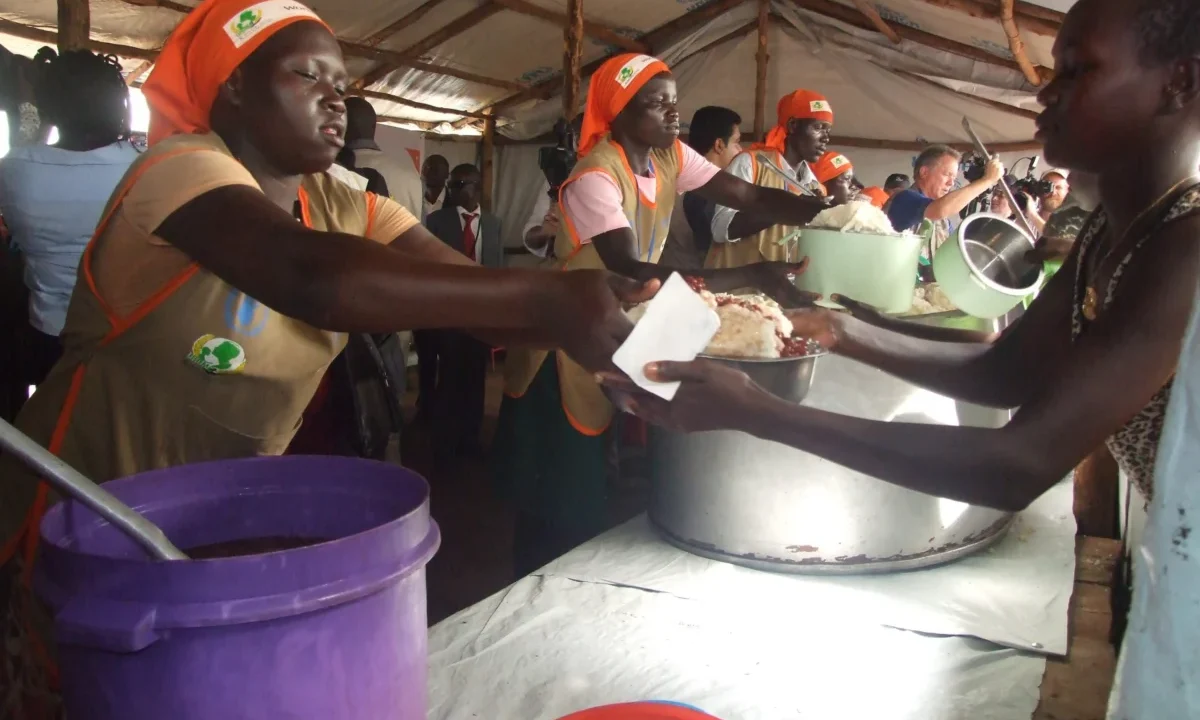
In Nigeria, for instance, the WFP has reported that over a million people are facing extreme hunger, yet the organization is constrained by severe funding shortfalls. Similarly, in Djibouti, high food prices have pushed the nation into an emergency-level hunger state. In Somalia, the intersection of political instability and extreme climate events has left millions at risk of starvation, a situation the UN has described as a "compounding catastrophe."
Implications: A Future at Risk
The implications of these findings are profound. If the trajectory of the last five years continues, the global community will fail to meet the 2030 SDG targets. The failure to achieve these goals is not just a statistical disappointment; it is a moral and economic failure with long-term consequences.
1. The Stability-Hunger Feedback Loop
Hunger is a potent driver of political instability. As food prices rise, civil unrest follows. This creates a feedback loop: hunger leads to conflict, and conflict destroys food systems, which leads to further hunger. Addressing food insecurity is therefore not only a humanitarian imperative but a foundational requirement for global security.
2. The Climate-Agriculture Disconnect
Agriculture is the sector most vulnerable to climate change, yet it is also a major contributor to it. The report suggests that without significant investment in "climate-smart" agriculture—such as drought-resistant seeds, improved water management, and sustainable soil practices—the hunger rates in the coming five years are projected to increase rather than decrease.
3. The Need for Systemic Reform
Rights groups and international organizations are increasingly calling for a move away from emergency aid toward systemic resilience. This involves:
- Decoupling food from energy: Investing in organic and localized fertilizer production to insulate farmers from global energy price shocks.
- Infrastructure development: Reducing post-harvest loss in rural areas through better storage and transport facilities.
- Social safety nets: Implementing government-backed food subsidy programs that target the most vulnerable populations without distorting local markets.
4. The Human Cost
Behind the acronyms and the reports lie the faces of millions in Gaza, Afghanistan, Haiti, and across the African continent. The "cost of a healthy diet" is more than a metric—it is a measurement of human dignity. When parents are forced to skip meals to feed their children, or when children are stunted by chronic malnutrition, the entire future potential of a region is compromised.
Conclusion
The 2026 State of Food Security and Nutrition report serves as both a roadmap and a warning. It demonstrates that while the tools to eradicate hunger exist, they are being blunted by political intransigence and environmental neglect. The decline in hunger rates observed over the last three years is a testament to human resilience, but it is a fragile foundation.
To reverse the projected trends of the next five years, the international community must move beyond the cycle of reactive humanitarianism. Achieving the SDG of Zero Hunger will require a coordinated effort to stabilize conflict-torn regions, insulate agricultural systems from climate volatility, and ensure that a healthy, nutritious diet is viewed as a fundamental human right rather than a luxury commodity. Without such systemic intervention, the gains of the past three years will likely be eclipsed by the challenges of the next.
