




In the world of automotive modification, few things are as polarizing—or as rewarding—as the engine swap. It is a pursuit that blends mechanical engineering with sheer, stubborn willpower. For The Drive video producer Tom Gorelik, this pursuit manifested as a year-long odyssey to transform a aging Porsche 944 into a turbocharged powerhouse, driven by the reliability and versatility of Honda’s legendary K-series engine.
What began as an ambitious, budget-conscious experiment has finally reached a critical milestone: the car is moving under its own power. This project serves as a testament to the "shadetree" spirit, illustrating that with enough persistence—and a little help from professionals—even the most daunting mechanical failures can be overcome.
The Genesis of the Build: A Vision for the 944
The Porsche 944 has long been a darling of the enthusiast community, celebrated for its near-perfect weight distribution and transaxle layout. However, the aging German powerplants that reside under the hood often prove to be a financial black hole for restorers. Gorelik’s vision was simple yet provocative: replace the temperamental factory engine with a Honda K24, a powerplant widely considered the "Swiss Army Knife" of the tuning world.
The goal was not just performance, but accessibility. By utilizing an engine with an immense aftermarket support network, Gorelik hoped to prove that one could build a high-performance sports car without the astronomical costs typically associated with Porsche maintenance. However, as any seasoned mechanic will attest, the reality of "affordable" swaps often involves a steep learning curve, freezing temperatures, and the humbling realization that some jobs require more than just enthusiasm.
Chronology of a Mechanical Odyssey
The timeline of this build has been anything but linear. For twelve months, Gorelik navigated the trials of a DIY swap, moving from the initial engine mounting to the complex integration of electronics and custom fabrication.
Phase 1: The Honeymoon Period
Early updates showed great promise. The K-series engine, compact and lightweight, seemed like a natural fit for the 944’s chassis. During the initial stages, the focus was on custom engine mounts and transmission adapter plates. Gorelik documented the process with transparency, acknowledging the frequent setbacks that come with adapting two disparate automotive ecosystems.
Phase 2: The Breakdown
As the project progressed into the colder months, momentum slowed. The car faced a series of technical hurdles that pushed Gorelik to his limits. The transition from theory to practice revealed that the car’s electrical system, fuel delivery, and cooling architecture were not cooperating with the new powerplant. The project hit a wall—literally and figuratively—when the engine refused to cooperate, eventually leading to a failure that forced a complete teardown.
Phase 3: Professional Intervention
Recognizing that he had reached the ceiling of his personal expertise, Gorelik made the pragmatic decision to bring in the experts at Fulltime Fabrication. The diagnostic process was brutal: the team discovered bent valves and systemic issues within the gearbox and hydraulic lines. This stage of the project highlighted a crucial lesson in automotive modification: knowing when to ask for help is as important as knowing how to turn a wrench.
Supporting Data: By the Numbers
To understand the significance of this build, one must look at the performance metrics. The Porsche 944 Turbo S, in its prime, produced roughly 247 horsepower at the crank. The base model, equipped with a 2.5-liter naturally aspirated engine, offered a modest 188 horsepower.
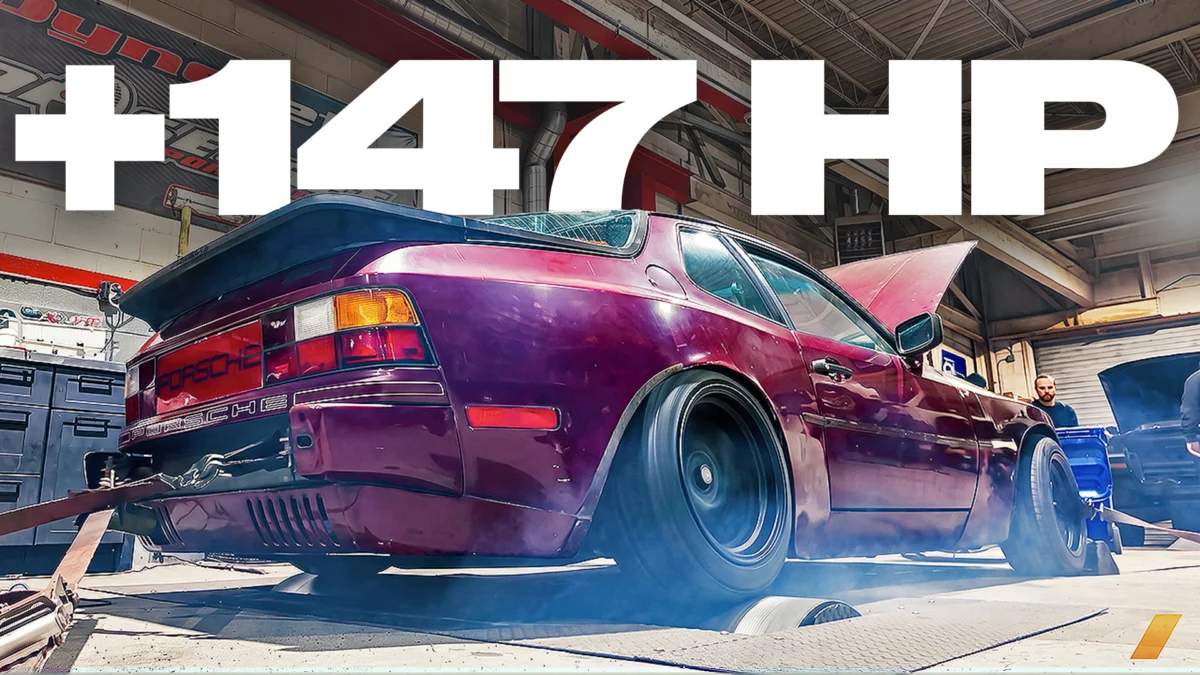
Gorelik’s K24-swapped 944, aided by a turbocharger, has completely redefined the car’s performance envelope. Current dyno results show the vehicle pushing nearly 300 horsepower at the wheels. While the power delivery lacks the low-end torque characteristics of a V8-based LS swap, the K-series provides a high-revving, aggressive power band that transforms the driving experience of the 944. The weight savings provided by the Honda engine also contribute to improved handling dynamics, making the car significantly more agile than its factory-original counterpart.
The Human Element: Professional Perspectives
The project was not merely a mechanical achievement; it was a character-building exercise. Kevin Maecha of Fulltime Fabrication, who played a pivotal role in finalizing the build, offered a candid assessment of the project during the finishing stages.
"What he did, in the back of a shop, in the cold weather, on the ground? I respect that," Maecha remarked. "You cannot pay me enough to do that on the ground."
This commentary underscores a vital truth about car culture: the "shadetree" mechanic is the backbone of the community. Maecha acknowledged that while Gorelik made mistakes—many of which were part of the learning process—the determination to see the project through to fruition was nothing short of impressive. For a DIY builder to arrive at a functional, turbocharged vehicle after months of struggling in non-ideal conditions is a feat that earns respect from seasoned professionals who typically work in climate-controlled, lift-equipped environments.
Implications for the Future of Modding
Gorelik’s experience serves as a case study for future engine swappers. It demonstrates that the path to a completed build is rarely paved with easy victories.
1. The Reality of "Affordable" Swaps
While the K-series engine is affordable, the "hidden" costs—custom fabrication, professional tuning, and unexpected part failures—can quickly inflate a budget. The takeaway for enthusiasts is to account for a "contingency fund" of at least 30-40% of the projected build cost.
2. The Value of Documentation
Gorelik’s choice to share the failures alongside the successes provided immense value to his audience. By highlighting the bent valves and the need for professional help, he demystified the process, proving that high-level automotive builds are rarely as seamless as they appear on social media.
3. The "Next Project" Mindset
Gorelik has already turned his attention toward the future. With the 944 now running, he is scouting for a cleaner body to serve as a platform for a second, more refined iteration of the build. This speaks to the addictive nature of car modification. Having mastered the initial swap, he now aims to apply his accumulated knowledge to create a "Version 2.0" that will benefit from a proper garage environment and the lessons learned during the first round.
Conclusion: A Work in Progress
The Porsche 944, once a dormant project, is now a functioning, high-horsepower reality. While Gorelik is the first to admit that the car is not "perfect," it represents a significant victory over the entropy that usually claims such projects.
In the world of automotive journalism, we often focus on the finished product—the polished feature car at a show or the track-record-shattering lap time. However, the story of this K-swapped 944 is far more relatable. It is a story of grit, the cold, the grease, and the ultimate satisfaction of hearing an engine roar to life after months of silence.
As Gorelik looks toward his next project, the legacy of this build remains clear: it wasn’t just about putting a Honda engine into a German chassis. It was about proving that even in the face of setbacks, a dedicated enthusiast can turn a dream into a machine. The road ahead for this 944 promises more refinement and perhaps more adventures, but for now, the engine is running, the turbo is spooling, and the mission is accomplished.
For those inspired by this journey, remember that every great car project begins with a single, often difficult, step. Whether you have a fully equipped workshop or just a corner of a driveway and a dream, the mechanical horizon is wide open.
