





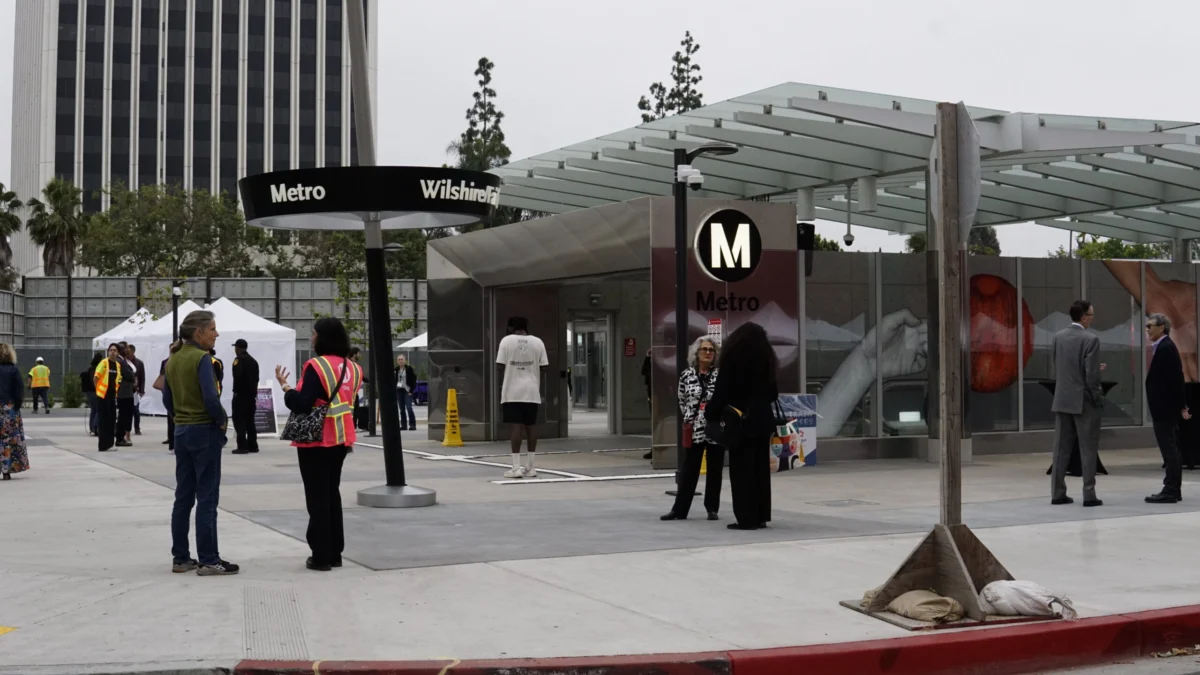
Los Angeles, a city historically defined by its sprawling freeway network and the cultural primacy of the private automobile, is currently undergoing a radical transformation. With the 2028 Olympic and Paralympic Games on the horizon, the city’s transit agency, LA Metro, is engaged in a high-stakes race against time to redefine mobility in one of the world’s most car-dependent regions. While initial rhetoric regarding a "car-free" Olympics has evolved into a more pragmatic "transit-first" strategy, the shift remains a monumental endeavor.
As the only agency in the United States to inaugurate new underground stations this year, LA Metro is attempting to prove that a city built for the car can pivot toward a sustainable, multi-modal future. However, the path to 2028 is paved with significant hurdles, including budget constraints, bureaucratic delays, and deeply ingrained cultural perceptions regarding public transport.
Main Facts: The "Transit-First" Mandate
The strategy for the 2028 Games is built on the premise of leveraging massive international attention to accelerate long-delayed infrastructure projects. Unlike previous host cities that relied on temporary, single-purpose facilities, Los Angeles is positioning its transit improvements as a permanent civic legacy.
Key Pillars of the Strategy:
- Expansion of Rail Infrastructure: The ongoing construction of the D Line (Purple) subway extension represents the most significant investment in transit capacity. These new underground stations are designed to link the city’s densest neighborhoods directly to the Olympic venues.
- The "Twenty-Eight by ’28" Initiative: Originally an ambitious list of 28 infrastructure projects slated for completion before the Opening Ceremony, the initiative has faced significant scaling back due to economic realities and project delivery timelines.
- Bus Fleet Electrification: A aggressive transition toward a 100% electric bus fleet is underway, aiming to reduce the city’s carbon footprint and improve air quality in communities that have historically suffered from the effects of heavy freeway traffic.
- Street-Level Improvements: Beyond heavy rail, the city is prioritizing "first-mile, last-mile" solutions, including enhanced bus shelters, improved pedestrian lighting, and protected bicycle lanes to encourage non-car travel to stadiums and arenas.
Chronology: From Concept to Construction
The trajectory toward the 2028 Games has been a decade-long exercise in planning and political navigation.
- 2016–2017 (The Foundation): The passage of Measure M, a half-cent sales tax, provided the long-term funding mechanism required to move major transit projects from the drawing board to the construction phase.
- 2020–2022 (The Reality Check): The global pandemic necessitated a shift in focus. Declining ridership and increased operational costs forced planners to re-evaluate the "Twenty-Eight by ’28" list, leading to a prioritization of high-impact projects over purely symbolic ones.
- 2023–2024 (The Construction Peak): LA Metro made history as the only major US agency to open new underground subway stations during this period. These milestones have been crucial in maintaining public confidence that the system can actually expand.
- 2025–2027 (The Final Push): The focus shifts to operational readiness. This period will be defined by the integration of technology, security protocols for the Games, and the completion of the remaining bus-rapid-transit (BRT) lanes.
Supporting Data: Infrastructure and Ridership Metrics
The success of the Los Angeles Olympic transit plan rests on the ability to move millions of visitors without gridlocking the existing freeway network. Data suggests that while capacity is growing, the gap between current utilization and the required capacity for the Games remains substantial.
Infrastructure Growth
- Underground Expansion: The D Line extension is slated to add nearly nine miles of subway track, serving key hubs like Beverly Hills and Century City.
- BRT Networks: Expansion of the Metro Bus Rapid Transit system is the "secret weapon" of the 2028 plan, offering a more cost-effective way to move large volumes of people compared to heavy rail.
- Electric Transition: As of 2024, Metro has successfully deployed hundreds of electric buses, with a goal of full fleet transition by 2030, putting the Olympic period squarely in the middle of this transformation.
Ridership Challenges
Despite the infrastructure investment, public transit ridership in Los Angeles has struggled to rebound to pre-pandemic levels. Data indicates that while "choice riders" (those who have access to a car but choose transit) are increasing in areas near the new rail lines, the bulk of ridership remains reliant on essential workers. The "Olympic effect" aims to bridge this divide, normalizing transit use for middle- and upper-income residents who previously viewed the bus as a last resort.
Official Responses: Navigating the Policy Landscape
The administration of LA Metro and the municipal government have been forced to balance the enthusiasm of Olympic organizers with the fiscal caution of local taxpayers.
The View from City Hall
Mayor Karen Bass and other civic leaders have consistently framed the transit upgrades as an "equity imperative." The rhetoric has shifted away from the "car-free" branding—which was widely criticized as unrealistic—toward a narrative of "freedom of movement." Official statements emphasize that the goal is not to punish drivers, but to provide an alternative that is so efficient it becomes the preferred option for visitors and locals alike.
The Metro Perspective
LA Metro officials acknowledge the "funding gap." In briefings, spokespeople have highlighted that while the 2028 deadline provides a powerful catalyst for funding, the agency must remain focused on long-term sustainability. They emphasize that the Olympics are a two-week event, but the transit network must serve the region for the next century. Therefore, quality and reliability have been prioritized over raw speed of construction.
Implications: A Legacy Beyond the Games
The implications of Los Angeles’s transit experiment extend far beyond the two weeks of sporting events. If successful, Los Angeles could serve as a template for other "sunbelt" cities in the United States that are currently struggling with the twin pressures of population growth and climate change.
Environmental Impact
The environmental implications are profound. By moving a significant percentage of the city’s population toward electrified transit, Los Angeles is setting a precedent for how a sprawling, low-density city can achieve aggressive decarbonization targets. The reduction in vehicle miles traveled (VMT) is essential for the city’s long-term air quality goals.
Cultural Shift
Perhaps the most difficult hurdle is the psychological one. Los Angeles is a city where the car is often equated with personal liberty. To succeed, the city must successfully rebrand the transit experience. This involves addressing valid concerns regarding safety, cleanliness, and reliability. The 2028 Games provide the perfect "trial run" to demonstrate that a well-funded, well-managed transit system can be a pleasant, safe, and efficient way to navigate the metropolis.
The Urban Design Legacy
The "transit-first" approach is already influencing land-use policy. "Transit-Oriented Development" (TOD) has become the buzzword in local planning departments. By encouraging high-density housing and retail around the new transit hubs, the city is effectively changing the physical shape of the urban environment. This is a permanent structural change that will outlive the Olympic infrastructure, creating a more walkable and connected Los Angeles for future generations.
Conclusion: The Road Ahead
As the countdown to 2028 continues, Los Angeles finds itself at a unique historical crossroads. The ambition of a "car-free" Olympics may have been tempered by the realities of budgets and geography, but the shift toward a "transit-first" city is undeniable.
The success of this transition will not be measured solely by how many visitors are moved to the Coliseum or the new arenas in Inglewood. Rather, it will be measured by whether the post-Olympic city feels fundamentally different than the pre-Olympic one. If the new stations, the electric bus corridors, and the improved pedestrian access become part of the daily rhythm of life for Angelenos, then the 2028 Games will have achieved their most important victory: the reclamation of a city from the congestion of the past.
While challenges remain—ranging from the high cost of subterranean construction to the persistent cultural allure of the private car—the progress made to date suggests that Los Angeles is finally, albeit slowly, learning to share the road. The world will be watching in 2028, but for the residents of Los Angeles, the real game begins the day after the closing ceremony, when the legacy of this massive investment must prove its worth in the daily lives of millions.
