



By Global Affairs Desk
The tenuous lull that had briefly descended upon the Middle East has shattered, replaced by a surge in military volatility that threatens to plunge the global economy into a protracted energy crisis. Following a month of relative restraint, hostilities between the United States and Iran have reignited with renewed ferocity, centered once again on the strategic chokepoint of the Strait of Hormuz. As military strikes and retaliatory volleys cross the region, global markets are bracing for the impact of an open-ended war that shows no immediate sign of resolution.
The Resumption of Hostilities: A Chronology of Escalation
The current cycle of violence represents a significant deviation from the recent trend of subdued engagement. For the past four weeks, energy shipments through the Strait of Hormuz—the world’s most vital maritime oil artery—had begun a tentative recovery, reaching nearly 50% of pre-war volumes. That recovery has been abruptly halted.
The escalation began in earnest earlier this week when US forces initiated a secondary round of precision strikes. Over a 72-hour window, American military assets targeted radar arrays, communication nodes, and mine-laying infrastructure along Iran’s southern coast. The Pentagon stated these actions were a direct response to provocations by the Islamic Revolutionary Guard Corps (IRGC), which had allegedly attempted to harass commercial shipping vessels traversing the strait.
Iran’s response was swift and geographically expansive. Following the pattern established during the first six months of the conflict, Tehran launched waves of kamikaze drones and ballistic missiles against US military installations across the Middle East. Reports from the semi-official Tasnim news agency indicated a “decisive operation” targeting bases in Kuwait, Jordan, Bahrain, Iraq, and the United Arab Emirates. While local authorities in several of these nations reported successful interceptions of incoming fire, the sheer scale of the coordinated barrage underscored the widening scope of the conflict.
The Human Cost and Diplomatic Friction
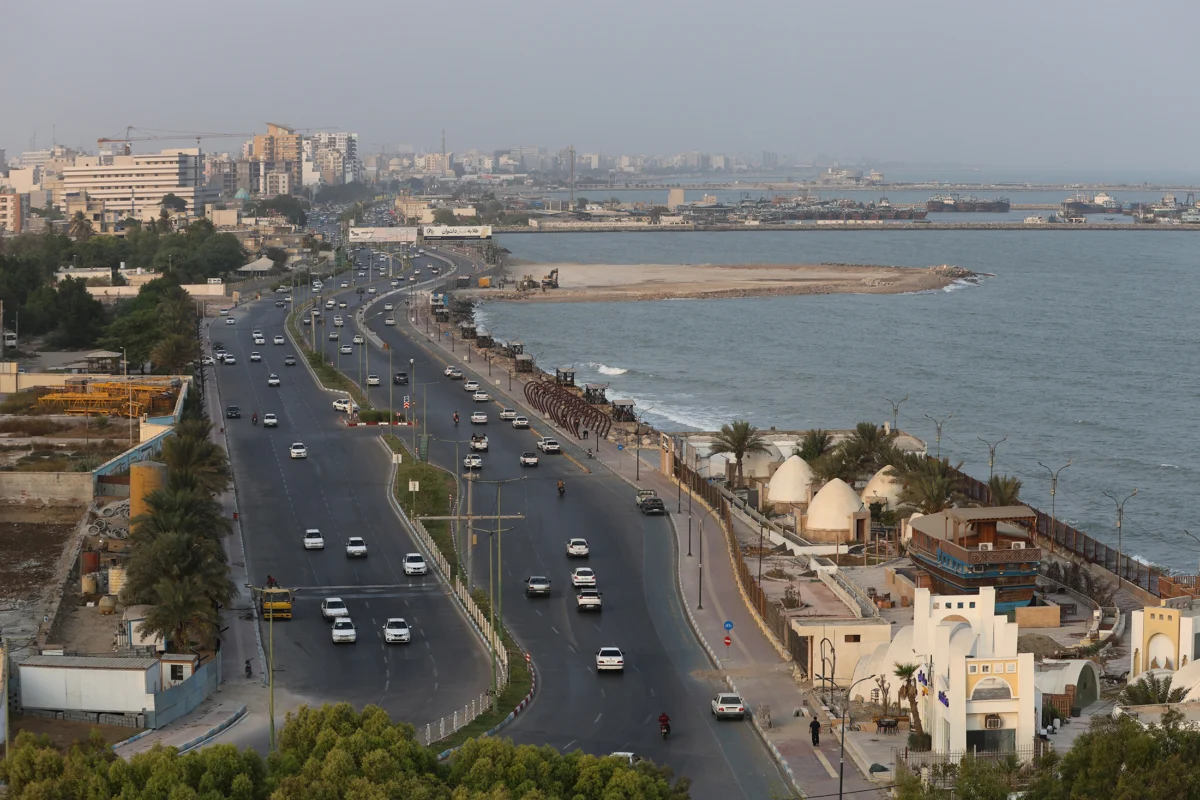
Central to the current diplomatic firestorm are allegations of civilian casualties. Iranian officials have accused the US military of striking a wedding ceremony in the coastal city of Sirik. The Iranian Red Crescent Society reported at least four fatalities and roughly 67 injuries, noting that the death toll remains fluid as rescue operations continue.
The incident has drawn comparisons to the harrowing tragedy in Minab earlier this year, where an airstrike on an elementary school claimed the lives of an estimated 120 children. That event remains a subject of intense scrutiny and an ongoing US military investigation.
"This cruelty cannot be separated from the chain of atrocities that preceded it in Minab," said Iranian Foreign Ministry Spokesman Esmail Baghaei in a statement posted to X. "Iran will respond to these savage crimes with firmness."
The US military has categorically denied the allegations regarding the Sirik strike. US Navy Captain Tim Hawkins, a spokesperson for Central Command (Centcom), reiterated the official position: "The US military never targets civilians."
The dispute highlights a growing chasm in the information war accompanying the kinetic conflict. Iran has further accused the US of targeting critical telecommunication infrastructure, calling upon regional neighbors to cease providing the logistical support and facilities that allow the US to conduct such strikes.
Economic Implications: The Energy Price Shock
The immediate economic casualty of the renewed fighting has been the global energy market. Brent crude, the international benchmark, surged to over $95 a barrel—its highest closing level in five weeks. This represents a staggering 58% increase in the value of the benchmark contract over the calendar year, stoking fears of inflationary pressure as the northern hemisphere approaches winter.
Natural gas prices have mirrored this upward trajectory, while domestic diesel costs in the United States have reached their highest point since April. The “tanker-for-tanker” policy, recently authorized by President Donald Trump, has further complicated the shipping environment. Under this new mandate, the US military has begun targeting Iranian tankers directly, a departure from previous strategies that focused primarily on enforcement of the naval blockade.
"Fighting drags on with no end—and no winner—in sight," noted a team of Bloomberg economists led by Dina Esfandiary. "The wider Middle East is now an arena for war. And surging oil prices are taxing the global economy."
The blockade, while intended to stifle Iran’s export capabilities, is now inextricably linked to the volatility of global supply chains. As long as the Strait of Hormuz remains a contested theater, the risk of a sustained supply shock remains high, threatening to derail the fragile economic recovery observed in many Western nations.
Official Responses and the Diplomacy Gap
Despite the economic carnage, neither Washington nor Tehran has shown a genuine inclination to return to the negotiating table. The collapse of the interim peace accord, brokered in Islamabad this past June, appears to have hardened the resolve of both administrations.
US Secretary of State Marco Rubio has maintained a hawkish stance, asserting that the United States will continue to prioritize the protection of commercial shipping against Iranian aggression. Conversely, President Trump has signaled a lack of urgency regarding a new diplomatic framework. In a recent post on Truth Social, the President stated he is "not trying to force Iran to the bargaining table," a sentiment that suggests the administration is prepared for a long-term strategy of containment and economic pressure.
US Treasury Secretary Scott Bessent, speaking at the G20 finance ministers’ summit in Asheville, characterized the Iranian leadership as "panicked" by the state of their domestic economy. Bessent remains committed to an "economic onslaught," promising to intensify sanctions against Iran and its international trading partners. However, analysts remain skeptical of the efficacy of these measures. To date, nations with deep-seated economic ties to Tehran have largely ignored US threats, and the perceived "underwhelming" impact of the blockade continues to draw criticism from within the Western policy community.
A Wider Regional Conflagration
The conflict is no longer confined to the US-Iran binary. The regional architecture is fraying under the strain of multiple overlapping crises:
- The Levant: Israel has intensified its campaign against Hezbollah in southern Lebanon, citing persistent drone launches from the group. The frequency of these strikes has increased significantly this week.
- The Gaza Front: The ceasefire in Gaza, already precarious, is teetering on the edge of total collapse. An Israeli military incursion deep into Palestinian territory to capture a high-ranking militant leader has drawn condemnation from Hamas and threatened to draw other regional actors into the fray.
As the conflict broadens, the strategic calculus for all involved parties is becoming increasingly complex. With the US military tied to a naval blockade, Iran leveraging its regional proxy network, and energy markets reacting to every missile launch, the situation remains highly fluid.
For the global community, the immediate concern is the risk of miscalculation. In a theater as dense as the Strait of Hormuz, where military assets operate in close proximity, the threshold for a catastrophic error is dangerously low. As the winter season approaches, the world watches with bated breath, waiting to see if the current cycle of escalation can be contained or if the region is sliding toward a broader, systemic collapse.
Ultimately, the lack of a diplomatic pathway has left a void, one that is currently being filled by military hardware and market volatility. Unless a new framework for de-escalation emerges, the energy-dependent global economy remains at the mercy of a conflict that shows no sign of cooling.
