




BERLIN — Germany’s critical energy infrastructure, the backbone of the European Union’s largest economy, has been thrust into a state of high alert following a series of coordinated, suspicious incidents on Tuesday that saw coal-fired power plants across the country forced offline. Security services are now grappling with the chilling possibility that these events, occurring on opposite sides of the nation, were not merely coincidental malfunctions, but calculated acts of sabotage intended to destabilize the grid.
As investigators pore over evidence in the industrial heartlands of the Rhineland and the rural expanses of Brandenburg, the German government faces a growing realization: the era of "peaceful" infrastructure management is over. In an age of hybrid warfare, the country’s power grid has become a primary battlefield.
The Chronology of the Attacks
The timeline of Tuesday’s events suggests a level of tactical planning that has alarmed federal security officials.
The Eastern Front: The Jänschwalde Incident
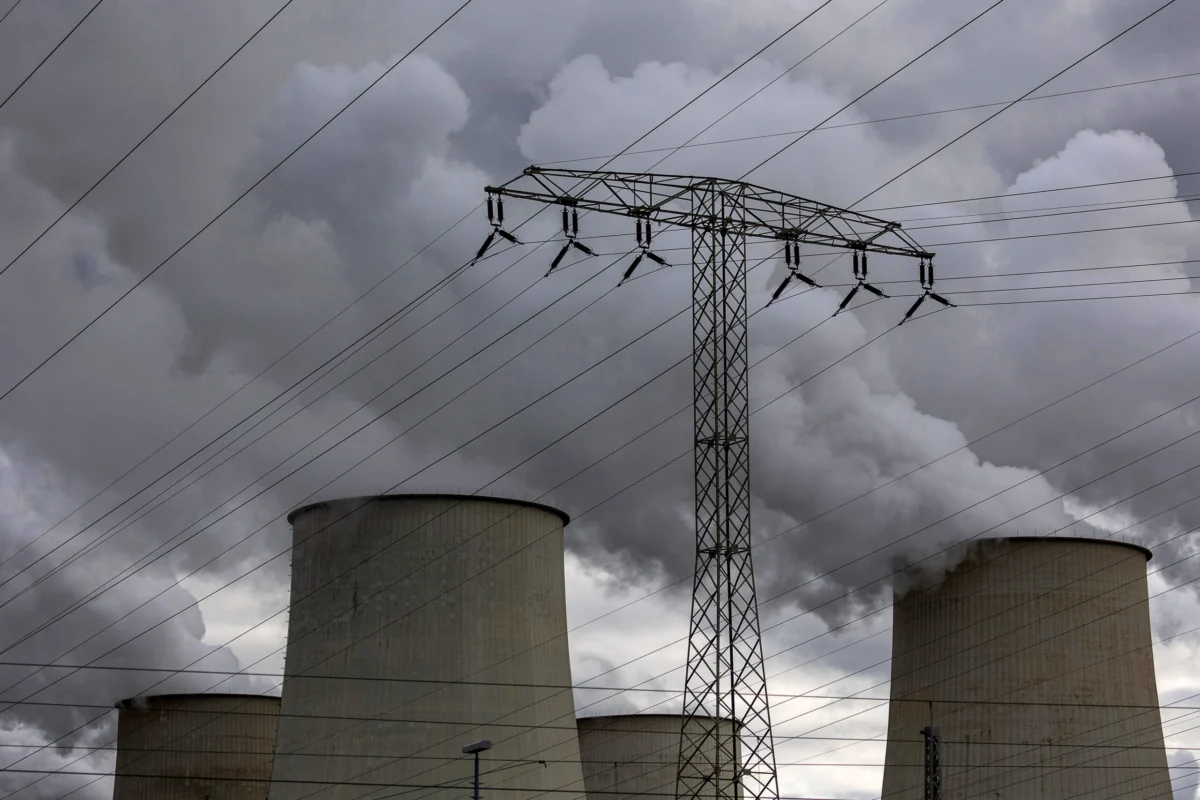
The first strike occurred in the early hours of Tuesday morning in eastern Germany. Unknown perpetrators targeted transmission lines connected to LEAG’s Jänschwalde coal-fired power plant. Using improvised projectiles—an act that points to a degree of technical sophistication and premeditation—the attackers damaged key transmission infrastructure. The result was an immediate, albeit temporary, outage that forced the facility to throttle down, highlighting the vulnerability of Germany’s decentralized and aging transmission corridors.
The Western Front: The Rhineland Blackout
The situation escalated dramatically on Tuesday evening. In the industrial powerhouse surrounding the Rhine, a second, more severe incident occurred near an Amprion substation in Rommerskirchen. This disruption triggered the automatic shutdown of five units at RWE AG’s lignite-fired power plants. The affected units—Neurath G and F, and Niederaußem H, G, and K—represented a staggering 4.2 gigawatts of combined generation capacity.
While the Essen police force has officially categorized the incident as a "deliberate act" and a criminal offense, the timing—occurring while the eastern incident was still being assessed—has led authorities to investigate potential links between the two.
Supporting Data: Economic and Technical Impacts
The technical fallout from these incidents provides a window into the fragility of the European energy market.
Market Volatility and Price Spikes
The sudden loss of 4.2 gigawatts from the grid caused a ripple effect across European power markets. According to Talha Torlak, lead for short-term power trading at Vitus Commodities, the grid experienced a "very extreme deficit" between 8:00 p.m. and 9:00 p.m. local time.
The mechanism used to balance the grid—the "imbalance price," which accounts for unexpected gaps between supply and demand—skyrocketed to an eye-watering €5,000 per megawatt-hour. This price point serves as a stark indicator of how close the system came to a more severe destabilization event. While system stability was technically maintained, the cost to the market was immediate and punitive.
Grid Resilience and Recovery
Despite the alarm, grid operator Amprion maintained that general power supply to the public remained unaffected. By Wednesday morning, RWE began the process of reconnecting approximately 2.6 gigawatts of capacity. The remaining 1.6 gigawatts are expected to be restored by the weekend.
Leonhard Gandhi, a researcher at the Fraunhofer Institute, noted that while the grid successfully handled the immediate load drop, the resilience of the system is not infinite. "The grid handled the incident well," Gandhi observed. "However, the situation would become critical if multiple such attacks occurred simultaneously at central grid nodes. That is why the attempted sabotage that same morning near Jänschwalde is the truly alarming news. It suggests a move toward coordinated, multi-vector attacks."
Official Responses: A Nation on Edge
The response from German officials has been measured but grim. Herbert Reul, the interior minister of North Rhine-Westphalia, confirmed during a Wednesday press conference that the state is investigating multiple high-stakes motives.
The Investigation: Terrorism vs. State Sabotage
For the western incident, authorities are exploring two primary lines of inquiry:
- Foreign State-Directed Sabotage: The possibility that a hostile foreign actor—with the resources and motive to weaken Germany’s economic engine—is behind the attack.
- Extremist Agitation: The potential involvement of far-left extremist groups, who have previously targeted energy infrastructure in protests against fossil fuel usage.
In the east, the Brandenburg police have opened a formal investigation under the suspicion of the formation of a "terrorist organization." This legal classification elevates the incident from mere vandalism to a matter of national security, granting investigators broader powers to conduct surveillance and track potential cells.
Federal Stance
The German economy ministry, while declining to comment on specific investigative details, issued a pointed statement regarding the threat landscape. "Acts of sabotage against critical infrastructure pose a serious threat," a spokesperson stated. The ministry highlighted that the combination of "Russia’s war of aggression, the rise in acts of sabotage targeting the economy, and the increasing frequency of extreme weather events" creates a "perfect storm" that mandates a fundamental shift in how Germany protects its energy assets.
The Strategic Implications: A New Era of Hybrid Warfare
The events of Tuesday did not occur in a vacuum. They are the latest in a string of attacks on German infrastructure throughout 2026, including a major arson attack earlier this year that left parts of Berlin in the dark.
The Shadow of the Kremlin
Germany’s intelligence services remain on high alert following a failed drone attack at Leipzig airport, which federal authorities have explicitly blamed on Russian actors. The fear in Berlin is that these attacks are part of a broader campaign of "gray-zone" warfare designed to test the resolve of NATO nations, erode public confidence in the state’s ability to provide basic services, and drive up energy costs to exacerbate domestic political tensions.
Hardening the Grid
Across Europe, governments are racing to fortify their energy networks. The destruction of Ukrainian energy infrastructure by Russian missiles has provided a grim roadmap of what happens when a power grid becomes a strategic target.
For Germany, the challenge is twofold:
- Physical Security: The need to monitor thousands of miles of transmission lines and hundreds of remote substations is a logistical nightmare. The use of "homemade projectiles" at Jänschwalde proves that even low-tech solutions can inflict high-tech consequences.
- Digital and Hybrid Defense: As the grid becomes increasingly digitized to accommodate renewable energy sources, the risk of cyber-physical attacks—where a cyber-breach is followed by physical damage—grows exponentially.
The Political Fallout
The attacks are likely to dominate the domestic political agenda for the foreseeable future. The government is under immense pressure to increase funding for the protection of "Critical Infrastructure" (KRITIS). However, with the economy already strained, officials must balance the massive costs of security upgrades against the need for energy transition investments.
Conclusion
The incidents on Tuesday represent a turning point in Germany’s national security posture. When the lights flickered in the Rhineland and the transmission lines were severed in the east, it served as a wake-up call that the nation’s industrial heart is no longer immune to the instabilities of the modern world.
As investigators continue to work through the debris and the digital logs, one thing remains clear: Germany is no longer just defending its power plants from accidents or technical failure. It is now actively defending its sovereignty against a hidden, determined, and evolving adversary. The stability of the grid has held for now, but the events of Tuesday have made it painfully clear that the threshold of security has been crossed. The question remains: how long can the system withstand a sustained campaign of attrition? The answer will likely dictate the course of Germany’s security policy for the remainder of the decade.
