

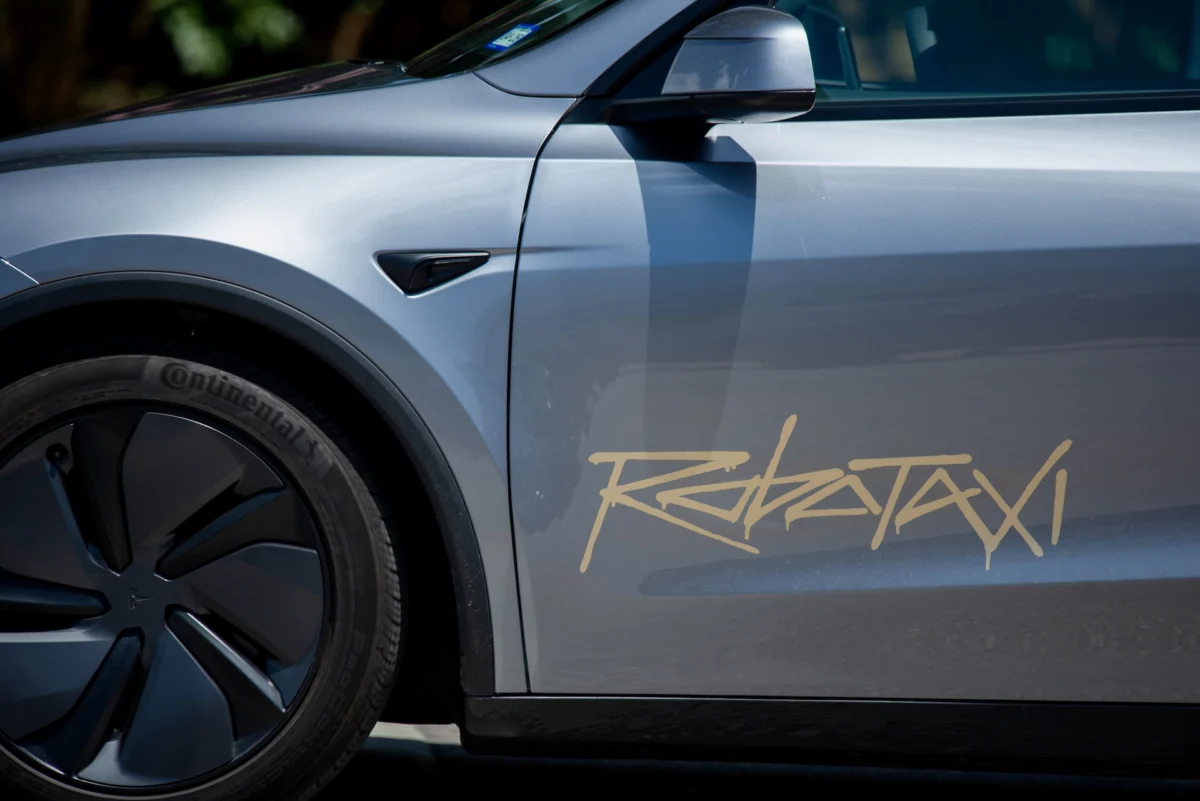
LAS VEGAS, NV — In a decision that is poised to fundamentally reshape the commercial transportation landscape of Southern Nevada, the Nevada Transportation Authority (NTA) has unanimously approved commercial permits for three of the world’s most prominent players in autonomous vehicle technology.
On Thursday, the regulatory body granted operating permits to Tesla, Uber, and Alphabet’s Waymo. Collectively, the approvals pave the way for the deployment of up to 8,000 commercial robotaxis across Clark County—the home of the world-famous Las Vegas Strip—over the next 12 months.
The landmark ruling establishes Las Vegas as the premier high-density competitive market for driverless ride-hailing in the United States. Unlike other municipal rollouts, which have typically seen a single operator dominate or enter sequentially, Nevada’s sudden multi-permit authorization sets up an unprecedented, direct head-to-head-to-head clash between Tesla’s vision of mass-market autonomy, Waymo’s established hardware-heavy systems, and Uber’s hybrid network orchestration.
Chronology of Nevada’s Autonomous Transition
Nevada has long positioned itself as a pioneer in autonomous vehicle (AV) policy. To understand how the state arrived at Thursday’s massive regulatory expansion, one must look at a decade of deliberate legislative and regulatory steps.
+-----------------------------------------------------------------------------+
|                                 CHRONOLOGY                                  |
+-----------------------------------------------------------------------------+
| 2011–2012: Nevada becomes first state to pass laws authorizing AV testing.  |
|                                                                             |
| 2017–2019: Early closed-loop and public shuttle pilots in downtown Las Vegas|
|            gather crucial safety data.                                      |
|                                                                             |
| 2021–2023: Companies like Motional and Zoox begin localized testing on public|
|            streets and within the resort corridor.                          |
|                                                                             |
| Late 2024: Tesla, Waymo, and Uber submit formal commercial permit           |
|            applications to the Nevada Transportation Authority (NTA).       |
|                                                                             |
| Present Day: NTA unanimously approves commercial permits for up to 8,000    |
|              robotaxis in Clark County over the next 12 months.             |
+-----------------------------------------------------------------------------+
Historically, Nevada became the first state in the nation to pass laws authorizing the operation of autonomous vehicles on public roads in 2011, issuing its first AV testing license to Google (now Waymo) in 2012. Over the subsequent decade, the state steadily lowered regulatory barriers to attract tech investment, transitioning from supervised testing to driverless pilot programs.
By 2017, localized autonomous shuttles were navigating the historic streets of downtown Las Vegas. In the years that followed, companies like Motional (a joint venture between Hyundai and Aptiv) and Amazon’s Zoox logged hundreds of thousands of miles on the resort corridor, establishing the safety profiles that made Thursday’s regulatory leap possible.
The NTA’s decision represents the culmination of this multi-year effort, shifting autonomous operations in the state from a novelty-scale testing phase into a fully commercialized, mass-market utility.
Supporting Data: Fleet Sizes and Technical Allocations
The NTA’s permits establish clear regulatory ceilings for each operator, though the actual deployment figures are expected to rise gradually. The distribution of the 8,000 permitted vehicles reveals distinct corporate strategies and operational capacities:
| Operator | Maximum Permitted Fleet Size | Primary Hardware/Technology Partner | Operational Strategy |
|---|---|---|---|
| Tesla | 5,000 vehicles | In-house (FSD / Cybercab) | Direct commercial fleet deployment |
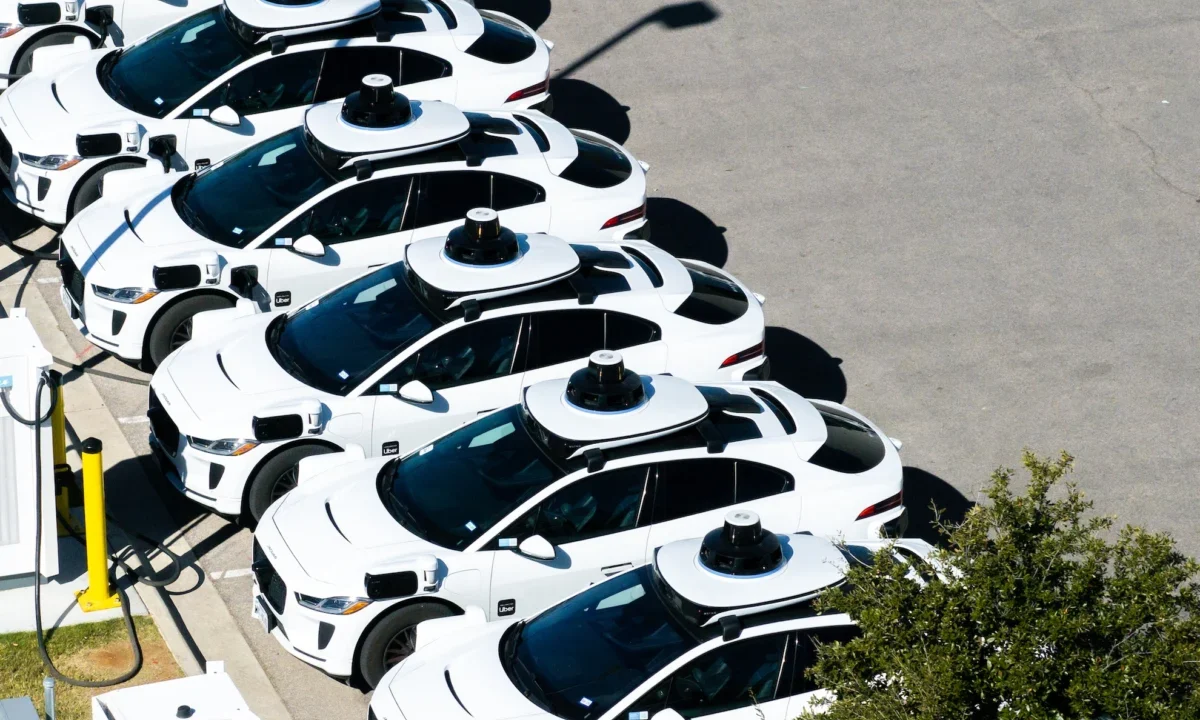
| Waymo | 1,000 vehicles | In-house (Waymo Driver / Geely Zeekr / Jaguar I-PACE) | Proprietary app-based ride-hailing |
| Uber | 1,000 vehicles | Motional (Hyundai) and Zoox (Amazon) | Third-party platform integration (Hybrid Network) |
| Zoox (Independent) | 100 vehicles | In-house (Purpose-built bi-directional carriage) | Standalone fleet service |
Tesla’s Aggressive Ceiling and Realistic Targets
While Tesla secured the lion’s share of the allocation with a ceiling of 5,000 vehicles, company executives tempered expectations regarding immediate rollouts. Eric Early, Tesla’s Cybercab Chief Engineer, clarified that the company does not intend to flood the streets of Clark County immediately.
"The 5,000 has always been a ceiling for us," Early testified during the NTA hearing. "I don’t think we’ll be in a position by this time next year to deploy 5,000 vehicles, and it’s not [because of] the technology… I think we would be extremely happy and satisfied if we could get ourselves up to 2,500, maybe a bit higher than that in the next year."
Waymo’s Measured Scaling
Waymo’s allocation of 1,000 vehicles aligns with its historical playbook of measured, geofenced expansions. Having already logged millions of commercial miles in Phoenix, San Francisco, and Los Angeles, Waymo is expected to leverage its sixth-generation hardware platform to quickly establish a reliable, highly mapped service zone in Las Vegas.
Uber’s Multi-Partner Network
Rather than deploying its own proprietary vehicle technology, Uber is acting as a network aggregator. Its 1,000-vehicle permit will be fulfilled through partnerships with Motional and Zoox. This allows Uber to capture market share without the massive capital expenditures associated with manufacturing and maintaining its own autonomous fleet.
Official Responses and Public Backlash
The NTA’s unanimous vote was not met without fierce resistance. The hearing room became a battleground between optimistic technology executives and local transportation representatives who fear the economic and physical impacts of rapid automation.
Industry Opposition: Congestion and Safety Concerns
Representatives from the traditional livery and taxi industries argued that the NTA is moving too far, too fast. Kimberly Maxson-Rushton, a prominent attorney representing the Livery Operators Association, presented a formal opposition during the hearing.
"These applications raise two grave concerns," Maxson-Rushton stated. "One deals with the oversaturation of the commercial transportation industry as a whole in Nevada. And the second one deals with the overcrowding of the roadways, and specifically the Golden Triangle."
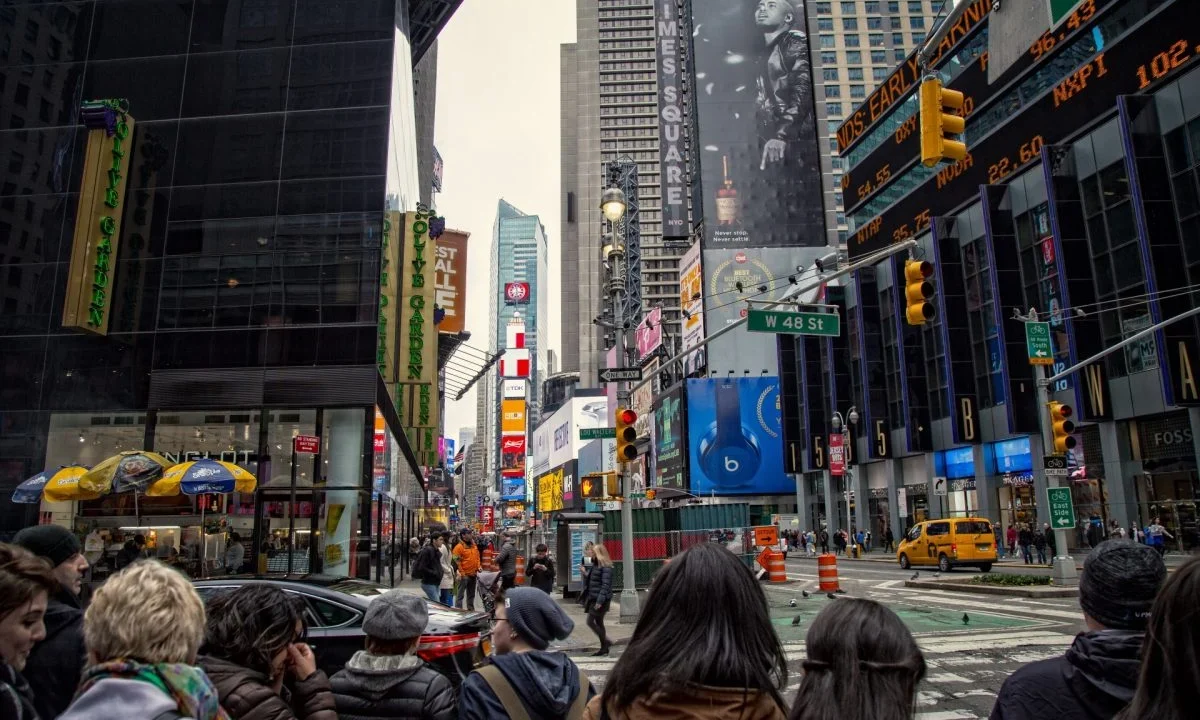
The "Golden Triangle"—the highly congested, high-traffic zone bounded by Harry Reid International Airport, the Las Vegas Strip (Las Vegas Boulevard), and the surrounding resort corridor—is already one of the most logistically challenged transit areas in the world. Local taxi companies argue that introducing thousands of slow-moving or occasionally stalled autonomous vehicles into this bottleneck could cripple the city’s tourism-dependent infrastructure.
Uber’s "Goldilocks" Advocacy
In response to concerns over sudden market saturation, Uber has pitched itself as the moderate, stabilizing force in the transition to automation. During the NTA hearing, Uber representatives advocated for a "hybrid approach" that blends human-driven gig vehicles with autonomous fleets.
Uber has actively lobbied for regulatory frameworks that require autonomous vehicles to operate on mixed-ride networks. The company argues that a pure-play autonomous model cannot handle the extreme demand spikes characteristic of Las Vegas—such as the massive crowds dispersing after a major concert at the Allegiant Stadium or a convention at the Las Vegas Convention Center.
By utilizing a hybrid network, Uber claims it can dynamically dispatch human drivers during peak hours and rely on autonomous vehicles during predictable baseline demand periods, thereby avoiding the permanent oversaturation of the city’s roadways.
Implications: The Battle for the Las Vegas Strip
The commercial deployment of up to 8,000 robotaxis in Clark County carries profound implications for the local economy, the labor force, and the urban environment.
Labor and Workforce Disruption
Las Vegas is a city built on hospitality and service labor, with a highly unionized workforce and thousands of independent gig-economy drivers. The introduction of autonomous fleets introduces a stark economic dichotomy:
- Job Creation: Proponents of the AV industry point to a new class of technical and operational jobs. Robotaxis require centralized depots for overnight storage, rapid charging, high-tech sensor calibration, cleaning, and physical maintenance. These roles represent localized, skilled labor opportunities.
- Job Displacement: Conversely, labor advocates warn of a devastating blow to human taxi drivers, limousine chauffeurs, and rideshare gig workers. If robotaxis successfully undercut human-driven rides on price and availability, thousands of families reliant on the local transit economy could face sudden displacement.
Navigating the "Golden Triangle"
The physical environment of Las Vegas presents a unique set of challenges for autonomous driving algorithms. The Golden Triangle is characterized by:
- High-density pedestrian traffic, often featuring unpredictable behavior from tourists.
- Complex drop-off and pick-up zones at major resorts, which require navigating multi-level parking structures and private access roads.
- Extreme environmental conditions, including intense desert heat that can strain vehicle cooling systems and computational hardware, and dazzling neon lighting that can challenge optical camera sensors.
While Motional has expanded its testing into the downtown area and the Town Square shopping district, the true test of these 8,000 permitted vehicles will be their ability to seamlessly integrate into the chaotic, high-stakes environment of the Las Vegas Strip without causing high-profile traffic jams or safety incidents.
As Tesla, Waymo, and Uber prepare to deploy their fleets, the eyes of the global transportation industry will be fixed on Clark County. The success or failure of this massive, multi-operator experiment will likely write the regulatory and operational playbook for the future of autonomous transit worldwide.
