





Introduction
In an era dominated by sleek electric vehicle (EV) designs, flush door handles, and keyless entry systems, a fundamental automotive safety feature has been quietly compromised: the ability to escape a vehicle in an emergency. On August 21, 2026, this brewing safety crisis culminated in a massive regulatory action in China. Tesla, alongside ten other major automotive manufacturers, initiated a sweeping recall of nearly three million vehicles to address hidden or unintuitive manual emergency door releases—mechanisms that safety advocates warn can trap occupants inside a vehicle during a crash, fire, or sudden power loss.
The recall represents a pivotal moment for the global automotive industry. For years, manufacturers have prioritized aerodynamics and minimalist aesthetics, often relegating mechanical door overrides to obscure, hard-to-reach locations. Now, under intense pressure from international regulators and high-profile investigative reporting, the industry is facing a forced reckoning, transitioning away from electronic-only latching systems back toward intuitive, visible mechanical backups.
Main Facts of the Recall
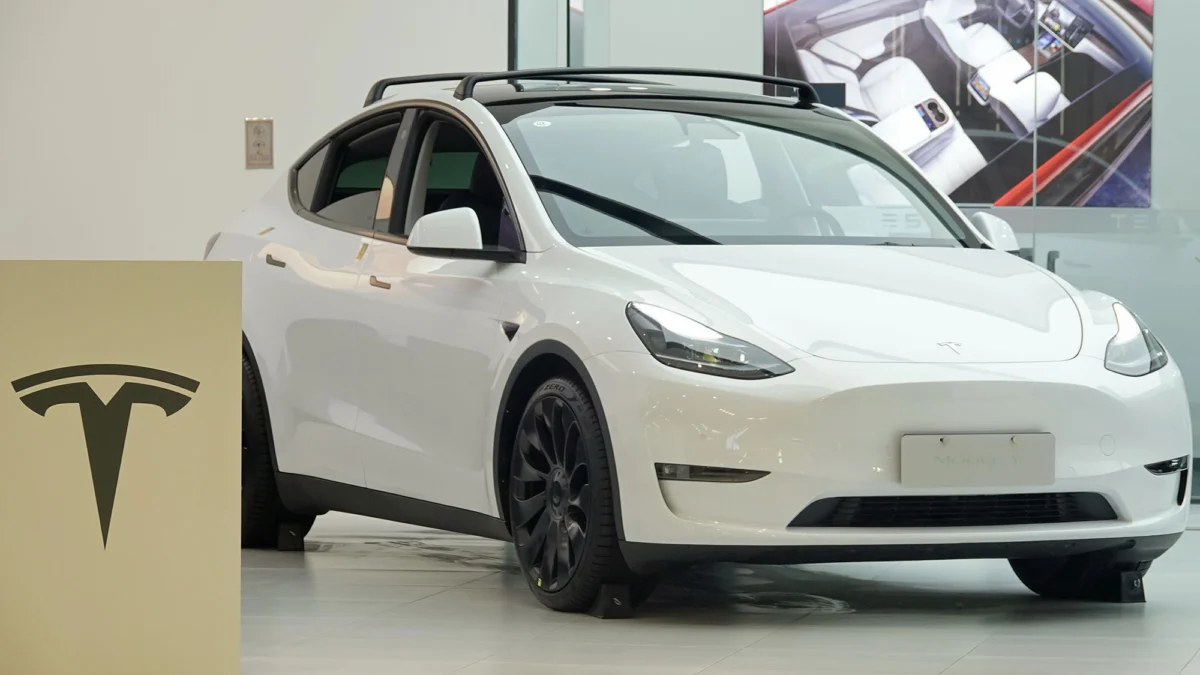
The State Administration for Market Regulation (SAMR) in China announced that 11 automakers are executing coordinated safety recalls to address the hazards of electronic door latches. At the center of this action is Tesla, which is recalling just under three million imported and domestically produced vehicles.
The Scope of the Chinese Recall
The corrective action is not limited to Tesla. A total of 11 carmakers are participating in the safety campaign, reflecting the widespread industry adoption of electronic door latches. The manufacturers involved include prominent domestic EV players and premium brands:
- Tesla (accounting for the vast majority of the recalled vehicles)
- Xiaomi
- Xpeng
- Zeekr (Geely’s premium EV brand)
- Lynk & Co (Geely’s joint venture brand)
- Six other unnamed domestic and joint-venture manufacturers.
The Remedy
To resolve the safety hazard without requiring physical modifications to the door structures of millions of existing cars, the automakers have agreed to a dual-pronged remedy:
- Physical Warning Labels: Nine of the eleven manufacturers, including Tesla, will distribute and install prominent warning labels inside the vehicles. These labels are designed to clearly identify the location of the manual emergency door releases, ensuring that passengers can locate them in a dark or smoke-filled cabin.
- Over-the-Air (OTA) Software Updates: All 11 companies will push software updates to the affected vehicles. These updates are intended to improve the logic of the electronic latch systems, ensuring that doors can still be unlatched electronically even during minor low-voltage anomalies or system faults.
The Core Safety Hazard
Modern EVs rely on electronic door latches (often called "e-latches") to open doors. Instead of a mechanical cable pulling a latch when a handle is tugged, an electronic button sends a signal to an actuator that pops the door open. While convenient, these systems require electrical power from the vehicle’s low-voltage (12-volt) battery.
If a collision severs the vehicle’s electrical wiring, or if a thermal runaway event (battery fire) destroys the electrical architecture, the electronic buttons cease to function. In these high-stress scenarios, occupants must rely on manual mechanical overrides. However, to maintain a clean interior aesthetic, many automakers have hidden these mechanical levers under rubber mats, behind plastic panels, or in the depths of door pockets, leaving occupants unaware of how to escape.
Chronology of the Door Handle Safety Crisis
The massive recall in China is the climax of a multi-year safety debate that has spanned across North America, Europe, and Asia. Below is the chronological progression of how minimalist design choices transformed into a global regulatory crackdown.
[Late 2025] ─────────────────► [Jan-Feb 2026] ───────────────► [July-Aug 2026]
• Bloomberg exposes hazards    • US introduces safety bill    • US drafts new rules
• NHTSA opens Tesla probe      • China bans hidden handles    • China executes mass
• Rivian R1 safety concerns    • Rivian shifts R2 design      • 3M Tesla recall
Late 2025: Media Spotlights and Federal Investigations
The safety risks associated with electronic door latches gained mainstream attention in late 2025. A series of high-profile accidents, where occupants were temporarily trapped or tragically perished inside burning vehicles because bystanders and first responders could not open the doors from the outside, prompted investigative scrutiny.
In September 2025, Bloomberg News published a comprehensive investigation into Tesla’s door-latching mechanisms. The report highlighted several instances where passengers were unable to locate the mechanical door releases during emergencies.
Following the public outcry generated by the reporting, the National Highway Traffic Safety Administration (NHTSA) in the United States officially opened a formal safety investigation into Tesla’s door-latching systems. Simultaneously, employees and customers at EV startup Rivian raised internal alarms regarding the manual door overrides on the R1T pickup and R1S SUV, which required passengers to pry off a plastic panel in the door pocket and pull a small wire cord to open the doors.
Early 2026: Legislative and Regulatory Backlash
As the calendar turned to 2026, governments began taking legislative action to curb the proliferation of hidden latches:
- January 2026: A United States federal lawmaker drafted a bill aimed at establishing strict automotive safety standards. The proposed legislation mandated that all vehicles sold in the U.S. feature manual door releases that are "intuitive to use and readily accessible for the occupant," effectively outlawing hidden or panel-covered mechanical overrides.
- February 2026: Following a rigorous two-year safety review, China’s regulatory bodies took a decisive stance. The Chinese government announced a sweeping ban on hidden, electronically actuated exterior door handles, set to take effect in 2027. This proactive regulation sent shockwaves through the EV industry, forcing design departments to immediately pivot.
- February 2026 (Corporate Pivot): Acknowledging the design flaws of its first-generation vehicles, Rivian announced a complete redesign of the rear-door manual releases for its highly anticipated, high-volume R2 SUV platform. Rather than hiding the release behind a removable panel, the R2 featured a highly visible, easily accessible mechanical override.
Mid-2026: Moving Toward Standardization
By July 2026, NHTSA was actively drafting new federal safety rules in the United States that would redefine the safety requirements for automotive door-latching systems, signaling that North America would soon follow China’s regulatory path.
On August 21, 2026, the regulatory pressure culminated in the massive 11-manufacturer recall in China, cementing the transition from aesthetic minimalism back to safety-first engineering.
Supporting Data and Technical Context
To understand why this safety issue became so widespread, it is necessary to examine the engineering choices that led to the adoption of electronic door latches and flush exterior handles.
The Aerodynamic and Aesthetic Motive
In the EV industry, driving range is a primary marketing metric. To maximize range, automakers must minimize aerodynamic drag. Flush exterior door handles—which retract into the door body when the vehicle is in motion—can reduce a vehicle’s drag coefficient ($C_d$) by several percentage points.
| Vehicle Model | Exterior Handle Style | Interior Latch Style | Emergency Backup Location |
|---|---|---|---|
| Tesla Model 3/Y | Flush / Electronic | Electronic Button | Front: Armrest lever (unmarked) Rear: Hidden under pocket floor mat |
| Rivian R1S/R1T | Flush / Auto-Present | Electronic Button | Behind a removable plastic panel in the door pocket; requires pulling a wire loop |
| Ford Mustang Mach-E | Button / No Handle | Electronic Button | Mechanical lever on the armrest (subject to 2025 recall) |
| Zeekr 001 | Flush / Electronic | Electronic Button | Hidden behind a trim piece on the door panel |
The transition to electronic interior latches was driven by a similar desire for minimalist cabin design. Removing mechanical cables allowed interior designers to create thinner, more sculptural door panels, saving cabin space and reducing assembly line complexity.
The Physics of Failure
The primary hazard of an e-latch occurs when a vehicle loses electrical power. In a severe crash, the pyrotechnic battery disconnect (a safety device that cuts high-voltage power to prevent electrocution) is triggered. While the 12V auxiliary battery is supposed to keep low-voltage systems running, the force of a crash frequently crushes the 12V battery or severs its wiring harness.
Without low-voltage power:
- The exterior electronic handles will not present or activate.
- The interior electronic door buttons will not function.
- The windows cannot be rolled down to escape or allow rescuers to reach inside.
In these precious seconds, if an occupant does not know that a mechanical lever exists—or if they cannot find it because it is hidden under a rubber floor mat in a door bin (as is the case with some Tesla rear doors)—they are effectively trapped inside a sealed metal box.
Official Responses and Corporate Accountability
The safety crisis has forced major automakers to publicly defend their design choices while quietly scrambling to re-engineer their vehicle platforms.
Tesla’s Stance and Engineering Redesign
Tesla, which popularized both flush exterior door handles and electronic interior buttons, has faced the brunt of the regulatory backlash. While the company initially defended its designs as safe and compliant with existing safety standards, the opening of the NHTSA investigation in late 2025 forced a shift in corporate strategy.
In statements responding to the investigations, Tesla confirmed that it is actively working on a comprehensive redesign of its door handles and latching systems for future vehicle platforms. For its current fleet of millions of vehicles on the road, Tesla has complied with the Chinese recall by distributing warning stickers to educate owners on how to use the mechanical overrides, acknowledging that the native design is not sufficiently intuitive.
Rivian’s Proactive Redesign
Rivian took a more transparent approach to addressing the design flaws of its R1 platform. Following internal concerns raised by employees and early adopters in 2025, the company conceded that the emergency door release on its R1 vehicles—which required passengers to remove a plastic panel and pull a cord—was not ideal for high-stress emergency scenarios.
[Rivian R1 Manual Release]                     [Rivian R2 Manual Release]
   (Hidden inside door pocket)                    (Exposed and Integrated)
 ┌───────────────────────────┐                  ┌───────────────────────────┐
 │ [Plastic Panel Cover]     │                  │  ┌───┐                    │
 │   └─► (Must be pried off) │   ────────────►  │  │ █ │◄─── [Visible Lever] │
 │ [Hidden Pull Cord]        │                  │  └───┘   (No cover/panel) │
 └───────────────────────────┘                  └───────────────────────────┘
When Rivian officially launched its smaller, more affordable R2 SUV in early 2026, the company proudly highlighted a redesigned manual release. The new mechanism was relocated to a highly visible, easily accessible spot on the door panel, completely eliminating the need to remove panels or pull hidden wires.
Ford’s Preemptive Recalls
Ford Motor Company also faced issues with its electronic door latching systems. In 2025, Ford issued a temporary stop-sale and a subsequent recall for its electric Mustang Mach-E. The recall was initiated to address software and hardware issues that could cause the electronic door latches to malfunction or fail to open if the vehicle experienced a sudden drop in low-voltage power. Ford’s quick action highlighted that legacy automakers were not immune to the engineering hurdles of the software-defined vehicle transition.
Implications for the Automotive Industry
The coordinated recall of three million vehicles in China, combined with impending regulatory bans and federal rules in the United States, marks the end of the "minimalist-at-all-costs" era in automotive interior design. The implications of this shift will reverberate through the industry for years to come.
The Regulatory Convergence
For decades, automotive manufacturers have operated under different regulatory frameworks in different regions. However, the issue of door-latch safety is creating a rare moment of global regulatory convergence.
With China banning hidden, electronically actuated exterior handles starting in 2027, and the United States drafting similar safety standards, global automakers can no longer design vehicles with market-specific door mechanisms without incurring massive engineering and manufacturing costs. The industry must design to the strictest common denominator, which means a return to visible, mechanical, and highly intuitive door handles worldwide.
Re-evaluating the "Software-Defined" Vehicle
The door handle crisis exposes a broader vulnerability in the trend toward "software-defined vehicles." As automakers replace mechanical switches, knobs, and levers with software menus, touchscreens, and electronic actuators, they introduce single points of failure.
While software updates can fix entertainment systems or optimize battery range, they cannot physically open a door when a vehicle’s electrical system is completely dead. This recall serves as a warning to automotive engineers that safety-critical systems—such as steering, braking, and passenger egress—must always maintain robust, uncompromised, and easily accessible physical backups.
The Impact on Consumer Confidence
As EVs continue to transition from early-adopter novelties to mainstream family vehicles, consumer expectations around safety are evolving. While early adopters were willing to overlook quirky door latches and hidden buttons in favor of cutting-edge technology, mass-market buyers prioritize safety, simplicity, and reliability.
Automakers that fail to adapt their designs to be more intuitive risk alienating mainstream buyers. The recall of three million Teslas in China is a stark reminder that in the automotive world, true luxury and innovation should never come at the expense of human life and basic safety.
