





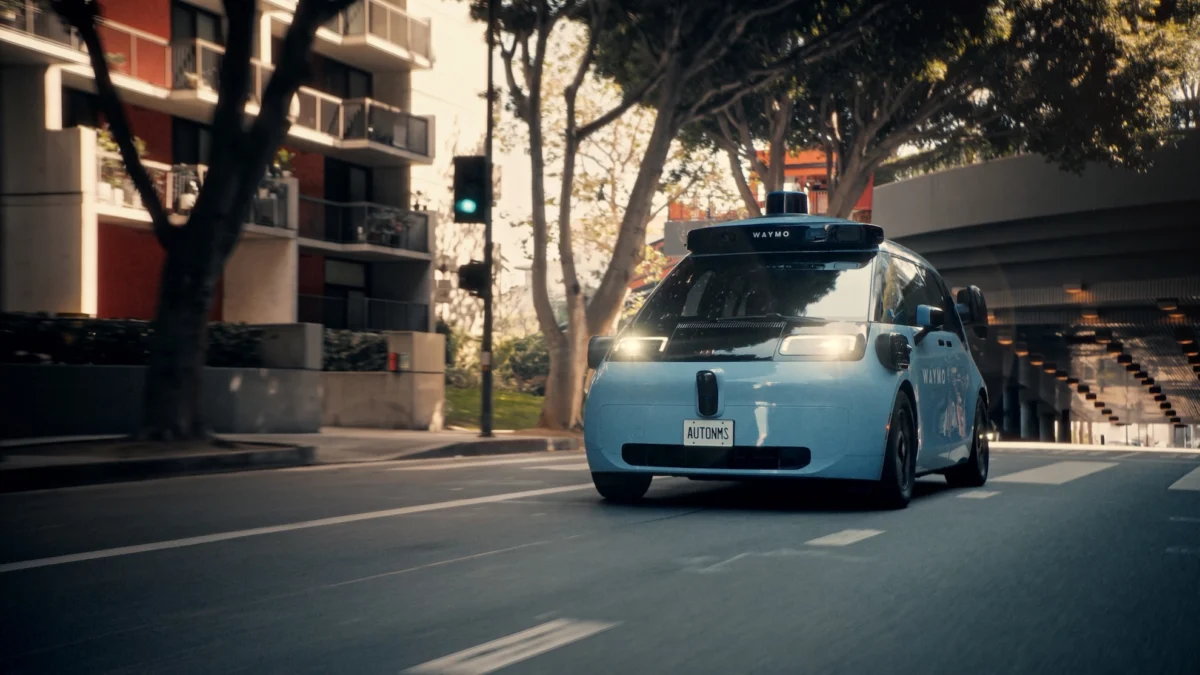
Alphabet Inc.’s autonomous driving subsidiary, Waymo, has officially opened access to its highly anticipated, next-generation robotaxi—dubbed the "Ojai"—to all riders across its primary operating territories of Los Angeles, Phoenix, and San Francisco. This rollout represents a watershed moment for the ride-hailing pioneer as it transitions from a high-cost proof-of-concept phase to a commercially viable, mass-scale business model.
The Ojai, a custom-designed electric vehicle built in partnership with Chinese automotive conglomerate Geely Holding Group, is engineered to significantly lower the capital expenditures associated with fleet manufacturing, operation, and maintenance. By introducing a vehicle specifically designed for ride-hailing, Waymo aims to solve the unit-economic challenges that have long plagued the autonomous vehicle (AV) sector.
1. Main Facts: The Rollout of the Ojai and the 6th-Gen Waymo Driver
The commercial deployment of the Ojai (pronounced "oh-hi") marks the beginning of the end for Waymo’s reliance on its previous flagship vehicle, the Jaguar I-Pace. Currently, Waymo operates a fleet of approximately 300 Ojai vehicles alongside its existing Jaguar fleet. For now, riders booking a trip through the Waymo One app in San Francisco, Los Angeles, or Phoenix may be randomly matched with either vehicle. However, the company has confirmed that once Ojai production scales to sufficient volumes, users will have the option to specifically select their preferred vehicle type.
+-----------------------------------------------------------------------------+
|                            THE WAYMO OJAI AT A GLANCE                        |
+-----------------------------------------------------------------------------+
|  • Vehicle Platform:  Zeekr SEA-M (Geely Holding Group)                      |
|  • Autonomous Tech:   6th-Generation Waymo Driver (Modular architecture)     |
|  • AI Integration:    Google Gemini AI (In-car voice assistant)              |
|  • Active Markets:    Los Angeles, Phoenix, San Francisco                    |
|  • Future Markets:    Denver, Las Vegas, San Diego (Expected late 2024/2025) |
|  • Current Fleet:     ~300 Ojai units commercially active                    |
+-----------------------------------------------------------------------------+
Key Technical and Design Innovations
Unlike the Jaguar I-Pace—a luxury passenger SUV retrofitted with autonomous sensors—the Ojai is built on Zeekr’s proprietary SEA-M (Sustainable Experience Architecture-Mobile) platform. This platform was developed specifically for autonomous ride-hailing and logistics applications, offering several distinct advantages:
- Optimized Cabin Space: By eliminating traditional driver controls like steering wheels and pedals (in its fully realized autonomous configuration) and utilizing a flat-floor design, the Ojai maximizes passenger legroom and cargo capacity.
- Accessibility: The vehicle features a low step-in height, wide-opening sliding doors, and a B-pillarless design, making entry and exit significantly easier for passengers, including those with mobility challenges.
- The 6th-Generation Waymo Driver: The Ojai is the debut vehicle for Waymo’s latest self-driving hardware and software suite. This system is highly modular, allowing Waymo to apply the same sensor and compute architecture to various vehicle form factors, from passenger minivans to class-8 commercial trucks, reducing engineering costs.
- Google Gemini AI Integration: To elevate the rider experience, Waymo has integrated Google’s Gemini large language model (LLM) directly into the vehicle’s passenger interface. Acting as an intelligent in-car assistant, Gemini allows passengers to converse naturally with the vehicle, ask for route modifications, inquire about local landmarks, or adjust climate and entertainment settings using conversational speech.
Beyond its current operating zones, Waymo announced plans to expand its commercial footprint—and the Ojai fleet—into Denver, Las Vegas, and San Diego later this year.
2. Chronology: The Evolution of Waymo’s Fleet
The transition to the Ojai is the culmination of a fifteen-year hardware and platform journey that began in the early days of Google’s self-driving car project.
[2009] Google Self-Driving Car Project Founded (Toyota Prius & Lexus RX retrofits)
  │
[2014] "Firefly" Prototype Unveiled (Custom-built, steering-wheel-free pod)
  │
[2016] Project spins out as Waymo under Alphabet; partners with FCA (Chrysler Pacifica)
  │
[2018] Waymo orders up to 20,000 Jaguar I-Pace luxury EVs for premium fleet transition
  │
[2021] Waymo announces strategic partnership with Geely's Zeekr brand to co-develop the Ojai
  │
[2024] Ojai enters commercial passenger service in SF, LA, and Phoenix; expansion planned
The Retrofit Era (2009–2015)
In its infancy, Google’s self-driving project relied on aftermarket retrofits of consumer vehicles, most notably the Toyota Prius and the Lexus RX450h. These vehicles were mounted with bulky, expensive, roof-top LiDAR domes and heavy trunk-mounted computing stacks. While effective for software validation, they were never intended for commercial scale.
The Firefly Experiment (2014–2017)
In 2014, Google revealed "Firefly," a custom-built, two-seater prototype with no steering wheel, gas pedal, or brake pedal. Firefly was designed to test the limits of fully driverless interaction and passenger comfort. Though retired in 2017 to focus on integrating self-driving systems into mass-produced vehicles, Firefly laid the philosophical foundation for the Ojai’s passenger-first cabin layout.
The Minivan and Luxury EV Era (2016–2023)
Following its spin-out into an independent Alphabet subsidiary in late 2016, Waymo partnered with Fiat Chrysler Automobiles (FCA) to integrate its system into hybrid Chrysler Pacifica minivans. The Pacifica became the workhorse of Waymo’s early public testing in Arizona.
In 2018, seeking an all-electric, premium platform, Waymo announced a major supply agreement with Jaguar Land Rover to procure and retrofit up to 20,000 Jaguar I-Paces. While the I-Pace established Waymo as a viable commercial operator in dense urban environments like San Francisco, its high base-vehicle cost and complex retrofitting process made it a costly long-term option for achieving profitability.
The Zeekr Partnership and Ojai Development (2021–Present)
Recognizing the economic limitations of luxury passenger cars, Waymo partnered with Geely’s premium EV brand, Zeekr, in late 2021. The goal was to design a clean-sheet, purpose-built robotaxi from the ground up. Over the next three years, the partners refined the concept, transitioning from a conceptual design to a production-ready vehicle capable of surviving the rigorous, high-mileage demands of commercial ride-hailing.
3. Supporting Data: Production Targets, Imports, and Tariff Pressures
Data compiled by New York-based independent research firm MoffettNathanson highlights the scale of Waymo’s commitment to the Ojai platform. By analyzing shipping manifests, customs declarations, and import receipts, the firm has tracked a massive surge in vehicle deliveries from China to the United States.
Fleet Growth and Import Projections
According to MoffettNathanson, Waymo is on pace to import approximately 5,000 Ojai vehicles to the United States by the end of 2026. To put this in perspective, this figure is more than double the size of Waymo’s active Jaguar I-Pace fleet.
   Projected Ojai Fleet Growth (Cumulative Imports by End of Year)

   6,000 +----------------------------------------------------------------+
         |                                                                |
   5,000 |                                                          *     |
         |                                                                |
   4,000 |                                                                |
         |                                                                |
   3,000 |                                                                |
         |                                                                |
   2,000 |                                                                |
         |                                                   *            |
   1,000 |                                                                |
         |                                     *                          |
       0 +-------------------------------------+--------------------------+
                                             2024                       2026
The acceleration of imports is already visible in recent shipping data. In July alone, 725 Ojai vehicles arrived at U.S. ports, signaling that the supply chain is operating at high capacity.
The Economic Impact of Import Tariffs
While the Ojai is designed to be highly cost-effective to manufacture, its financial profile is heavily influenced by geopolitical trade policies. Under current U.S. trade rules, electric vehicles manufactured in China face steep import tariffs. These duties significantly increase the landed cost of each Zeekr vehicle before it ever receives its autonomous driving hardware.
To mitigate security risks and comply with emerging regulatory frameworks, Waymo and Zeekr have structured their manufacturing and assembly process into a two-stage, dual-country pipeline:
+--------------------------+          +--------------------------+
|  Stage 1: Ningbo, China  |  ----->  |   Stage 2: Mesa, Arizona  |
|  • Zeekr SEA-M Platform  |          |   • Install Waymo Driver |
|  • No Chinese Software   |          |   • Add Sensors & Compute|
|  • Base Chassis / Glider |          |   • Final Calibration    |
+--------------------------+ +--------------------------+- Chassis Manufacturing (China): The base Zeekr vehicle is assembled at Geely’s state-of-the-art facilities in China. Crucially, these vehicles are shipped as "gliders" or basic chassis units, completely devoid of Chinese connected-car software, telematics, or autonomous sensors. This addressess concerns regarding foreign data access.
- Autonomous Integration (United States): Once the base vehicles arrive in the United States, they are transported to Waymo’s dedicated integration facility in Mesa, Arizona. Here, Waymo engineers install the 6th-generation Waymo Driver, including proprietary LiDAR, radar, cameras, onboard compute platforms, and the specialized software that runs the vehicle.
4. Official Responses: What the Companies and Analysts Say
The launch of the Ojai has drawn comments from Waymo leadership, industry analysts, and trade experts, all highlighting the delicate balance between technological progress and geopolitical headwinds.
Waymo’s Stance on Fleet Optimization
A Waymo spokesperson emphasized that the transition to the Ojai is a crucial step in lowering operational costs:
"Our partnership with Zeekr is focused on delivering a rider-first experience that does not compromise on safety, accessibility, or comfort. The Ojai represents the realization of our vision for a purpose-built robotaxi. While the Jaguar I-Pace has been an incredible vehicle for proving our technology in dense urban environments, the Ojai is built to scale. Its durability, ease of maintenance, and modular 6th-generation hardware will allow us to expand our service to more people, in more cities, much more efficiently."
Analyst Perspectives on Trade Hurdles
Wall Street analysts have pointed out that while the vehicle’s engineering is a major achievement, its dependence on Chinese manufacturing introduces significant policy risks. An automotive supply chain analyst at MoffettNathanson noted:
"Waymo’s strategy with the Ojai is brilliant from a product and passenger perspective, but it runs headfirst into Washington’s current stance on Chinese automotive imports. Even with the vehicle being completed in Arizona, the base platform is subject to heavy tariffs that eat into the cost savings Waymo hoped to achieve by partnering with Geely. The fact that Waymo is still importing these vehicles at such a rapid pace—725 in a single month—shows how vital this platform is to their scaling ambitions. They are willing to absorb the tariff penalty to get a purpose-built robotaxi on the road today."
5. Implications: The Future of Autonomous Ride-Hailing
The widespread deployment of the Ojai carries profound implications for the autonomous vehicle industry, the future of urban transportation, and the ongoing trade tensions between the United States and China.
1. Achieving Unit Economics and Profitability
For years, skeptics have argued that robotaxis are a financial sinkhole due to the astronomical costs of the vehicles. A retrofitted luxury EV like the Jaguar I-Pace can easily cost upwards of $150,000 to $200,000 once sensors and computing power are added.
By utilizing Zeekr’s mass-produced SEA-M platform, Waymo can leverage Geely’s massive purchasing power and manufacturing efficiencies. The Ojai’s simplified assembly, lower component costs, and modular 6th-generation sensor suite are designed to bring the total cost of each vehicle down significantly, paving a clearer path to profitability for Alphabet’s "Other Bets" division.
                      VEHICLE PLATFORM COMPARISON

+-------------------------+----------------------------------------------------+
| Feature                 | Jaguar I-Pace (Retrofit) | Waymo Ojai (Purpose-Built)
+-------------------------+----------------------------------------------------+
| Base Vehicle Type       | Premium Passenger SUV    | Purpose-Built Ride-Hail EV
| Interior Space          | Standard 5-Seat Cabin    | Ultra-Spacious, Flat Floor
| Sliding Doors           | No                       | Yes (Easy entry/exit)
| Self-Driving Tech       | 5th-Gen Waymo Driver     | 6th-Gen Modular System
| Manufacturing Origin    | Austria (Magna Steyr)    | China (Zeekr / Geely)
| Scalability             | Limited / Expensive      | High / Optimized for Volume
+-------------------------+----------------------------------------------------+
2. Navigating Geopolitical and Regulatory Risks
The Ojai’s reliance on a Chinese-manufactured platform lands it in the middle of a highly charged political environment. The Biden administration has taken a firm stance against Chinese electric vehicles, citing both economic protectionism and national security concerns regarding connected vehicle technologies.
By shipping the vehicles without any active Chinese software or connectivity hardware, and completing all sensor integration and software installation on U.S. soil, Waymo has designed a process to satisfy regulators. However, if the U.S. government moves forward with proposed bans on any Chinese-manufactured hardware in autonomous systems, Waymo may be forced to find an alternative manufacturing partner, which could disrupt its growth plans.
3. Redefining the Passenger Experience
The integration of Google’s Gemini AI into the Ojai marks a major shift in how passengers interact with autonomous vehicles. In traditional ride-hailing, passengers have limited control over their environment and must rely on the driver for adjustments. In the Ojai, the vehicle becomes an interactive companion.
This level of natural language control could set a new industry standard, forcing competitors like Amazon’s Zoox, General Motors’ Cruise, and Tesla to invest more heavily in their own natural language processing and in-cabin passenger experiences.
4. Pressure on the Competitive Landscape
The rapid deployment of the Ojai places immense pressure on Waymo’s rivals:
- Cruise: After halting operations due to a pedestrian accident in late 2023, GM’s Cruise has slowly resumed testing with safety drivers, but its custom-built, steering-wheel-free vehicle, the Origin, was indefinitely shelved due to regulatory hurdles.
- Zoox: Amazon’s autonomous vehicle division is currently testing its custom, bi-directional carriage in limited areas, but it has not yet achieved the commercial scale or geographic reach of Waymo.
- Tesla: Despite high-profile announcements regarding its "Cybercab," Tesla’s Full Self-Driving (FSD) system still requires active driver supervision, leaving Waymo as the clear leader in true driverless commercial operations.
By scaling a purpose-built, highly advanced robotaxi across multiple major metropolitan areas, Waymo is solidifying its lead in the autonomous space. The success of the Ojai will likely determine whether driverless ride-hailing remains a niche luxury service or becomes a ubiquitous, profitable component of modern urban transit.
