



By Phil Neuffer
Published July 23, 2026
Overview: A New Era of Trade Enforcement
In a sweeping move that signals a hardening of U.S. trade policy, the Trump administration has finalized a new tariff framework targeting 60 major trading partners. Effective this Friday, the United States will impose duties of either 10% or 12.5% on a vast array of imported goods. This strategic pivot coincides with the expiration of the temporary Section 122 global tariffs that have been in place since early 2026, marking a transition from broad, emergency-based levies to a more targeted—yet equally disruptive—enforcement mechanism focused on international labor standards.
The new levies, authorized under Section 301 of the Trade Act of 1974, follow a multi-month investigation by the Office of the U.S. Trade Representative (USTR). The probe concluded that 60 nations have failed to adequately implement or enforce bans on goods produced with forced labor. As Washington seeks to decouple U.S. consumer markets from exploitative supply chains, the administration has signaled that these measures are intended to be a long-term fixture of its trade architecture.
Chronology of Escalation
The road to these new tariffs was paved by a series of legislative and executive actions throughout 2026.
- Early 2026: Following a Supreme Court ruling that invalidated previous tariffs imposed under the International Emergency Economic Powers Act (IEEEA), the Trump administration implemented a temporary, blanket 10% global tariff under Section 122 to prevent a sudden vacuum in trade enforcement.
- March 2026: The USTR launched a formal Section 301 investigation into the labor practices of key global partners, specifically scrutinizing how effectively these nations prevent forced labor from entering their export streams.
- June 2026: U.S. Trade Representative Jamieson Greer officially proposed the new tariff structure, citing evidence that the 60 identified countries had failed to meet international benchmarks for labor compliance.
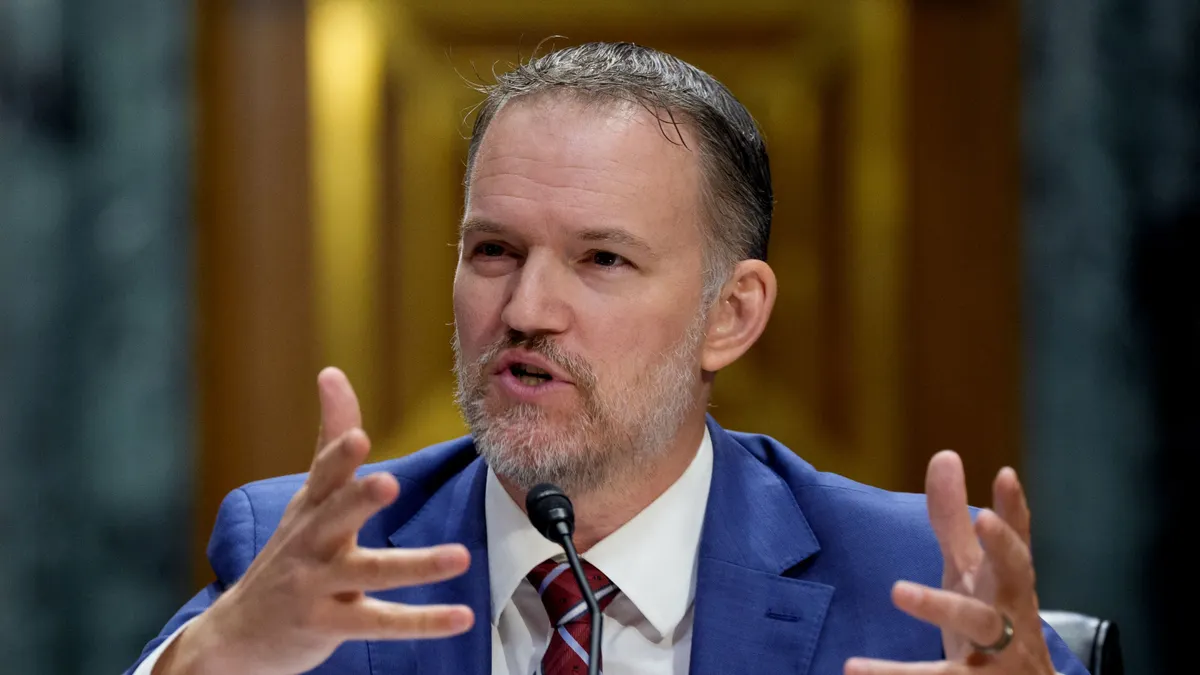
- July 22, 2026: During a Senate Finance Committee hearing, Greer defended the administration’s aggressive posture, emphasizing that the U.S. market would no longer be a haven for goods produced through human rights abuses.
- July 23, 2026: The Federal Register finalized the action, confirming that the new rates take effect on Friday, July 24, 2026.
Supporting Data and the "Net of MFN" Complexity
The scope of the new policy is immense. According to the USTR, the tariffs will cover approximately 99.4% of all U.S. imports. The list of affected nations includes major economic powers such as China, the European Union, Mexico, Japan, and South Korea.

However, the technical implementation of these tariffs contains a nuance that has sent trade lawyers and supply chain consultants scrambling. For countries with "Most-Favored Nation" (MFN) status, the new tariff will be calculated "net of the MFN duty." This means the total duty paid—the sum of the MFN rate and the new Section 301 tariff—will be capped at 10% or 12.5%, depending on the country’s classification.
Pete Mento, director of global trade advisory services at Baker Tilly, highlighted the gravity of this calculation in a recent analysis. "Those three words—’net of MFN’—may end up being the biggest story in the entire announcement," Mento noted. "If it works the way it appears, this isn’t simply another tariff stacked on top of existing duties. It could fundamentally change how the Section 301 duty is calculated for those products."
For exporters and importers, this mechanism prevents a "double-stacking" of duties that could have otherwise rendered trade with the EU or Japan prohibitively expensive. Nevertheless, the administrative burden of calculating these duties at the border is expected to cause significant friction in global logistics.
Official Responses and the Moral Rationale
The USTR’s official stance is that the tariffs are a moral imperative disguised as trade policy. In a fact sheet released alongside the Federal Register filing, the administration stated: "Despite longstanding international consensus that this practice must be eliminated, the prevalence of forced labor persists worldwide and has even escalated in recent years."
The administration argues that the failure of trading partners to police their own factories constitutes an unfair trade practice. By failing to stop forced labor, these countries allegedly lower their production costs, creating an artificial competitive advantage over U.S. manufacturers who operate under strict labor and environmental regulations.

Critics, however, suggest that the move is an extension of the administration’s "America First" protectionism. By linking human rights to tariff rates, the White House has effectively granted itself the power to adjust duties on almost any country at any time, provided they can identify a deficiency in labor enforcement.
Implications for the Global Supply Chain
The immediate impact on the global supply chain will be one of intense volatility. With the grace period for goods already in transit expiring shortly, importers have been rushing to clear customs. Goods loaded on vessels before Friday and entered for consumption by July 28 will escape the new levies, leading to a frantic week at major U.S. ports as companies attempt to beat the deadline.
1. Sectoral Exemptions
To mitigate the impact on domestic inflation, the USTR has carved out significant exemptions. These include:
- Agricultural Goods: Essential food supplies remain largely exempt to protect the U.S. grocery supply.
- Section 232 Overlap: Goods already subject to steel and aluminum tariffs under Section 232 are excluded from these new 301 levies to avoid triple-taxing the same commodities.
- Country-Specific Exclusions: Targeted exemptions exist, such as specific textile categories from Malaysia and whiskey imports from the United Kingdom, acknowledging complex bilateral dependencies.
2. The Brazil and Canada Question
The timing of these tariffs is complicated by the recent, separate levies imposed on Canada and Brazil. The administration has yet to clarify how these forced-labor tariffs will interact with the specific bilateral duties already placed on these two North American and South American partners. Industry experts warn that if these tariffs are cumulative, it could effectively halt trade in several key industrial categories.
3. Looming Uncertainties: The Manufacturing Probe
Businesses are also bracing for the conclusion of a separate Section 301 probe into global manufacturing capacity. Launched in the same timeframe as the labor probe, this investigation seeks to determine if global overproduction—particularly in China—is damaging U.S. domestic manufacturing. If the USTR follows the same logic used in the forced labor case, more tariffs could be on the horizon, potentially creating a "rolling" environment of trade uncertainty that lasts well into 2027.

Economic Outlook: A New Reality
The transition away from the temporary Section 122 tariff to this permanent Section 301 structure represents a fundamental shift in how the U.S. manages its borders. For years, the global trade regime relied on predictable, negotiated MFN rates. Today, that system is being replaced by a reactive, punitive, and highly granular approach to trade.
As retailers, manufacturers, and logistics providers adjust to this new reality, the cost of "compliance" has become a central line item in corporate balance sheets. With 99.4% of imports now under the watchful eye of the USTR, the era of frictionless global trade appears to be firmly in the rearview mirror. Whether these tariffs succeed in their stated goal of eradicating forced labor remains to be seen, but their effect on the cost of doing business is already being felt in boardrooms across the globe.
As we look toward the remainder of the year, all eyes remain on Washington. With the administration showing no signs of de-escalating its trade enforcement strategy, global partners are now tasked with the difficult challenge of re-aligning their labor regulations to meet U.S. demands or facing the permanent reality of a 10% to 12.5% tax on their access to the world’s largest consumer market.
