





By Editorial Staff
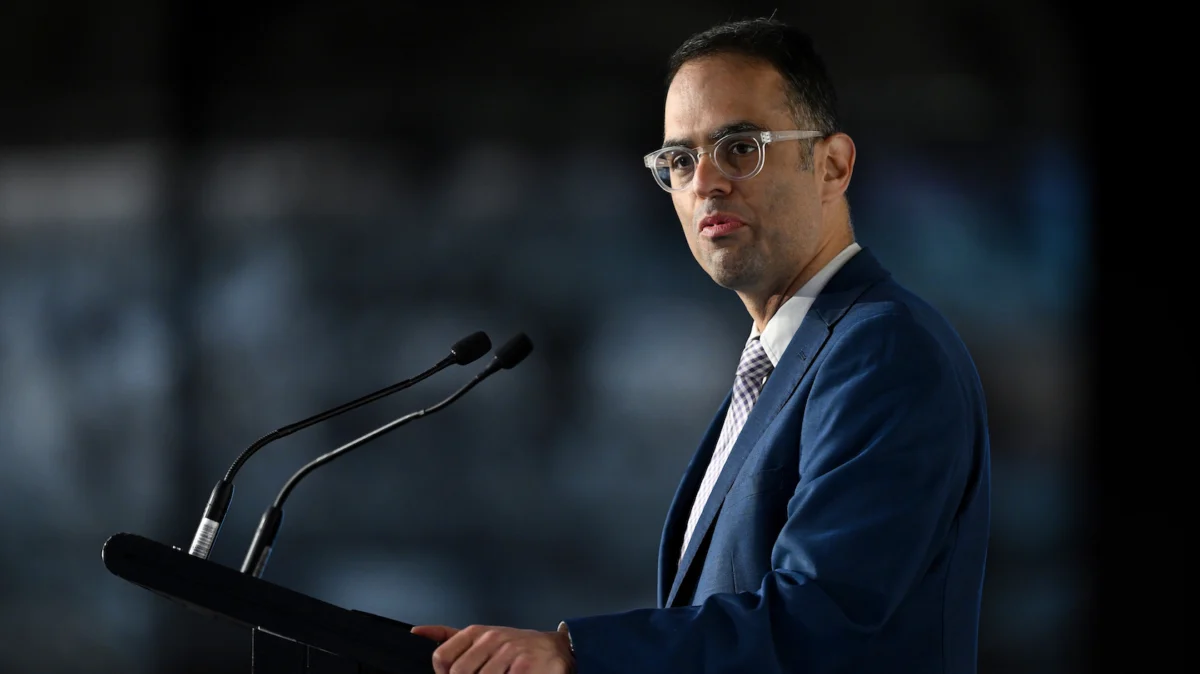
In a significant move aimed at cementing New South Wales’ position as a global leader in innovation, the NSW government has unveiled plans for a $150 million Science and Innovation Fund. The proposed initiative, announced by NSW Treasurer Daniel Mookhey at the Sydney Investment Summit, seeks to bridge the infamous "valley of death" between academic research and commercial viability. However, the policy comes with a significant caveat: the funding is contingent upon a Labor victory in the upcoming 2027 state election.
The proposal represents a fundamental shift in how the state government views the role of public universities, moving from passive educators to active engines of economic growth. By providing the necessary capital to spin out university-born technologies, the government aims to catalyze the development of a robust "deep tech" ecosystem in Sydney and beyond.
The Strategic Vision: Bridging Research and Revenue
The proposed $150 million fund is designed to act as a co-investment vehicle. Rather than operating as a standalone grant program, the fund is intended to partner directly with university-affiliated startup hubs—such as UNSW Founders, UTS Startups, and Western Sydney University’s LaunchPad—to inject capital into high-potential, research-heavy ventures.
Treasurer Daniel Mookhey highlighted that while New South Wales universities consistently rank among the best in the world for research output, the state has historically struggled to retain the intellectual property and the subsequent economic benefits of that research. By facilitating the commercialization of breakthroughs in fields like quantum computing, biotechnology, and advanced manufacturing, the fund aims to keep the "next big thing" firmly rooted in NSW soil.
Chronology: From Concept to Campaign Promise
The journey toward this policy announcement reflects months of consultation between the Treasury, Investment NSW, and the office of the NSW Chief Scientist and Engineer, Professor Hugh Durrant-Whyte.
- Q1 2026: Initial discussions begin regarding the state’s lagging commercialization metrics compared to international peers in Silicon Valley and Israel.
- Q3 2026: Professor Hugh Durrant-Whyte facilitates a series of roundtables with university vice-chancellors to identify barriers to startup formation.
- September 2026: Treasurer Daniel Mookhey formally unveils the $150 million Science and Innovation Fund at the Sydney Investment Summit.
- 2027 (Pre-election): The government intends to finalize the structural framework and governance model for the fund.
- FY2028: Subject to the outcome of the 2027 state election, the fund is scheduled to commence operations, marking the first tranche of capital deployment.
Supporting Data: Why NSW Needs a Structural Shift
Despite the presence of world-class institutions, the conversion rate of university research into high-growth startups in Australia remains lower than that of OECD leaders. According to recent industry reports, while NSW produces a high volume of patents, a significant percentage are either abandoned or licensed to international entities due to a lack of domestic "seed-to-series" funding.
The "valley of death"—the period where a venture has exhausted research grants but has not yet developed a product stable enough for private venture capital—is where most Australian university spinouts perish. The $150 million fund is explicitly designed to bridge this gap, providing the "patient capital" required to transition from a laboratory prototype to a Minimum Viable Product (MVP).
Official Responses and Governance
The collaboration between Treasury, Investment NSW, and the Chief Scientist’s office suggests a multi-disciplinary approach to fund management.
"We are not looking to pick winners in the traditional sense," a Treasury spokesperson noted following the summit. "We are looking to de-risk the transition from the lab bench to the market. By partnering with existing incubators that already have deep knowledge of their specific research faculties, we ensure that the capital is directed toward ventures with genuine commercial potential."
However, the announcement has been met with cautious optimism by the venture capital sector. Industry observers note that while the capital is welcome, the success of the fund will depend entirely on the governance structure. Questions regarding whether the fund will be managed by public servants or a board of independent industry experts remain unanswered.
Implications: A New Era for NSW Innovation
If the Labor government is re-elected and the fund is implemented, the implications for the NSW startup landscape could be profound.
1. Retention of Intellectual Property
One of the primary goals is to prevent the "brain drain" that occurs when researchers move abroad to commercialize their work. By providing local funding, the state hopes to encourage local founders to build their companies in Sydney, contributing to tax revenue and job creation within the state.
2. Strengthening University Ecosystems
Institutions like UNSW and UTS have already built impressive internal pipelines for student and researcher-led startups. The $150 million fund acts as a force multiplier for these ecosystems. It provides the "Series A" or "Seed" validation that encourages private investors to follow, effectively crowding in private capital that might otherwise remain on the sidelines.
3. The Political Risk
The most critical implication is the inherent political risk. By making the fund contingent on the 2027 election, Labor has turned the state’s innovation policy into a campaign platform. This forces the electorate to weigh the long-term benefits of a revitalized tech sector against the current fiscal priorities of the state. It also leaves the initiative vulnerable to cancellation should an opposition government take office.
Critical Questions Remaining
As the policy moves toward the campaign cycle, stakeholders are calling for clarity on several key operational metrics that were absent from the initial announcement:
- Investment Caps: Will there be a cap on the amount invested in any single spinout?
- Equity Stakes: What percentage of equity will the state government take in these startups, and how will it be managed?
- Governance: Will the investment committee be comprised of academic peers, government officials, or private sector venture capitalists?
- Accessibility: How will early-stage researchers without existing connections to university accelerators apply for this funding?
Without these details, the $150 million figure remains a headline number rather than a concrete roadmap. Industry experts suggest that the government must move quickly to define these parameters to build trust within the investment community.
Conclusion: A High-Stakes Bet
The $150 million science and innovation fund represents a bold, if somewhat speculative, investment in the future of the NSW economy. It acknowledges that the traditional models of academic research are no longer sufficient to compete in a global economy driven by high-velocity technological advancement.
For the researchers at the University of Sydney, Macquarie, and beyond, the fund offers a glimmer of hope for a more streamlined path to market. For the voters of New South Wales, it presents a clear choice: a future where the state actively plays a role in the high-growth tech sector, or a continuation of the status quo.
As the 2027 election approaches, all eyes will be on the fine print. Whether this fund becomes the bedrock of a new "Silicon Sydney" or remains a promise on a campaign brochure will depend on the government’s ability to turn political ambition into a robust, transparent, and professionally managed investment reality. For now, the innovation sector remains in a holding pattern, waiting to see if the state’s rhetoric will be matched by structural, long-term commitment.
