




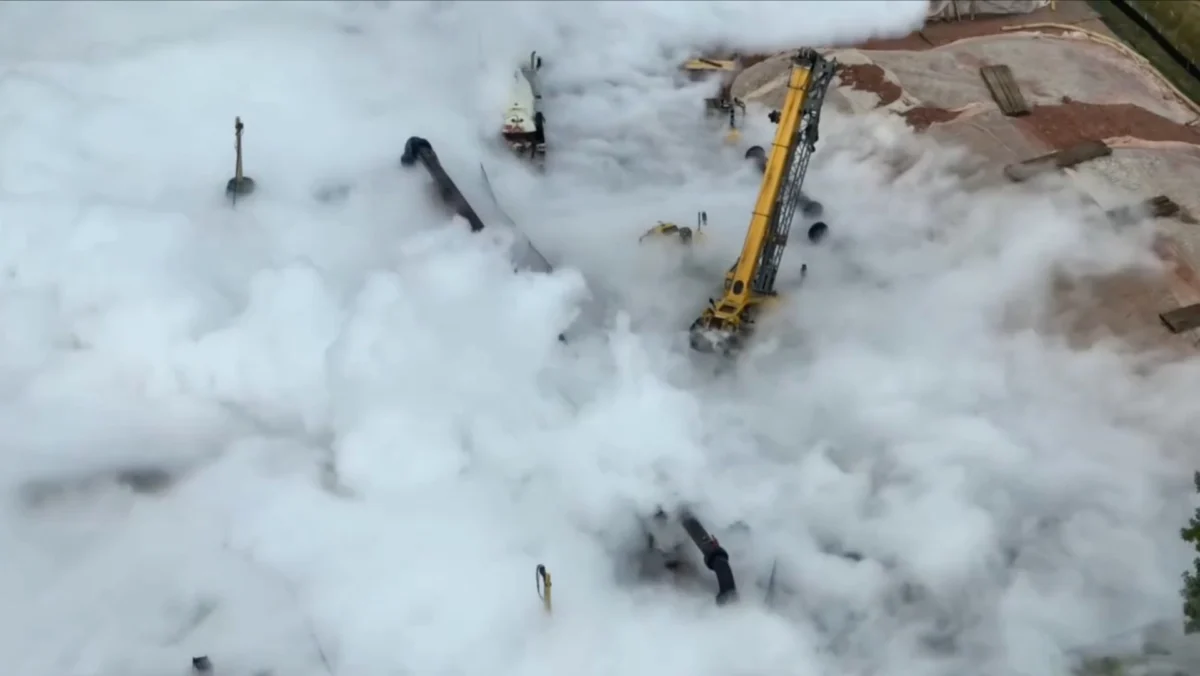
In a dramatic incident that underscores the high-stakes nature of heavy industrial infrastructure, a runaway semi-truck crashed into a critical section of the Enbridge Line 5 pipeline in Saxon, Wisconsin, earlier this week. The collision triggered a significant emergency response, forced the evacuation of nearby residents, and halted operations on a project already under intense environmental and legal scrutiny.
While professional operators are expected to maintain the highest standards of safety, the mechanical or procedural failure that allowed a heavy-duty vehicle to roll into a live construction zone serves as a stark reminder of the fragile interface between human error and industrial risk.
The Incident: A Routine Site Turns into a Hazmat Zone
The incident occurred at an active excavation site in Iron County, located on the northern edge of Wisconsin. According to reports from local law enforcement and emergency management agencies, the semi-truck—which was unoccupied at the time—somehow broke free from its parked position, gaining momentum before striking a portion of the Enbridge Line 5 pipeline.
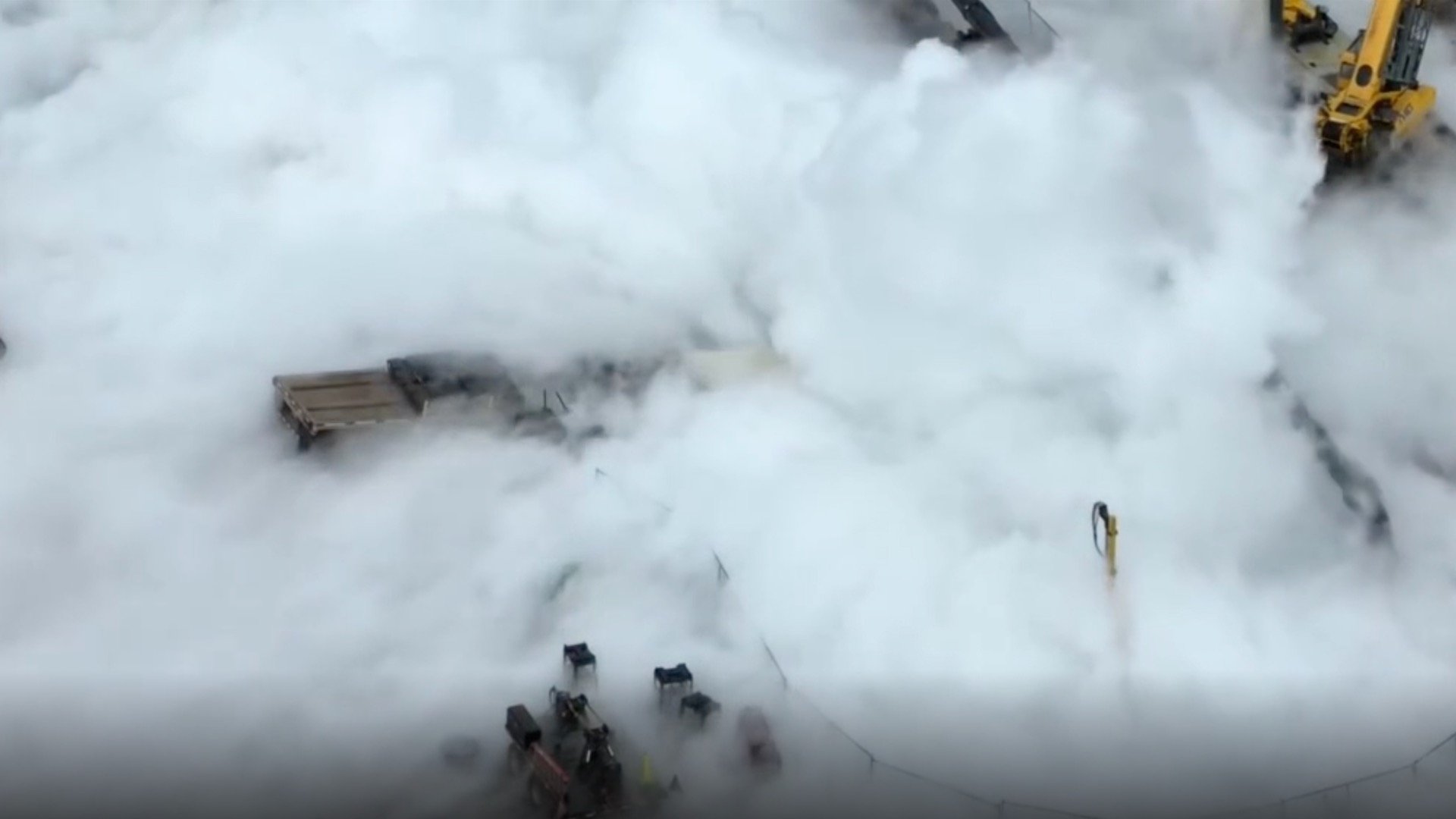
The impact caused an immediate breach, releasing a massive plume of natural gas into the atmosphere. Witnesses on the scene described a terrifying scene as clouds of vapor began to envelop the heavy construction equipment, including tall cranes, effectively turning the site into a potential ignition trap.
Local authorities, including the Iron County Sheriff’s Office, acted swiftly to establish a security perimeter. A no-fly zone was promptly imposed over the area to prevent any spark or ignition source from reaching the site, while emergency services were dispatched to mitigate the volatile environment.
Chronology of the Emergency Response
The unfolding of the event followed a rapid escalation and containment timeline:
- Initial Impact: The runaway truck collided with the pipeline infrastructure in the early hours of the week, triggering an immediate and substantial release of pressurized natural gas.
- Emergency Dispatch: Local fire and rescue departments, along with specialized hazardous materials (hazmat) teams, arrived on the scene within minutes.
- Containment: Enbridge crews were able to isolate the damaged section of the pipeline, effectively stopping the flow of petroleum products and gases through that specific segment.
- Evacuation and Power Outage: As a precautionary measure to prevent an explosion, electricity was cut to approximately 50 nearby homes, leaving residents without power while air quality monitoring commenced.
- Monitoring Phase: Throughout the following 48 hours, hazardous materials technicians conducted systematic testing for combustible gases, hydrogen sulfide, carbon monoxide, and various volatile organic compounds (VOCs) within a one-mile radius of the breach.
- Stability: By mid-week, reports from Wisconsin Public Radio confirmed that while crews remained on-site for remediation, ambient air quality readings had returned to safe levels, indicating that the immediate threat to public health had been successfully neutralized.
Supporting Data: The Anatomy of the Line 5 Pipeline
To understand the severity of this incident, one must look at the vital role the Line 5 pipeline plays in North American energy logistics.
Constructed in 1953, the Line 5 pipeline is a 645-mile arterial network stretching from Superior, Wisconsin, to Sarnia, Ontario. It is a critical conduit, transporting up to 23 million gallons of crude oil and natural gas liquids (NGLs) daily. The liquids carried through these lines are foundational to the production of propane, which remains a primary heating fuel for millions of residents in the Midwest and Canada.
The specific site in Saxon is currently the focus of a massive $1 billion relocation project. This project was initiated specifically to reroute the pipeline away from the lands of the Bad River Native American tribe, following years of legal disputes regarding the pipeline’s proximity to reservation territory and the potential ecological impact of a spill in the region’s delicate watershed.
The NGLs that escaped during the crash are particularly concerning. Unlike crude oil, which creates a visible, localized slick, NGLs evaporate rapidly upon release. While this minimizes the risk of ground-level contamination in the traditional sense, it creates an invisible, highly flammable, and potentially toxic cloud that poses an acute risk of asphyxiation and combustion.
Official Responses and Enbridge’s Stance
Enbridge, the Canada-based energy giant, has issued statements confirming that no injuries were sustained during the collision. The company emphasized that its response protocols were activated immediately upon detection of the pressure drop.
"The safety of the community and the environment remains our primary focus," an Enbridge spokesperson stated. "We are working closely with local authorities to investigate how the vehicle was able to mobilize and roll into the excavation zone."
However, the company has remained notably silent on the specific mechanics of the "roll-away." When asked by local media why a heavy-duty truck, which is typically equipped with robust air-brake systems and parking safety protocols, would move on its own, Enbridge deferred to the ongoing investigation. The incident has raised questions regarding safety protocols at construction sites where heavy machinery is operated in close proximity to high-pressure energy transport systems.
Implications: Infrastructure Safety and Oversight
The implications of this accident reach far beyond a simple case of a truck failing to set its parking brake.
The Human Factor in Industrial Safety
Industry experts note that "roll-aways" are a known, albeit preventable, issue. Whether caused by mechanical failure or human negligence, the incident serves as a case study in why safety redundancies are required at every level of industrial operations. The fact that a single vehicle could compromise a multibillion-dollar energy project highlights a vulnerability that regulators may soon be forced to address through more stringent on-site vehicle safety mandates.
Environmental and Legal Scrutiny
The Line 5 pipeline has been a flashpoint for environmental advocacy groups for years. Critics of the pipeline argue that this incident is further proof that the aging infrastructure—and the construction work surrounding it—poses an unacceptable risk to the environment. The leak will likely be used as leverage in ongoing legal challenges, with opponents citing the breach as evidence that even "contained" construction sites can lead to dangerous environmental exposure.
The Grid and Public Utility
The necessity of cutting power to 50 residents highlights the fragility of local infrastructure during industrial emergencies. While the move was necessary to prevent a catastrophic explosion, it underscores the disruption that can be caused to rural communities when they live in the shadow of major energy corridors.
Conclusion: A Lesson in Vigilance
As the investigation into the Saxon incident continues, the focus will likely shift to the maintenance records of the truck involved and the safety protocols in place at the Enbridge construction site.
While the outcome could have been significantly worse—had the gas cloud ignited, the consequences would have been catastrophic—the event serves as a sobering reminder of the volatility inherent in energy transportation. For the professional driver, the incident is a cautionary tale of the importance of adherence to safety checklists. For the energy sector, it is a reminder that in the eyes of the public, the margin for error is nonexistent.
As we move toward a future that relies on both legacy energy infrastructure and the logistical challenges of transitioning to new, safer routes, incidents like this demand a higher degree of accountability. For those living near the pipeline, the hope is that this "embarrassing" mistake serves as the final wake-up call for improved safety management at every point along the line.
