





In the pursuit of aerodynamic efficiency, minimalist aesthetics, and high-tech appeal, the modern automotive industry has increasingly abandoned mechanical door latches in favor of electronic, push-button systems. However, this design evolution has introduced a critical, potentially life-threatening vulnerability: occupant entrapment during collisions or vehicle fires.
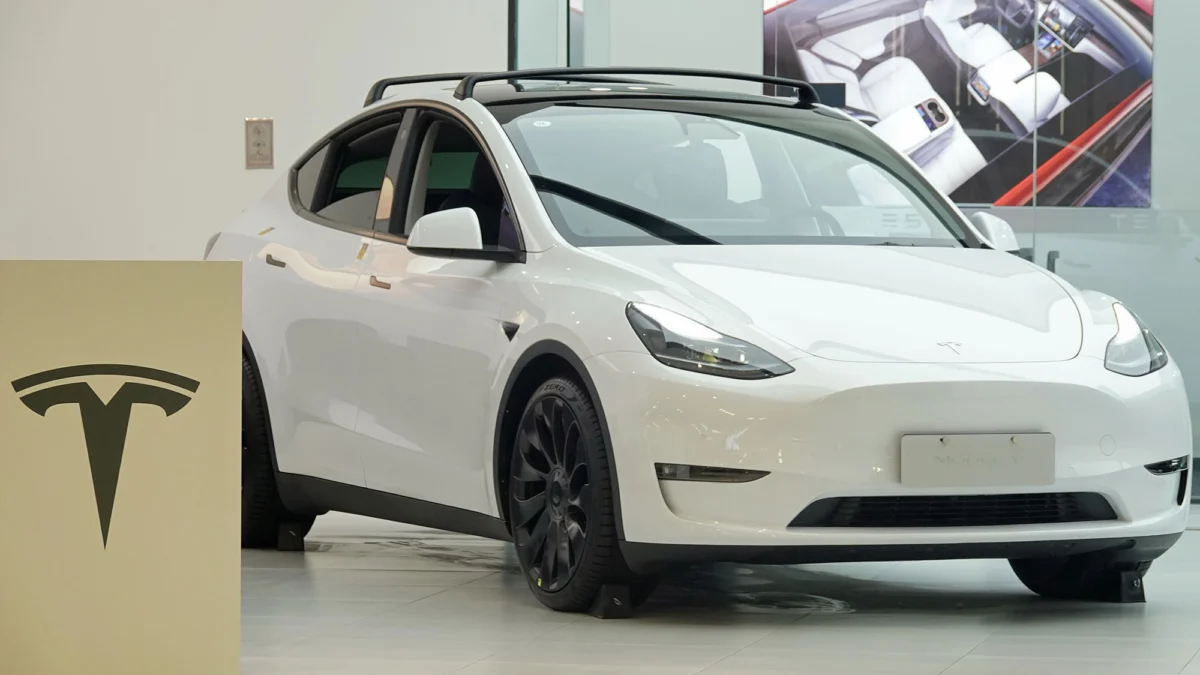
In a massive regulatory action highlighting these dangers, Tesla is recalling just under 3 million vehicles in China. The recall is part of a sweeping, nationwide safety campaign aimed at alerting vehicle owners to the existence and location of hidden manual emergency door releases. These manual backups are designed to work when a vehicle loses electrical power, but they are often so well-hidden that passengers cannot find them in moments of extreme crisis.
Main Facts: The Scale of the China Recalls and the Core Hazard
The recall, first reported by Reuters, represents a coordinated effort by Chinese market regulators to address a systemic safety issue plaguing modern electric vehicles (EVs). Eleven automakers operating in China are issuing concurrent recalls related to electronic door latches and hidden emergency releases.
Among the affected manufacturers, Tesla represents the largest share of recalled vehicles, reflecting its dominant market position and its early role in popularizing electronic latches. Alongside Tesla, major Chinese domestic EV manufacturers and premium brands are also participating in the safety action. These include:
- Xiaomi
- Xpeng
- Geely-owned Zeekr
- Lynk & Co.
+-------------------------------------------------------------------------+
|                      CHINA DOOR LATCH RECALL SUMMARY                    |
+------------------------------------+------------------------------------+
| Total Affected Manufacturers       | 11 automakers                      |
+------------------------------------+------------------------------------+
| Key Brands Involved                | Tesla, Xiaomi, Xpeng, Zeekr,       |
|                                    | Lynk & Co.                         |
+------------------------------------+------------------------------------+
| Tesla Recall Volume                | Just under 3,000,000 vehicles      |
+------------------------------------+------------------------------------+
| Primary Remediation Strategy       | Physical warning labels (9 brands) |
|                                    | Over-the-air (OTA) software updates|
+------------------------------------+------------------------------------+
Nine of the eleven affected manufacturers, including Tesla, have committed to installing physical warning labels inside their vehicles. These labels are designed to clearly guide occupants to the manual emergency door releases. Furthermore, all eleven companies will deploy over-the-air (OTA) software updates to modify door-latching logic, optimize power distribution to doors during emergencies, and provide digital educational alerts on the vehicles’ infotainment screens.
The core safety concern is simple but catastrophic: in the event of a severe crash, water immersion, or battery fire, a vehicle’s 12-volt electrical system often fails instantly. When power is lost, electronic door buttons cease to function. If occupants do not know how to find or operate the manual mechanical override—which is often intentionally concealed to preserve the cabin’s clean visual lines—they can become trapped inside a burning or sinking vehicle.
Chronology: The Journey from High-Tech Novelty to Safety Crisis
The transition from mechanical door handles to electronic latches did not happen overnight, but rather unfolded over a decade of rapid EV design iteration. Understanding how the industry arrived at this regulatory reckoning requires tracing the timeline of these design choices and the subsequent safety incidents that triggered government intervention.
+-----------------------------------------------------------------------------+
|                          CHRONOLOGY OF THE DOOR SAFETY CRISIS               |
+-----------------------------------------------------------------------------+
|                                                                             |
|  [2012-2020] ---> Tesla popularizes flush, motorized exterior handles and   |
|                   interior electronic door-release buttons.                 |
|                                                                             |
|  [Late 2024] ---> Emerging reports of occupant entrapment and difficulties |
|                   faced by first responders during high-profile EV fires.   |
|                                                                             |
|  [Mid 2025]  ---> Ford issues a temporary stop-sale and recall of the       |
|                   Mustang Mach-E over electronic door latch malfunctions.   |
|                                                                             |
|  [Sept 2025] ---> U.S. NHTSA launches an investigation into Tesla’s door-    |
|                   latching systems following a Bloomberg expose.            |
|                                                                             |
|  [Feb 2026]  ---> China concludes a 2-year review; announces a complete ban |
|                   on hidden, electronically actuated handles from 2027.     |
|                                                                             |
|  [Aug 2026]  ---> China mandates recalls for 11 automakers, including       |
|                   Tesla's 3-million-vehicle campaign.                      |
+-----------------------------------------------------------------------------+
The Rise of Flush and Electronic Handles (2012–2020)
Tesla pioneered the mainstream use of flush, motorized exterior door handles and interior push-button electronic releases, beginning with the Model S and expanding across its entire lineup. Other automakers quickly followed suit, viewing flush exterior handles as a vital tool to reduce aerodynamic drag, thereby squeezing extra miles of range out of battery packs. Internally, electronic buttons replaced mechanical linkages, allowing for sleeker door panel designs and simplified manufacturing.
Emerging Safety Concerns and High-Profile Incidents (2024–2025)
As these vehicles aged and grew in market share, reports of occupants struggling to escape damaged vehicles began to surface. First responders also raised alarms, noting that they could not open doors from the outside when a crashed EV lost electrical power, forcing them to smash windows to extract unconscious passengers.
The Ford Mustang Mach-E Stop-Sale (2025)
In mid-2025, Ford temporarily halted sales of its Mustang Mach-E and issued a targeted recall. The company discovered that if the vehicle lost electrical power, the rear electronic door latches could malfunction, preventing occupants from exiting easily. This served as an early industry warning that even legacy automakers were struggling with the complexities of digital latching systems.
Regulatory Investigations and China’s Ban (Late 2025–Early 2026)
In September 2025, the U.S. National Highway Traffic Safety Administration (NHTSA) opened a formal investigation into Tesla’s door-latching mechanisms. This federal probe was heavily spurred by a detailed investigative report from Bloomberg, which spotlighted multiple incidents of drivers trapped in burning Teslas.
Concurrently, China’s Ministry of Industry and Information Technology (MIIT) was concluding its own comprehensive two-year safety review. In February 2026, Chinese regulators announced a landmark policy: a complete ban on hidden, electronically actuated exterior door handles, set to take effect in 2027.
The Mass China Recall (August 2026)
The culmination of these regulatory pressures arrived on August 21, 2026, when Chinese authorities mandated the recall of nearly 3 million Teslas and hundreds of thousands of domestic EVs to address the immediate danger of hidden interior manual releases.
Supporting Data: Technical Vulnerabilities and Design Failures
To understand why these recalls are so critical, one must examine the engineering differences between a traditional mechanical door assembly and a modern electronic latch system.
The Mechanics of Electronic Latch Failures
In a traditional automobile, the interior door handle is physically connected to the latch mechanism via a metal cable or rod. Pulling the handle mechanically releases the latch, regardless of whether the car has power, is turned off, or has a completely destroyed electrical architecture.
In contrast, an electronic door system replaces this mechanical connection with an actuator, a solenoid, and a microswitch. When a passenger presses the door-release button:
- A signal is sent to the vehicle’s body control module (BCM).
- The BCM verifies that the vehicle is in a safe state to open (e.g., not moving).
- The BCM sends an electrical pulse to a solenoid in the door latch.
- The solenoid retracts the latch, allowing the door to swing open.
If a collision ruptures the 12-volt battery located in the frunk (front trunk), or if a thermal runaway event in the high-voltage battery pack compromises the vehicle’s electrical wiring, this entire chain of communication instantly dies. Without electricity, the solenoid cannot retract the latch, rendering the electronic door button completely useless.
TRADITIONAL MECHANICAL LATCH:
[Interior Handle] ===(Physical Cable/Rod)===> [Door Latch] ---> Door Opens (Fail-Safe)

MODERN ELECTRONIC LATCH:
[Button] ---(Digital Signal)---> [Control Module] ---(Electric Current)---> [Solenoid Latch] ---> Door Opens (Power-Dependent)
The Hidden Release "Scavenger Hunt"
To comply with global safety standards, automakers utilizing electronic latches must install manual mechanical overrides. However, to maintain a clean cabin aesthetic, many manufacturers have tucked these manual releases away in highly unintuitive, hard-to-reach locations.
- Tesla Model 3 and Model Y: While the front seats feature manual release levers located just ahead of the window switches, the rear seats are a different story. In many Model Y units, the rear manual release is hidden inside a pocket at the bottom of the door bin, underneath a removable plastic cover, requiring passengers to peel back a mat and pull a small mechanical release cord. In an emergency filled with smoke and panic, finding this release is virtually impossible for an uninformed passenger.
- Rivian R1 Series: Prior to recent redesigns, Rivian’s R1 vehicles featured a rear manual release that required passengers to physically remove a speaker grille or door panel and pull a hidden cord. Following intense pressure from employees and customers, Rivian redesigned the system for its newer, lower-priced R2 SUV platform, moving the manual release to a highly visible and accessible spot.
- Xiaomi and Xpeng: These Chinese EV newcomers adopted similar minimalist philosophies, hiding their manual emergency overrides under armrest cubbies or behind plastic flush-mount tabs that require fingernails or tools to pry open.
Official Responses: Regulators and Automakers React
The response from both regulatory bodies and the automotive industry indicates a growing acknowledgment that vehicle design has overreached, sacrificing basic human safety for the sake of high-tech novelty.
Tesla’s Remedial Action Plan
In response to the Chinese regulatory mandate, Tesla has stated it will cooperate fully with the State Administration for Market Regulation (SAMR). Tesla’s remediation plan is twofold:
- Physical Warnings: Tesla service centers will distribute and install high-visibility warning stickers directly adjacent to the manual release mechanisms, particularly on the rear door assemblies where the overrides are most severely concealed.
- Software Enhancement: Tesla will push an OTA software update designed to detect when a vehicle has been in a collision and automatically attempt to trigger the door latches using residual capacitor power before the system shuts down completely. Additionally, the update will feature prominent safety tutorials on the central touchscreen upon vehicle startup, instructing owners on how to locate the manual overrides.
Tesla has also publicly acknowledged the need for long-term hardware changes, stating that it is actively working on redesigning its door-latching systems for future vehicle platforms to ensure manual overrides are highly visible and do not require the removal of panels or covers.
The Global Regulatory Stance
Regulators worldwide are tightening the screws on vehicle door designs:
- China (SAMR & MIIT): By enforcing the 2027 ban on hidden, electronically actuated exterior handles, China is setting a global precedent. The country’s regulators have made it clear that aesthetic trends cannot compromise egress times during accidents.
- United States (NHTSA): The federal safety agency is currently drafting new safety standards that could mandate standardized locations and intuitive operations for all manual door overrides.
- Legislative Action: In the U.S. Congress, lawmakers have introduced bills aimed at forcing the Department of Transportation to establish strict rules. One proposed piece of legislation requires all manual door releases to be "intuitive to use and readily accessible for the occupant" without requiring the removal of any trim pieces, mats, or covers.
Implications: Balancing Aerodynamics, Aesthetics, and Human Lives
The massive scale of the Tesla recall in China, combined with the industry-wide regulatory crackdown, marks a significant turning point in modern automotive design. It exposes the limits of "over-digitization" and highlights a critical lesson: safety systems must always prioritize mechanical simplicity and human intuition over digital complexity.
The Tension Between Aesthetics and Safety
For years, EV manufacturers have chased a drag coefficient of under 0.20 to maximize highway range. Flush door handles that slide into the bodywork when the car is in motion are a key component of this aerodynamic optimization. However, the current crisis proves that this obsession with efficiency has come at a steep human cost.
+-----------------------------------------------------------------------------+
|                      DESIGN TRADE-OFFS: EV DOOR SYSTEMS                     |
+-----------------------------------------------------------------------------+
|   AESTHETIC & EFFICIENCY PRIORITIES     |      CRITICAL SAFETY PRIORITIES       |
+-----------------------------------------+-----------------------------------+
| * Ultra-low aerodynamic drag            | * Immediate mechanical redundancy |
| * Seamless, flush-mount exterior look   | * High-visibility manual releases |
| * Minimalist interior door panels       | * Intuitive operation under panic |
| * Lower assembly-line production costs  | * Easy access for first responders|
+-----------------------------------------+-----------------------------------+
When a car is on fire or filling with water, panic severely degrades cognitive function. Expecting a passenger—especially a child or an elderly individual—to remember to peel back a rubber mat in a dark door pocket to pull a small release cord is an engineering failure.
Impact on First Responders
The implications of this recall extend far beyond the vehicle occupants. Firefighters and emergency medical technicians (EMTs) rely on being able to rapidly open vehicle doors from the outside to administer life-saving aid. Flush exterior handles that do not present themselves when a vehicle loses power force first responders to use heavy hydraulic extrication tools (the "Jaws of Life") or smash windows, delaying rescue efforts by precious, life-saving minutes.
A Return to Mechanical Redundancy
The automotive industry is now facing a forced return to physical, mechanical common sense. Just as aviation relies on mechanical backups for critical flight controls, the automotive sector must accept that door latching is a fundamental safety system that cannot be left entirely to the mercy of software and electrical wiring.
In the coming years, consumers can expect a noticeable shift in EV interiors and exteriors. The era of completely hidden handles is drawing to a close, replaced by a new generation of designs that blend sleek aerodynamics with highly visible, physically integrated mechanical release mechanisms. As regulators in China, the U.S., and Europe align their standards, the message to automakers is clear: no amount of range or aesthetic appeal is worth the risk of trapping a passenger in a burning car.
