
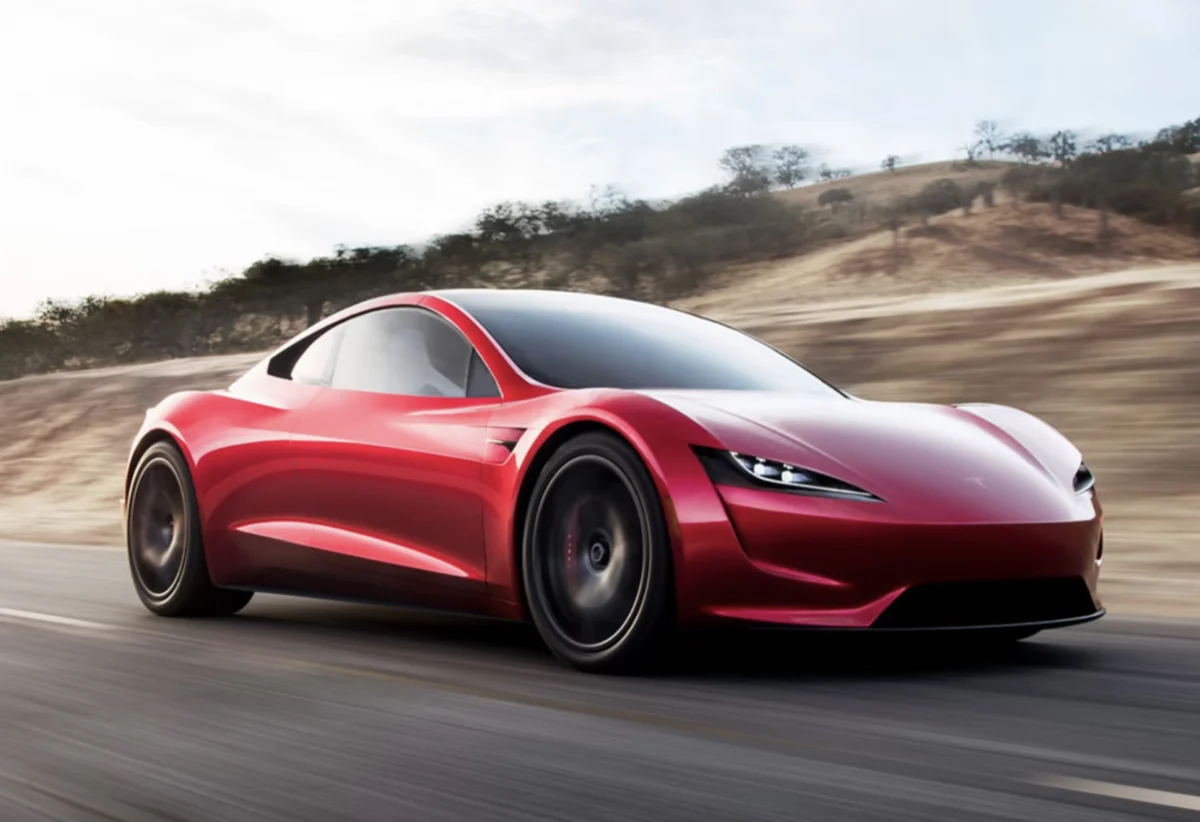
SAN FRANCISCO — Tesla Inc. has reignited anticipation for one of the most delayed vehicles in automotive history. In a social media post on Saturday, September 12, 2026, the electric vehicle manufacturer strongly hinted that the second-generation Tesla Roadster is finally ready for its official, updated public debut.
Posting on the social media platform X (formerly Twitter), the official Tesla account shared a minimalist graphic featuring the phrase "Go for launch" alongside the numbers "10.01"—a clear indication that a major reveal event is scheduled for October 1, 2026. The teaser graphic’s design elements and aerospace-aligned phrasing heavily suggest the inclusion of the long-rumored SpaceX cold gas thruster system, which Chief Executive Officer Elon Musk has claimed could allow the vehicle to achieve short-duration flight or hovering capabilities.
The announcement marks a critical juncture for Tesla as it attempts to deliver on a halo car first promised nearly a decade ago, navigating a radically transformed electric vehicle market and intense scrutiny over its product timelines.
Main Facts: The "Go for Launch" Teaser and Current Status
The September 12 teaser has set the automotive and tech industries abuzz, pointing to an October 1, 2026, reveal. The choice of the phrase "Go for launch" is a direct nod to rocket launch terminology, highlighting the deep technological crossover between Tesla and SpaceX, both helmed by Elon Musk.
Key Details of the October 1 Event
- The Date: October 1, 2026 ("10.01").
- The Teaser: A stylized graphic posted on X featuring aerospace-themed visual cues, pointing to the integration of cold gas thrusters.
- The SpaceX Connection: The vehicle is expected to showcase an optional "SpaceX Package," utilizing compressed cold gas thrusters to drastically improve acceleration, cornering, braking, and potentially facilitate brief, controlled liftoffs.
- The Redesign: Recent reports indicate the car being unveiled is not merely a production-ready version of the 2017 prototype, but an entirely re-engineered vehicle built to meet the competitive standards of the late 2020s.
Chronology: A Nine-Year Journey of Delays and Redesigns
The path of the second-generation Roadster has been plagued by shifting corporate priorities, supply chain bottlenecks, and fundamental design overhauls.
[Nov 2017] Surprise reveal alongside Tesla Semi; promised for 2020.
   │
[2020-2023] Repeated delays due to global supply chain crises and focus on Model Y/Cybertruck.
   │
[Late 2025] Public spat between Elon Musk and OpenAI's Sam Altman over unfulfilled reservations.
   │
[Early 2026] Reports emerge that the 2017 design was abandoned for a radical "flying" redesign.
   │
[Sept 2026] Tesla posts "Go for launch" teaser, setting the reveal date for Oct 1, 2026.
The Surprise Debut (November 2017)
The second-generation Roadster was first introduced as a "one more thing" surprise at the end of the Tesla Semi unveiling event in Hawthorne, California, in November 2017. At the time, Musk promised the car would enter production by 2020, setting a new benchmark for production sports cars.
The Era of Postponements (2020–2024)
As 2020 arrived, the onset of the COVID-19 pandemic, subsequent global semiconductor shortages, and Tesla’s urgent need to scale production of the Model Y and the Cybertruck pushed the Roadster to the periphery. The production timeline was repeatedly pushed back—first to 2022, then 2023, and eventually past 2024.
The Altman Reservation Controversy (Late 2025)
By late 2025, the extreme delays had become a point of public friction. OpenAI CEO Sam Altman, who had placed a hefty $50,000 deposit on the sports car years prior, publicly remarked on X that "7.5 years has felt like a long time to wait" for a vehicle reservation. Musk responded sharply on the platform, claiming that Altman had already received a refund for his deposit, highlighting the growing tension surrounding the unfulfilled promises of the Roadster program.
Scrapping the Original Design (2026)
In mid-2026, an investigative report from The Information revealed that Tesla had entirely abandoned the engineering and design architecture of the 2017 prototype. The company reportedly realized that the original specifications, while revolutionary in 2017, had been matched or surpassed by competitors. Consequently, Tesla engineers pivoted to a radical, ground-up redesign focused heavily on incorporating "flying" technologies developed in tandem with SpaceX.
Supporting Data: Technical Evolution and Market Context
To understand why Tesla chose to redesign the Roadster, one must look at how the high-performance EV landscape has evolved since 2017.

| Metric | 2017 Prototype Claims | 2026 Industry Standard (e.g., Rimac, Yangwang) | Projected 2026 Roadster Specs (Est.) |
|---|---|---|---|
| 0–60 mph Acceleration | 1.9 seconds | 1.74 seconds (Rimac Nevera) | Sub-1.0 second (with thrusters) |
| Top Speed | 250+ mph | 258 mph | 260+ mph |
| Range | 620 miles | 400–500 miles | 500+ miles |
| Battery Capacity | 200 kWh | 120–150 kWh (optimized weight) | Structural Pack (capacity TBD) |
| Base Price | $200,000 | $2,000,000+ (Hypercar class) | $200,000 – $250,000 |
The SpaceX Thruster Package
The most controversial and highly anticipated technical feature of the new Roadster is the "SpaceX Package."
- The Technology: The system replaces the rear seats of the car with a composite overwrapped pressure vessel (COPV)—similar to those used in SpaceX’s Falcon 9 rockets.
- The Mechanics: High-pressure compressed air is expelled through roughly ten cold gas thrusters arranged around the vehicle.
- The Purpose: According to physics simulations, these thrusters could assist in immediate deceleration, high-g cornering, and potentially propel the vehicle upward, allowing it to clear small obstacles or "hover" momentarily.
Financial Contributions of Reservation Holders
Tesla’s reservation model for the Roadster acted as a massive, interest-free loan from its most loyal customers. To reserve a base model, buyers had to deposit $50,000. To secure one of the limited 1,000 "Founders Series" models, customers were required to pay the full $250,000 upfront. With thousands of estimated reservations placed since 2017, analysts estimate Tesla held hundreds of millions of dollars in capital from the Roadster program alone during its critical Model 3 production ramp-up years.
Official Responses and Executive Commentary
Tesla has historically maintained a unique approach to public relations, having dissolved its core PR department in 2020. Consequently, official communications are primarily funneled through regulatory filings, official corporate social media channels, and Elon Musk’s personal accounts.
Elon Musk’s Production Timeline Caveat
While the October 1 event is expected to showcase the working, radical new design of the Roadster, Musk has already sought to manage expectations regarding actual delivery dates. In statements earlier in 2026, Musk cautioned that the unveiling of a production-ready design does not equate to immediate mass manufacturing. He estimated that actual assembly line production of the Roadster would not commence for another 12 to 18 months post-reveal, pushing customer deliveries into late 2027 or early 2028.
Tesla’s Corporate Stance
The brief "Go for launch" statement remains the only official comment from the company regarding the October event. When reached for comment on the location of the event and the specific technical parameters of the SpaceX package, Tesla representatives did not provide a formal response, in keeping with their long-standing media policy.
Implications: Brand Prestige, Regulatory Hurdles, and Market Position
The impending reveal of the Roadster carries significant implications for Tesla’s market position, regulatory standing, and overall corporate strategy.
Re-establishing Technological Leadership
Over the past several years, Tesla’s product lineup has aged, and the company has faced intense competition from Chinese manufacturers like BYD, Geely, and GAC, alongside European luxury brands. Vehicles such as the Yangwang U9 and the Rimac Nevera have challenged Tesla’s claim to absolute performance supremacy. A successful, mind-bending Roadster launch could restore Tesla’s reputation as the ultimate pioneer of EV technology.
Regulatory and Safety Hurdles
Integrating rocket thrusters onto a passenger vehicle presents unprecedented regulatory challenges:
- NHTSA Scrutiny: The National Highway Traffic Safety Administration (NHTSA) will undoubtedly scrutinize the safety of high-pressure COPV tanks in crumple zones. The risk of explosion during a collision is a primary concern.
- Pedestrian Safety: Expelling high-pressure cold air at ground level poses significant risks to bystanders, cyclists, and nearby vehicles.
- FAA Classification: If the vehicle is indeed capable of leaving the ground, even momentarily, it could trigger regulatory oversight from the Federal Aviation Administration (FAA), potentially requiring specialized licensing or limiting the use of the thrusters to closed tracks.
Opportunity Cost and Focus
Some industry analysts question the wisdom of dedicating engineering resources to a low-volume, high-complexity hypercar. With Tesla currently navigating the rollout of its autonomous "Robotaxi" network, the scaling of the Cybertruck, and the development of a cheaper, next-generation mass-market platform, the Roadster risks becoming an expensive distraction.
However, as a "halo car," the Roadster is not designed for volume; it is designed to capture the public’s imagination, drive brand engagement, and serve as a rolling testbed for the next decade of Tesla’s engineering innovations. All eyes will be on the stage on October 1 to see if Tesla can finally turn its most ambitious promise into reality.
