




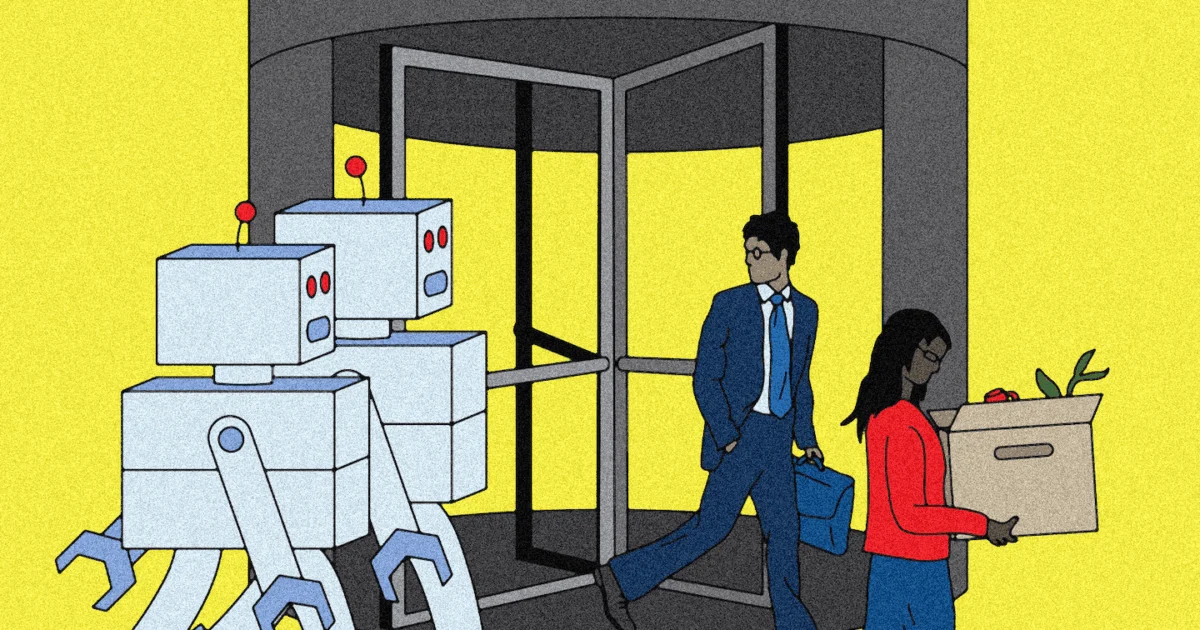
As artificial intelligence systems continue to integrate into the modern corporate landscape, a growing chorus of economists and labor advocates are warning that the U.S. social safety net is fundamentally ill-equipped to handle the impending wave of white-collar displacement.
Rebecca Dixon, CEO of the National Employment Law Project (NELP), has become a leading voice in this critique. She argues that the existing unemployment insurance (UI) system, designed for a mid-20th-century industrial economy, is far too “stingy” to sustain workers during a period of rapid, AI-driven structural transformation. With white-collar professionals increasingly vulnerable to automation, the current patchwork of state-level benefits may prove insufficient to prevent a broader economic decline.
The State of the Safety Net: A Patchwork of Disparity
The U.S. unemployment insurance system is currently defined by extreme geographic and financial variance. Because UI is managed at the state level, the support a worker receives is entirely dependent on their zip code.
Currently, maximum weekly payments range from a floor of $235 in Mississippi to a ceiling of $1,105 in Massachusetts. For a displaced software engineer or financial analyst—professions traditionally considered insulated from the shocks of the labor market—a payment of $235 per week is effectively meaningless. These benefit levels were calibrated to support low-wage, manual labor transitions, not to bridge the gap for highly skilled professionals navigating a complete career pivot in an AI-dominated economy.
Dixon and other advocates argue that this discrepancy creates an "economic lottery" for workers, where the severity of their financial hardship after a layoff is determined by state legislative budgets rather than their own professional merit or the needs of their households.
Chronology of the AI Labor Shift
To understand the urgency of the current situation, one must look at the rapid acceleration of AI integration over the last three years:
- 2024: The Pilot Phase: Initial enterprise adoption of Generative AI focuses on administrative automation, primarily impacting clerical and data-entry roles. The impact on the broader labor market remains muted as companies experiment with "human-in-the-loop" systems.
- 2025: The Efficiency Pivot: Corporations begin to scale AI, moving beyond simple task automation. Coding, legal research, and mid-level content generation become significantly more efficient. Tech firms begin downsizing, citing "AI-augmented productivity" as a primary reason for reduced headcount.
- 2026: The White-Collar Reckoning: The current climate reveals a shift in the nature of job loss. Recent college graduates—particularly those in computer science and data-intensive fields—find themselves entering a market where entry-level "stepping stone" jobs have been subsumed by AI tools. Advocacy groups like NELP begin to sound the alarm on the "ineligibility trap" for younger workers.
Supporting Data: The Coverage Gap
The fundamental issue, according to labor experts, is that the unemployment system excludes the most vulnerable segments of the emerging workforce. Current regulations often require a minimum length of employment and specific "base period" earnings to qualify for benefits.
This structure creates a systemic failure for three key demographics:
- Recent Graduates: Those entering the workforce after years of expensive education are often excluded from UI because they lack a sufficient history of "covered employment."
- Part-Time and Gig Workers: The rise of the "side hustle" and contract-based employment means many workers contribute to the economy without meeting the rigid state thresholds for unemployment insurance.
- The "AI-Displaced" Mid-Career Professional: Workers who have held high-salary positions are often discouraged from applying for benefits that don’t come close to covering their fixed costs (mortgages, healthcare, childcare), leading them to burn through savings rather than utilize a system that was never built for their salary bracket.
The NELP Agenda: Reforming the System for the AI Era
In response to these trends, NELP has been actively advocating for a modernization of the UI system. The organization, which recently bolstered its policy team with four seasoned experts, is pushing for a shift toward "inclusive social insurance."
Key Policy Recommendations:
- Universal Eligibility for Part-Time Workers: Advocates argue that the modern economy requires a flexible approach. By allowing part-time workers to collect partial benefits, states can encourage people to stay attached to the workforce rather than opting out entirely.
- Federalized Standards: To combat the "Mississippi-Massachusetts gap," reformers are calling for federal minimums that ensure a living wage regardless of state-level fiscal health.
- Expanded Coverage for New Entrants: Developing a "bridge grant" or modified UI structure for recent college graduates could prevent the "lost generation" effect that often follows major economic disruptions.
Official Responses and Political Obstacles
While the call for reform is growing, it faces significant political headwinds. Conservative legislators often argue that increasing unemployment benefits disincentivizes work and places an undue burden on state tax funds. Furthermore, the business community remains wary of increases to the employer-paid unemployment taxes that fund these systems.

However, the nature of the AI disruption presents a new argument for the center-right: economic stability. As the Congressional Budget Office and various private research firms monitor the impact of AI, there is a growing acknowledgment that if high-earning white-collar workers lose their purchasing power simultaneously, the resulting drop in consumer spending could trigger a broader recession.
Implications: The Social Contract in Question
The implications of failing to update the UI system are profound. If the United States enters an era of permanent, AI-driven labor volatility, the current social contract will likely fracture.
1. Increased Inequality
If only the wealthy can survive the transition through private savings, the gap between the asset-owning class and the labor class will widen significantly. The current unemployment system, by failing to protect the middle class, accelerates the erosion of the American dream.
2. Loss of Human Capital
When talented professionals are forced to abandon their careers due to a lack of a financial bridge, the economy loses years of specialized training and expertise. This "de-skilling" effect is a hidden cost of the current, insufficient safety net.
3. The Need for "Good Jobs Democracy"
As NELP recently highlighted with the appointment of Teresa Acuña as a Visiting Fellow for Good Jobs Democracy, the focus must shift from simply "managing poverty" to "promoting good jobs." This involves not just fixing the unemployment system, but also enforcing labor laws and creating partnerships that ensure AI is used to augment workers rather than merely replace them.

Conclusion: A New Foundation
The transition to an AI-driven economy is not a temporary hurdle; it is a structural evolution of the global labor market. Rebecca Dixon and the National Employment Law Project are correct in their assessment: the current unemployment system is a relic of a bygone era.
To prevent the next wave of technological progress from becoming a catalyst for mass financial insecurity, policymakers must move beyond the status quo. Whether through federal standards, expanded eligibility for the gig and part-time workforce, or entirely new forms of income support, the U.S. must ensure that the benefits of artificial intelligence are not exclusively enjoyed by the companies deploying the technology, while the risks are borne entirely by the workforce it replaces.
As the calendar turns toward 2027, the focus of labor policy will likely shift from simple job creation to the much more complex task of job transition support. The ability to modernize the safety net will be the true test of whether the American economy can remain both innovative and equitable in the face of the AI revolution.
