




As Artificial Intelligence (AI) permeates the modern corporate landscape, a complex duality is emerging. While the technology is being hailed as a transformative force for employee efficiency and mental well-being, it is simultaneously precipitating a quiet crisis of social isolation. New research from enterprise software giant Workday suggests that while employees are more productive than ever, they are increasingly trading human rapport for algorithmic efficiency, creating what experts are calling a "connection deficit."
The Human Connection Workplace Index, which surveyed 2,150 AI users across large-scale organizations globally, highlights a pivotal shift in how work gets done. While the promise of AI to automate drudgery has been fulfilled, the unintended consequences for organizational culture—and the human beings who sustain it—are beginning to manifest in alarming ways.
The Productivity Renaissance: AI as an Efficiency Catalyst
The primary narrative surrounding the integration of AI in the workplace has been overwhelmingly positive, particularly regarding individual output. For decades, the goal of office technology was to eliminate "busy work," and current AI tools are finally delivering on that promise at scale.
Key Performance Indicators
The Workday study provides compelling data to support the surge in productivity:
- Burnout Mitigation: 62% of respondents reported a tangible decline in their stress levels or burnout risk since integrating AI into their daily workflows.
- Productivity Surge: A staggering 86% of users feel more productive, attributing this gain to the automation of routine, repetitive tasks.
- Future Readiness: 64% of employees expressed increased confidence in their professional longevity, believing that AI tools have sharpened their ability to succeed in future roles.
By offloading administrative burdens—such as scheduling, data entry, and basic drafting—employees are reclaiming their time for high-value strategic initiatives. This shift, theoretically, should create a more energized and creative workforce. However, the data suggests that as human-to-human interaction is replaced by human-to-machine interaction, the social fabric of the office is beginning to fray.
Chronology of the Shift: From Collaboration to Automation
To understand the current state of the "connection deficit," it is necessary to examine the evolution of workplace communication over the last few years.
Phase 1: The Remote Transition (2020–2022)
The onset of the global pandemic forced a migration to digital-first communication. Tools like Slack, Zoom, and Microsoft Teams replaced the physical watercooler. While these platforms kept the business running, they narrowed the scope of interaction to strictly task-based communication, stripping away the serendipitous, non-work-related exchanges that build interpersonal trust.
Phase 2: The Generative AI Boom (2023–Early 2024)
With the widespread adoption of Large Language Models (LLMs), the frequency of "human-in-the-loop" work diminished. Employees began utilizing AI for brainstorming, drafting emails, and troubleshooting. The efficiency gains were immediate, but the necessity of asking a colleague for help decreased significantly.
Phase 3: The Emergence of the "Connection Deficit" (Present)
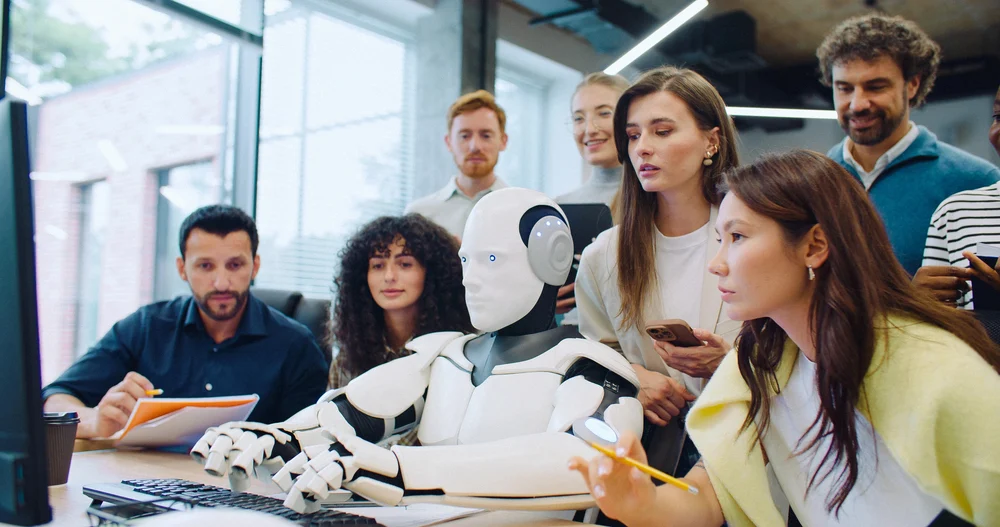
The current period is characterized by the normalization of AI as a primary "coworker." The Workday report identifies this as the tipping point. With AI now serving as an advisor, a creative partner, and even a confidant, the need for human interaction has been systematically downgraded. This shift is not merely technological; it is behavioral, fundamentally altering the way employees view their peers.
Data Analysis: Mapping the Social Void
The Human Connection Workplace Index offers a stark look at the sociological impact of these trends. The findings suggest that the office is becoming a lonelier place, even as it becomes a more "efficient" one.
The Erosion of Social Bonds
The statistics paint a sobering picture of modern workplace dynamics:
- The End of Small Talk: One-third of survey participants reported that they rarely or never engage in non-work-related conversations with their colleagues.
- The Friendship Gap: Fewer than 50% of respondents find it "easy" to make friends at work, a fundamental element of long-term employee retention and job satisfaction.
- The Human Cost: 14% of respondents explicitly stated they took time off during the past year specifically due to feelings of loneliness or social isolation.
Generational Vulnerability: The Gen Z Experience
Perhaps the most concerning discovery is the disparate impact on younger workers. Gen Z employees, who entered the workforce during a period of remote or hybrid transition, are suffering the most from this disconnect.
Twenty percent of Gen Z respondents reported taking leave due to loneliness—a figure significantly higher than that of their older counterparts. Because these workers have had less exposure to traditional, high-interaction office environments, they appear more prone to substituting human relationships with AI interactions, further entrenching their sense of isolation.
Official Responses: Navigating the AI-Human Balance
Workday’s leadership has been vocal about the implications of their findings. The report serves as a warning that businesses cannot afford to view AI as a total replacement for human engagement.
"We are seeing that AI is having a very positive effect on productivity at work, and employees across all industries globally are clearly telling us they feel less burned out than before they started using AI tools," noted Carrie Varoquiers, Chief Impact Officer at Workday.
However, Varoquiers provided a crucial caveat: "Our Index cautions that, as we route more questions, ideas, and even conflicts through AI, we risk losing the everyday human interactions that build trust, resilience, and a sense of connection."
The data reveals that employees are increasingly turning to AI for needs previously met by human colleagues:
- 67% use AI for professional advice.
- 52% use AI for brainstorming sessions.
- 37% use AI as a source of "companionship."
The reasons cited for this preference are telling: employees appreciate the non-judgmental, instantaneous nature of AI. Unlike a busy human colleague, an AI bot never grows frustrated, never complains about the workload, and is always available. But, as Varoquiers points out, this "frictionless" experience removes the messy, human-centered moments that ultimately cultivate team cohesion and emotional intelligence.
Implications: The Future of Organizational Infrastructure
The implications of these findings are profound for HR departments and C-suite executives. If the current trajectory continues, companies risk creating high-output organizations that suffer from low morale, shallow trust, and high attrition rates.
The Fear of Social Stagnation
Interestingly, employees themselves are aware of these risks. When asked about their primary concerns regarding AI adoption, respondents were more worried about the erosion of human interaction than they were about job loss. Specifically, 43% of participants identified the decline of person-to-person interaction as their number one concern.
Redefining the "Infrastructure" of Work
Workday suggests that organizations must pivot their strategy. Social connection should no longer be treated as a "nice-to-have" byproduct of office life; it must be treated as a critical component of organizational infrastructure.
To mitigate the "connection deficit," companies should consider the following:
- Deliberate Mentorship: Moving beyond digital-only check-ins to prioritize in-person mentorship and shadowing opportunities.
- Collaboration Mandates: Designing workflows that necessitate human collaboration rather than relying on AI-only output loops.
- Measuring Sentiment: Tracking "belonging" and "trust" metrics with the same rigor as productivity metrics.
- Communicative Intentionality: Training managers to facilitate team-building that encourages "unproductive" conversation—the kind that builds human trust.
Conclusion: Augmentation vs. Replacement
The ultimate goal for the modern enterprise is not to banish AI, but to ensure that technology acts as a bridge rather than a barrier. If AI is used to handle the routine, it should technically liberate humans to spend more time together, not less.
The challenge lies in leadership’s ability to foster an environment where technology is viewed as a tool for "augmentation"—a way to free up time for the uniquely human acts of empathy, complex negotiation, and collaborative creativity. Without such intentionality, the "connection deficit" threatens to become the defining workplace crisis of the AI era. As the line between digital assistance and human interaction blurs, companies must act decisively to ensure that while their work gets faster, their human connections remain strong.
