





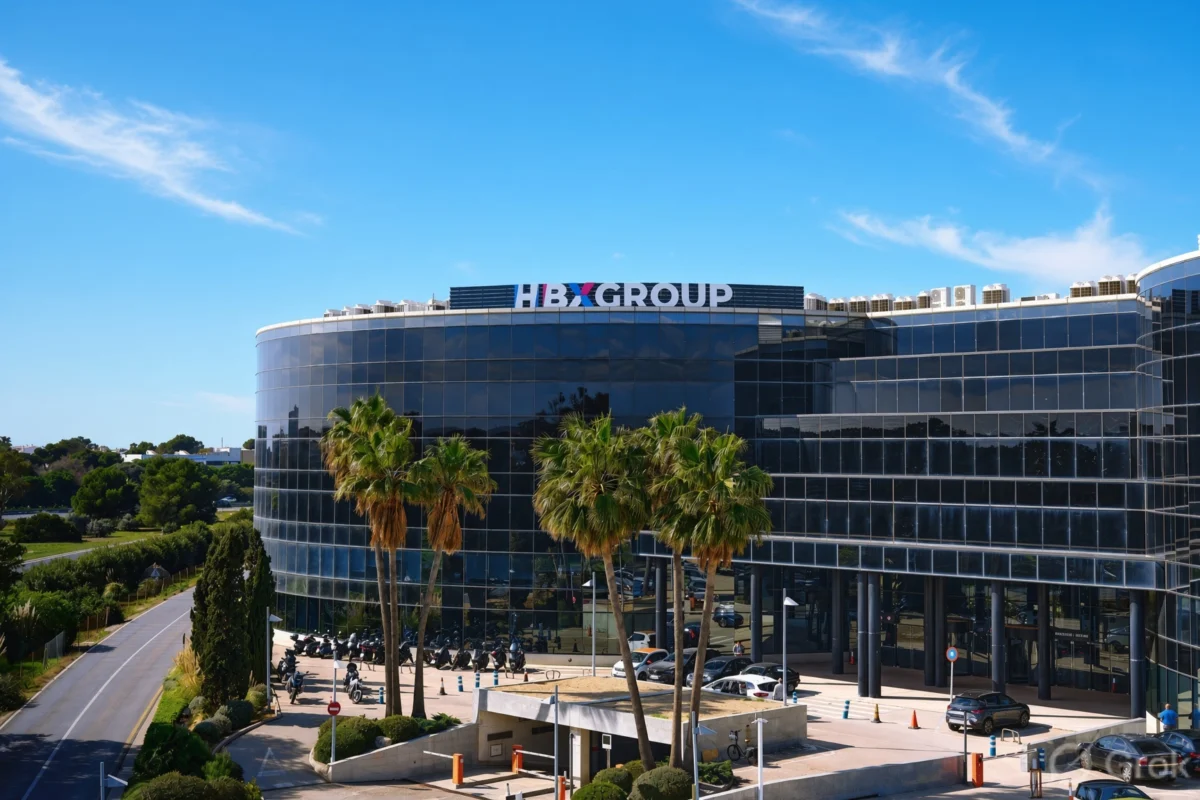
For years, the travel industry operated under a long-held axiom: in the world of wholesale distribution, scale is the ultimate moat. As the world’s largest independent hotel wholesaler, HBX Group—the parent company of the industry titan Hotelbeds—has long been the standard-bearer for this philosophy. By aggregating massive inventories of room nights and distributing them to thousands of travel agencies, tour operators, and airlines, the company became an indispensable plumbing system for global tourism.
However, recent financial disclosures have shattered the illusion that sheer volume is a sufficient defense against margin erosion. Despite expecting to process over EUR 1 billion in additional travel volume this year on a constant-currency basis, HBX Group is bracing for a sobering reality: that expanded business is projected to yield no net increase in revenue and a decline in adjusted EBITDA compared to the previous year.
As the company’s share price lingers nearly 30% below its February 2025 IPO price of EUR 11.50, the travel industry is forced to confront a difficult question: If the world’s biggest bed bank cannot turn scale into sustainable profitability, what does that mean for the future of wholesale distribution?
The Chronology of a Correction: From IPO to Reality Check
The current predicament for HBX Group is particularly striking given the optimism that surrounded its entry into the public markets earlier this year.
February 2025: The IPO Launch
HBX Group debuted on the stock exchange with a price of EUR 11.50 per share. The narrative was clear: the company was a powerhouse, a resilient intermediary that had successfully navigated the post-pandemic travel surge. Investors bought into the idea of a "digital infrastructure" company that would benefit from the rebound in international travel and the increasing complexity of hotel distribution.
Mid-2025: The First Cracks
As the first two quarters of the fiscal year progressed, the operational data began to tell a different story. While the top-line transaction volume—the total value of travel booked through the platform—continued to climb, the efficiency of that growth began to stutter. Analysts noted that the cost of acquiring this volume was rising, and the yield per booking was thinning.
Late 2025: The Market Reassessment
By the time the most recent projections were released, the market had largely turned against the stock. The realization that growth in transaction volume was becoming decoupled from profitability triggered a sharp sell-off. The current stock price, down nearly a third from its IPO peak, reflects a fundamental market shift in sentiment: investors no longer view HBX as a growth engine, but as a utility struggling to maintain margins in a hyper-competitive landscape.
Supporting Data: The Disconnect Between Volume and Value
To understand the crisis at HBX, one must look at the mathematical disconnect between "processing power" and "economic yield."
The Illusion of Growth
HBX expects to process EUR 1 billion in additional travel volume. In most industries, a billion-euro increase in throughput would be a cause for celebration. However, in the low-margin world of wholesale, the cost to capture that volume often exceeds the marginal revenue it generates.
The EBITDA Erosion
Adjusted EBITDA, the primary metric used to measure operational efficiency, is trending downward. This suggests that the company is spending significantly more on technology, supplier incentives, and marketing to secure these room nights than it was just twelve months ago.
The "Take-Rate" Trap
The "take-rate"—the percentage of the total transaction value that the wholesaler keeps as revenue—is the central pressure point. HBX has explicitly identified "take-rate dynamics" as the primary culprit for the deviation between their original projections and current reality. As hotel chains increasingly pursue direct-booking strategies and large Online Travel Agencies (OTAs) exert more leverage, the room for a middleman to capture a healthy commission is shrinking.
Official Responses: Explaining the Deviation
When pressed on why their original forecasts missed the mark so significantly, leadership at HBX Group has pointed to structural shifts in the market.
In a statement provided to Skift, the company noted: "The main change versus our original assumptions has been the greater impact of take-rate dynamics."
While the company remains tight-lipped regarding specific contract renegotiations, industry insiders interpret this statement as an admission that the "power dynamic" has shifted. Hotel chains, grappling with their own rising operational costs and a desire to control the customer relationship, are proving less willing to share a significant slice of the pie with third-party wholesalers.
Furthermore, the "greater impact" suggests that these pressures were not merely a seasonal blip but a sustained trend that accelerated faster than the company’s internal modeling anticipated. The transition from a seller’s market to a more balanced, or even buyer-friendly, environment has stripped away the pricing power that HBX once enjoyed.
The Implications: What is a Bed Bank, and Why Does it Matter?
To the average traveler, a "bed bank" is an invisible entity. When you book a hotel room on a travel site, that site is often pulling the inventory from a wholesaler like HBX. These companies aggregate rooms from tens of thousands of hotels, negotiate bulk rates, and package them for B2B partners.
The End of the "Middleman Era"?
For decades, the value proposition of a bed bank was simple: hotels needed to sell excess capacity, and agencies needed a centralized place to find that inventory. Technology has changed this. Modern API integrations allow hotels to connect directly to large agencies, bypass traditional wholesalers, and avoid paying the "middleman tax."
Implications for the Hospitality Ecosystem:
- Consolidation Risks: If scale no longer protects margins, smaller wholesalers may face insolvency or be forced into aggressive M&A activities to achieve the efficiencies they currently lack.
- Technological Pivot: HBX Group will likely need to move away from being a pure volume player and toward becoming a "Value-Added Service" provider. This could involve offering data analytics, dynamic pricing tools, or revenue management software to their hotel partners to justify their commission.
- The Investor Reckoning: The performance of HBX post-IPO serves as a cautionary tale for other travel-tech companies. Investors are no longer rewarding "growth at any cost." They are demanding a clear line of sight to profitability, and they are punishing companies that rely on outdated business models where volume is the only lever.
The Future of HBX
The company is not losing demand. It remains a vital artery of global travel, moving millions of people and billions of euros annually. The problem is not a lack of interest in their services; the problem is the commoditization of those services.
As HBX moves forward, it faces the difficult task of re-engineering its cost structure to match a reality where the "take-rate" is no longer a fixed, reliable variable. They must prove that they can add value beyond just being a digital shelf. Whether they can achieve this while under the scrutiny of the public markets remains one of the most compelling dramas in the modern travel industry.
In conclusion, the HBX saga confirms a brutal truth about the digital economy: when your business is built on processing transactions, you are only as strong as your take-rate. If that rate is subject to the whims of larger, more powerful partners, then scale—no matter how vast—is merely a treadmill, not a mountain.
