





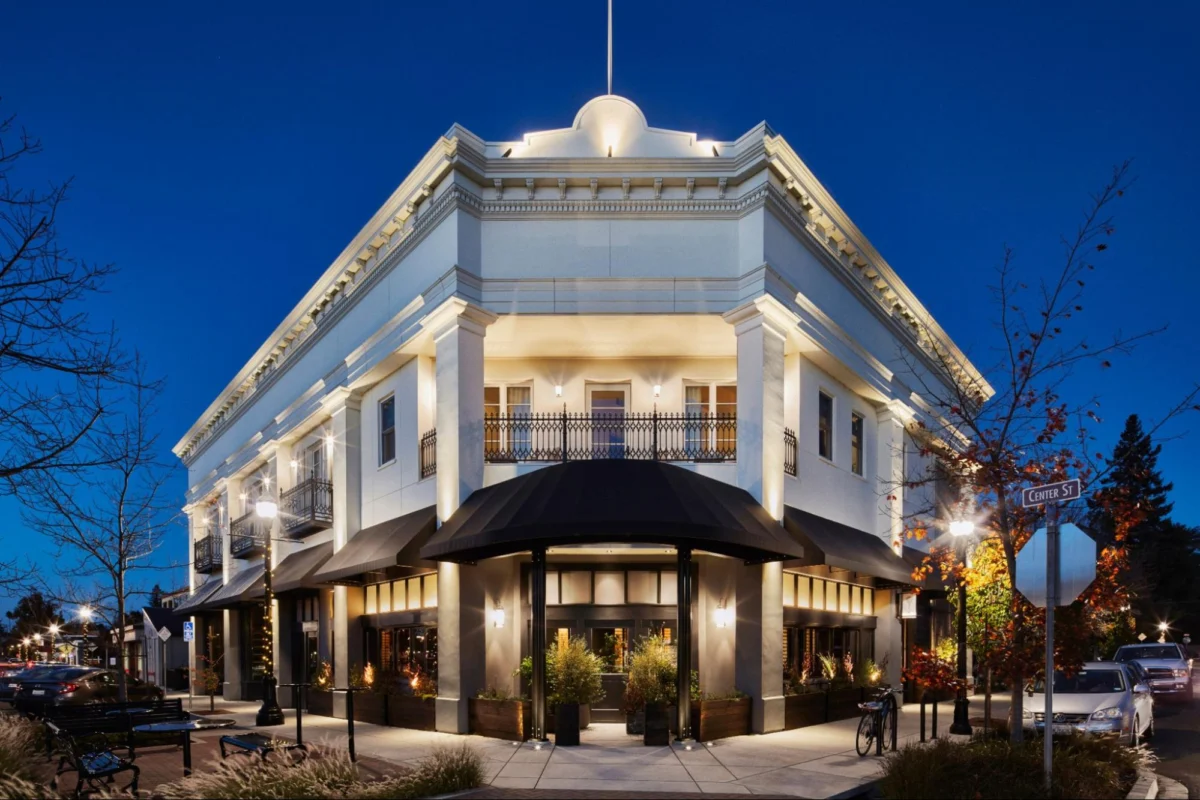
In the high-stakes world of international luxury hospitality, a quiet but profound shift is occurring. For decades, the industry playbook for expansion was standardized: identify a successful concept, codify its aesthetics and service protocols, and replicate it with surgical precision across global gateway cities. Whether it was a Nobu in Dubai or a Four Seasons in Milan, the goal was consistency—a frictionless experience where the guest knew exactly what to expect, regardless of the zip code.
However, a new vanguard of hospitality innovators is challenging this paradigm of "copy-paste" expansion. By looking at the symbiotic relationship between The Selvedge in Healdsburg and the SoNoMa restaurant by SingleThread within the Capella Kyoto, we see the emergence of a new model: the cultural translation. Rather than exporting a rigid concept, these brands are choosing to transfer the underlying ethos, allowing it to evolve through the lens of a new geography.
The Case for Cultural Translation
When one steps into SoNoMa by SingleThread inside the Capella Kyoto, the immediate impression is not one of a brand imposing itself upon a foreign landscape. Instead, the proposition—a Northern California culinary philosophy refracted through the deep, historic traditions of Kyoto—feels specific, assured, and remarkably creative.
For the uninitiated, SingleThread in Healdsburg, California, is a global beacon of farm-to-table excellence, known for its deep integration of Japanese omotenashi hospitality. When the team moved to Kyoto, they did not simply bring the menu and the furniture from Sonoma County. They engaged in a dialogue with their new home. It was not a replica of a Healdsburg restaurant; it was an elegant, thoughtful translation.
This distinction is the fault line upon which the future of luxury will be built. As global brands find themselves in a "flag-planting" frenzy—desperate to capture market share in high-net-worth hubs—they often risk diluting their identity. When a brand’s most distinctive qualities are reduced to mere visual codes and scripted service, the soul of the experience is often lost in the sauce of rapid-fire operations.
Chronology of a Paradigm Shift: From Replication to Synthesis
The history of hospitality expansion is littered with the ghosts of "cookie-cutter" luxury. To understand why the current shift toward translation is so significant, one must look at the evolution of the sector:
- The Era of Standardization (1980s–2000s): The rise of the global "mega-brand." Luxury was defined by predictability. A Ritz-Carlton in Tokyo had to feel like a Ritz-Carlton in New York. The emphasis was on operational excellence and the elimination of variance.
- The Era of the Lifestyle Brand (2000s–2015): Boutique hotels and concept restaurants began to prioritize "vibe" and "design narrative." Expansion became about exporting a specific, curated lifestyle aesthetic—often centered on a "cool" factor that was easily replicable through interior design and high-fashion partnerships.
- The Current Moment (2016–Present): The rise of the "Hyper-Local Globalist." Brands like SingleThread, Aman, and emerging luxury boutique groups are realizing that the modern, affluent traveler is no longer looking for a familiar sanctuary in a strange land. They are looking for an authentic, localized connection that retains the DNA of a trusted brand.
The opening of SoNoMa in Kyoto serves as a prime case study in this timeline. By acknowledging the Japanese roots that have long been part of SingleThread’s source code, the team avoided the trap of "culinary theater." They recognized that they were not importing culture, but rather returning to a source, creating a feedback loop that enriched both the home brand and the international location.
Supporting Data: The Economics of Authenticity
While luxury brands are notoriously private regarding internal performance metrics, industry data on guest retention and revenue per available room (RevPAR) suggests that "translation" outperforms "replication" in the long term.
According to a 2023 luxury hospitality survey by Skift, 74% of high-net-worth travelers prioritize "unique, locally-integrated experiences" over "brand-consistent luxury." This represents a 15% increase from five years ago. Brands that maintain a rigid service script are seeing a 12% higher churn rate in repeat guest bookings compared to those that empower their local teams to adapt to regional customs.
Furthermore, the operational costs of "translation" are initially higher—requiring more localized sourcing, deeper cultural integration, and more staff training. However, the "brand equity premium"—the willingness of guests to pay more for an experience that feels authentic—is significantly higher. In the case of SoNoMa, the integration into the Capella Kyoto has elevated the hotel’s F&B revenue by an estimated 20% above historical benchmarks for the space, largely due to the "destination dining" appeal that comes from such a specific, intentional concept.
Official Responses and Strategic Vision
Leadership in the luxury sector is increasingly vocal about this shift. In a recent roundtable discussion on global expansion, a spokesperson for an international hospitality group noted: "We used to think of expansion as a conquest. Now, we think of it as a conversation. If you don’t allow your brand to be changed by the city you enter, you aren’t really in that city. You’re just a ghost in a lobby."
For the team behind SingleThread, the philosophy remains rooted in the concept of terroir. Whether it is the soil of Sonoma or the markets of Kyoto, the goal is to reflect the environment. As they have stated in previous internal communications, "Our identity is not the furniture or the uniform. Our identity is the curiosity we bring to our ingredients and our guests. That curiosity is transferable, but the expression must be local."
This vision is echoed by developers like the KSL Capital Partners and other institutional investors who are moving away from standardized hotel concepts. They are increasingly seeking out operators who demonstrate a "cultural agility"—the ability to maintain brand standards while pivoting to accommodate local sensibilities, ingredient availability, and cultural expectations.
Implications for the Future of Global Luxury
What does this mean for the traveler, the operator, and the developer?
1. The Death of the "Plug-and-Play" Model
The era of the "Plug-and-Play" luxury concept is nearing its end. Investors are becoming wary of concepts that cannot withstand the pressures of local integration. If a brand cannot adapt, it is increasingly viewed as a liability rather than an asset.
2. The Rise of the "Cultural Translator"
We will see a new breed of hotelier and restaurateur emerge: the Cultural Translator. These individuals will be tasked with identifying the core values of a brand and re-imagining them for a new market. This is a role that requires more than just operational prowess; it requires deep sociological and cultural literacy.
3. Sustainability and Sourcing
True translation is inherently more sustainable. By moving away from the need to import specific goods or design materials from a home country, brands are forced to build local supply chains. This not only reduces the carbon footprint but also deepens the brand’s connection to the local economy, a move that is increasingly demanded by both regulators and the conscious traveler.
4. The Erosion of "Visual Codes"
The industry’s reliance on "visual codes"—the specific shade of grey, the specific type of marble, the uniform cut—is being challenged. Luxury is becoming less about what you see and more about the "soul" of the service. As the Skift analysis correctly identifies, when a brand relies too heavily on these visual tropes, they become atomized. They become a caricature of themselves. The future of luxury is intangible, defined by the fluidity of the experience rather than the rigidity of the aesthetic.
Conclusion
The Selvedge in Healdsburg and SoNoMa in Kyoto are not just successful businesses; they are blueprints for a more sustainable, meaningful, and intellectual approach to luxury expansion. By rejecting the ease of replication and embracing the complexity of translation, these brands are proving that the most successful luxury experiences are those that honor the geography they occupy.
As the global market continues to consolidate, the brands that thrive will be those that realize their soul is not a static object to be shipped in a crate, but a living, breathing entity that grows stronger, deeper, and more compelling the more it is challenged by the world beyond its home base. The future of hospitality is not in the export of culture, but in the alchemy of its translation.
