



For years, the travel and hospitality industry has treated climate change as a distant, abstract risk—a boilerplate paragraph buried in the depths of annual 10-K filings. Hurricanes, once considered "acts of God" occurring in isolated, unpredictable intervals, are now becoming a fixed line item on corporate balance sheets. As weather patterns intensify, the financial reality of property ownership in climate-vulnerable regions is undergoing a profound transformation.
Host Hotels & Resorts, the largest lodging real estate investment trust (REIT) in the United States, recently pulled back the curtain on this new reality. In its 2025 year-end filing, the company provided a rare, granular look at the economic toll of climate volatility, specifically detailing the devastation wrought by Hurricanes Helene and Milton on one of its crown jewels: The Don CeSar in St. Pete Beach, Florida.
The Financial Toll of Climate Volatility
The numbers released by Host Hotels & Resorts serve as a clarion call for the hospitality sector. While many companies choose to obscure climate-related repair costs within broader capital expenditure (capex) reporting, Host’s latest disclosure offers a sobering breakdown. The total estimated damage to The Don CeSar alone sits at approximately $105 million.
Of that staggering figure, roughly 30%—or $31.5 million—was dedicated exclusively to remediation efforts. This includes not just structural repairs, but the complex, costly process of mitigating mold, water damage, and environmental hazards that follow modern, high-intensity storm surges.
The broader impact on Host’s capital allocation is equally telling. In 2025, the company invested $75 million into hurricane-related restoration and recovery efforts across its portfolio. This figure represents 11.6% of the company’s total annual capital expenditure—a significant portion of budget that, in a different climate era, would have been earmarked for property renovations, brand upgrades, or guest experience enhancements. Instead, this capital was strictly defensive, spent merely to restore assets to their pre-storm baseline.
A Chronology of Crisis and Recovery
The path from the arrival of the 2024 hurricane season to the stabilization of The Don CeSar in 2025 illustrates the logistical and financial gauntlet that coastal hoteliers must now run.
The Impact (Late 2024)
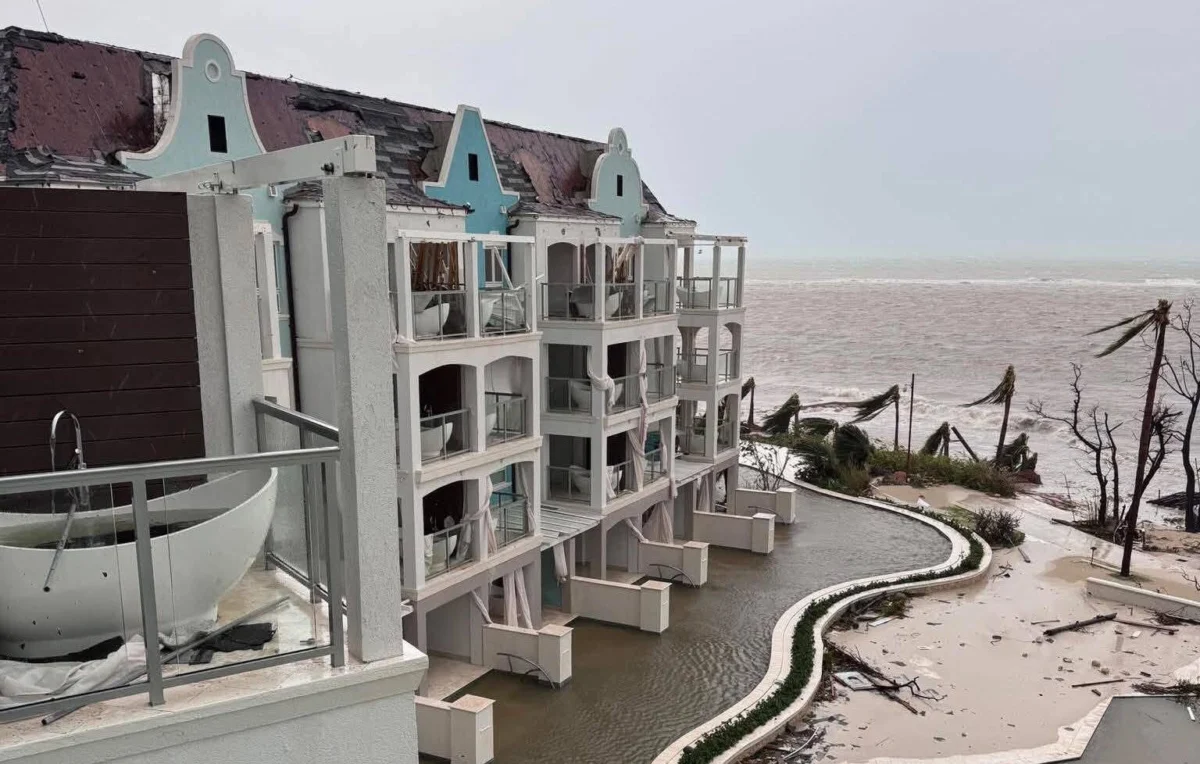
When Hurricanes Helene and Milton tore through the Gulf Coast in late 2024, they did more than damage infrastructure; they paralyzed the operations of one of Florida’s most iconic historic properties. The Don CeSar, known as the "Pink Palace," was rendered untenable, forcing an immediate cessation of operations. The damage was multifaceted: structural integrity, landscape destruction, and interior water intrusion necessitated a complete closure of the facility.
The Restoration Phase (Winter 2024–Early 2025)
As the storm clouds cleared, the financial clock began ticking. Host Hotels & Resorts initiated a comprehensive restoration program. This phase required not only manual labor and material procurement but also complex negotiations with insurance adjusters, government agencies, and climate mitigation experts. The closure lasted for several months, with the property remaining shuttered until late March 2025.
The Stabilization and Reopening (Q2–Q3 2025)
The road to full recovery was gradual. By late March, the hotel had partially resumed operations, but the "full restoration" status was not achieved until the third quarter of 2025. By that time, the final amenities—ranging from pool decks to landscaping and exterior features—had been restored to a state capable of withstanding the next inevitable surge.
Insurance: The Buffer and the Burden
A critical component of Host’s financial disclosure is the role of insurance. At the time of the filing, the company reported receiving $73 million in insurance payouts. While this appears to offset a large portion of the $105 million in damage, the nuance lies in what these payouts cover.
Insurance in the age of climate change is rarely a "make-whole" mechanism. The $73 million figure reflects a blend of physical property damage coverage and, crucially, business interruption insurance. The latter is essential for covering the loss of revenue during the months the hotel sat empty. However, as insurance premiums continue to skyrocket in Florida and other coastal states, the "cost" of insurance itself is becoming a compounding factor in the hospitality sector’s financial outlook.
For many REITs, the deductible thresholds are rising, and the scope of what is covered is narrowing. Host’s ability to recover a substantial portion of its losses speaks to the company’s strong balance sheet and robust insurance policies, but it also underscores a precarious dependence on an industry that is currently struggling to price climate risk accurately.
Investing in Resilience: A Strategic Shift
Beyond the immediate costs of remediation, Host Hotels & Resorts has begun a long-term strategic pivot toward "resilient capital expenditure." Over the six-year period ending in December 2025, the company allocated approximately 8% of its total capex toward climate-resilient upgrades.
This investment is not about repairing what is broken; it is about "hardening" assets against what is coming. This includes:
- Structural Hardening: Reinforcing roof systems and building envelopes to withstand higher wind speeds.
- Flood Mitigation: Upgrading drainage systems and elevating critical electrical infrastructure to survive storm surges.
- Material Selection: Transitioning to building materials that are more resistant to saltwater corrosion and humidity-induced degradation.
- Energy Autonomy: Investing in onsite power generation and micro-grid capabilities to ensure that properties can remain functional, or at least habitable, during regional power grid failures.
These expenditures represent a fundamental change in how REITs evaluate the return on investment (ROI) for their properties. Traditionally, capex ROI was measured by how much a new lobby or room renovation could drive RevPAR (Revenue Per Available Room). Today, the ROI is increasingly measured in "risk avoidance"—the value of a hotel that can reopen two weeks earlier than its competitors or survive a storm with minimal structural damage.
Industry Implications: The New Cost of Doing Business
The transparency provided by Host Hotels & Resorts creates a ripple effect throughout the lodging industry. Investors and analysts are now better equipped to scrutinize the "climate readiness" of other hotel portfolios.
1. The Valuation Gap
Properties in high-risk zones (Florida, the Caribbean, the Gulf Coast) are facing a potential "climate discount" in valuation. If investors know that a property carries a recurring 10%–15% capex risk due to weather, they will inevitably demand a higher yield to compensate for that volatility. This could lead to a bifurcation in the market, where coastal assets trade at lower multiples compared to inland properties.
2. The Shift in Corporate Governance
Boards of directors in the hospitality space are now under immense pressure to report climate-related financial disclosures with the same rigor as revenue and EBITDA. The SEC and international regulatory bodies are moving toward mandatory climate disclosure standards, meaning that the "Host Hotels model" of detailed, transparent reporting will soon become the industry standard rather than the exception.
3. The Future of Coastal Tourism
There is a broader sociological implication for the industry as well. If the cost of maintaining, insuring, and hardening coastal resorts continues to climb, these costs will eventually be passed on to the consumer. The luxury of the "Pink Palace" or similar beachside resorts may become an increasingly premium product, as the cost of climate resilience becomes baked into the daily room rate.
Conclusion: The Path Forward
The data from Host Hotels & Resorts regarding The Don CeSar provides a stark look at the financial architecture of the future. The climate crisis is no longer an environmental issue; it is a fundamental financial issue.
As we look toward the latter half of the 2020s, the hospitality industry will be defined by its ability to balance the aesthetics of luxury with the brutal engineering requirements of climate defense. Companies that treat climate repair as a surprise expense will likely find themselves struggling to maintain margins and investor confidence. Conversely, those that follow the path of strategic, proactive resilience—accepting that the weather is a permanent, hostile participant in the hospitality business—will be the ones that remain standing when the next season of storms rolls in.
For investors, employees, and travelers alike, the lesson is clear: the cost of the climate, once hidden in the margins, has now taken center stage in the annual report. The era of boilerplate climate disclosures is over; the era of granular, high-stakes climate accounting has arrived.
