



The global travel landscape is undergoing a tectonic shift. As technology redefines how travelers book flights and hotels, the "experiences" sector—the tours, activities, and cultural excursions that form the heartbeat of a vacation—has remained remarkably stubborn in its resistance to consolidation. For years, industry analysts have whispered about the inevitable "roll-up" of this fragmented market, but the global pandemic served as a cold bucket of water, freezing capital investment and stalling ambitious growth strategies.
Today, the frost is thawing. Flagship Group, a private equity-backed investment vehicle, has officially signaled that the era of consolidation has arrived. By announcing the simultaneous acquisition of Amigo Tours, WalksDevour, and Askos Tours, the group is not merely purchasing assets; it is attempting to construct the first truly global infrastructure for the experiences economy.
The Genesis of a Strategy: Identifying the Fragmentation
The spark for Flagship Group’s strategy did not come from a spreadsheet, but from the front lines of operations. Charaf El Mansouri, managing partner at Flagship Group and the former CEO of Dharma—the company that famously operated the official Emily in Paris tours in France and Italy—witnessed the chaotic nature of the industry firsthand.
During the planning stages of the Emily in Paris activation, El Mansouri tasked his team with mapping out local operators who could facilitate high-quality, authentic experiences. He anticipated a manageable list of perhaps six to eight specialized partners. Instead, his team returned with a list of 120 potential providers across just two cities.
"I think essentially that was the thread that led us to where we are today," El Mansouri told Skift. "It’s a massive space, it’s a growing space, but hyper-fragmented, which in the end is not in the interest of operators, distributors, or guests. The idea was: ‘Hey, is there an opportunity here to bring order to this?’"
This fragmentation is the central tension of the current travel market. While the hotel and airline industries have been dominated by massive conglomerates for decades, the experiences sector remains a cottage industry. Thousands of small, independent tour operators, each with unique local expertise, operate in silos, struggling with limited digital infrastructure, fragmented marketing budgets, and uneven service quality.
Chronology: From Pandemic Stasis to Rapid Expansion
The timeline of this consolidation effort is inextricably linked to the recovery of the travel industry.
- 2020–2021: The Covid-19 pandemic brings global tourism to a standstill. Capital markets retreat from the travel sector, and small-to-medium-sized tour operators focus exclusively on survival.
- 2022: As travel restrictions lift, the "revenge travel" phenomenon drives a massive rebound in demand for experiences. Profit and loss (P&L) statements for tour operators begin to show signs of long-term viability.
- 2023: Flagship Group secures the backing and infrastructure necessary to formalize its roll-up strategy. The team begins identifying high-quality targets that provide geographic and thematic diversity.
- Early 2024: Due diligence concludes on three primary targets: Amigo Tours (North America), WalksDevour (Food and Culture), and Askos Tours (Cultural and Archaeological).
- Mid-2024: The official announcement of the acquisition trio, establishing Flagship Group as a nascent powerhouse in the tours and activities space.
The Strategic Triad: Analyzing the Acquisitions
Flagship Group’s choice of initial acquisitions is deliberate, aiming to cover the three pillars of modern tourism: geography, thematic depth, and logistical reach.
1. Amigo Tours
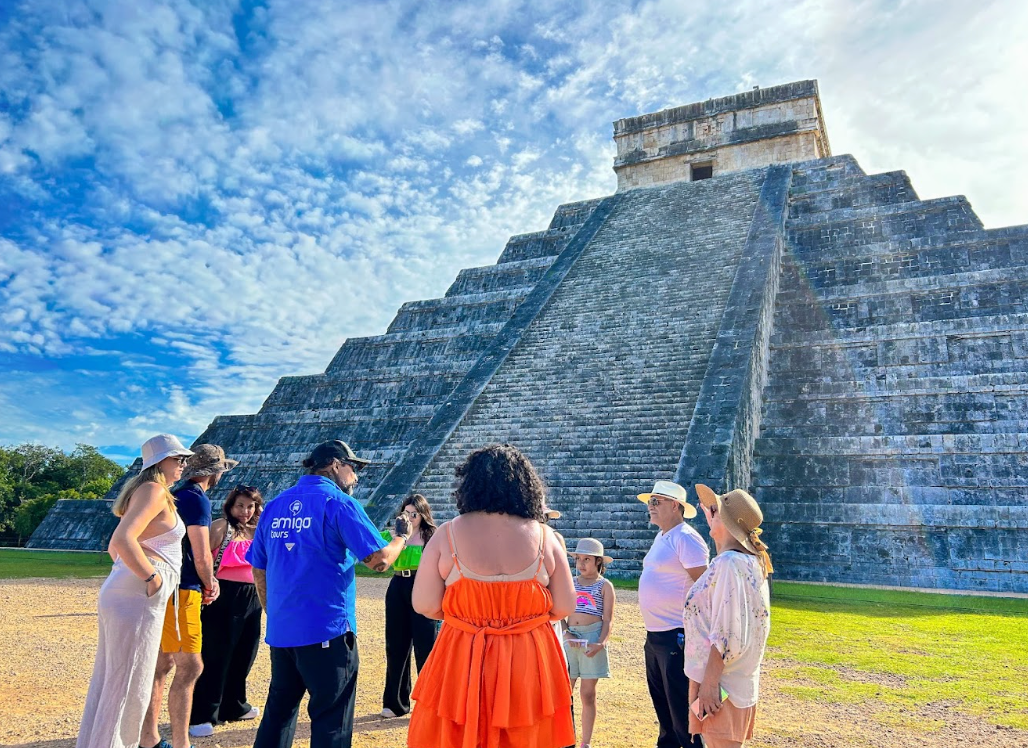
With a robust presence in North America, Amigo Tours provides the foundational volume for the group. They specialize in high-frequency, reliable day trips and excursions, providing the predictable revenue stream necessary for a private equity model.
2. WalksDevour
This acquisition is a play for the "passion traveler." By focusing on food and culture, WalksDevour targets the demographic that prioritizes authentic, immersive local experiences. Their operational model relies on high-quality storytelling—a premium product that commands higher margins and fosters brand loyalty.
3. Askos Tours
Askos brings the academic and historical rigor to the portfolio. Specializing in archaeological and cultural site visits, they provide the "prestige" element of the experience, ensuring that Flagship Group can cater to the educational and intellectual interests of the luxury and boutique travel segments.
Together, these three companies allow Flagship Group to operate across North America, Europe, and Japan, creating a global footprint that can scale as new entities are added to the portfolio.
Supporting Data: The Case for the "Counter-AI" Play
In a year defined by the rise of Generative AI, the experiences sector is being positioned as a rare, human-centric "counter-AI" play. As digital tools become better at automating the booking process, the actual delivery of a tour becomes the ultimate differentiator.
Data from the experiences sector suggests that travelers are increasingly willing to pay a premium for "un-automatable" moments. While an AI can book a flight, it cannot lead a walking tour through the Roman Forum or teach a traveler how to make authentic pasta in a Florentine kitchen.
- Market Fragmentation: Estimates suggest that over 80% of tour operators are small businesses with fewer than 10 employees. This creates massive potential for "economies of scale" through centralized accounting, HR, and digital marketing services.
- The Rebound: According to Skift Research, the experiences segment has seen the fastest growth post-pandemic compared to other travel verticals, with a Compound Annual Growth Rate (CAGR) projected to exceed 10% through 2027.
- Operational Synergies: By centralizing back-office operations, Flagship Group expects to reduce operational costs for its subsidiaries by 15–20% within the first 24 months, allowing for greater investment in the actual guest experience.
Official Responses and Strategic Vision
The industry response to Flagship Group’s move has been one of cautious optimism. For small operators, the prospect of being acquired by a larger, well-funded parent company offers a safety net that has been absent for years.
"For an operator, the benefit is twofold," notes one industry analyst. "You gain access to institutional capital, and you offload the burden of tech stack management. You get to focus on what you’re good at: guiding."
Charaf El Mansouri emphasizes that the goal is not to homogenize these brands, but to empower them. "We aren’t looking to strip away the local character that makes these companies special. We are looking to remove the friction that prevents them from scaling. We provide the plumbing; they provide the magic."
Implications for the Future of Travel
The entry of Flagship Group into the experiences market is likely the first domino in a larger trend. We can expect several ripple effects across the industry:
1. The Rise of the "Experience Brand"
Historically, travelers were loyal to hotel chains or airlines. The success of this roll-up strategy could shift brand loyalty toward experience providers. A traveler who enjoys a WalkDevour experience in Italy may be inclined to book an Askos tour in Japan, provided the booking interface and service standard remain consistent.
2. Digital Transformation
The fragmented nature of the market has historically meant that many operators still rely on manual booking processes or antiquated software. Flagship Group’s capital injection will likely accelerate the adoption of unified booking systems, mobile-first guest experiences, and sophisticated revenue management software.
3. Consolidation of Distribution
As these companies grow, they will have more leverage against Online Travel Agencies (OTAs) like Viator and GetYourGuide. By controlling a significant portion of the supply chain, Flagship Group can dictate more favorable terms, potentially reducing the heavy commission fees that currently squeeze small operators.
4. Quality Standardization
One of the primary risks of a roll-up is the dilution of quality. If the parent company focuses too heavily on cost-cutting, the "authentic" element of the tour could suffer. Flagship Group faces the challenge of maintaining the bespoke nature of their acquired brands while achieving the efficiency of a global conglomerate.
Conclusion: The Path Ahead
Flagship Group has identified a clear gap in the travel industry: the disconnect between the desire for authentic, human-led experiences and the operational reality of a disorganized, fragmented market. By acquiring a diverse portfolio of companies and applying a rigorous, private-equity-backed operational framework, they are attempting to build the architecture of the modern tour sector.
While the "roll-up" strategy is fraught with challenges—ranging from the difficulty of integrating disparate corporate cultures to the risk of over-leveraging—the timing appears to be in their favor. With travel demand surging and the market hungry for a professionalized, high-quality experience, Flagship Group is positioned to transform from a collection of parts into a dominant global player.
The question remains: will this consolidation lead to a more seamless experience for the traveler, or will it turn the local charm of the tour industry into a standardized corporate product? For now, the industry is watching closely. If Flagship succeeds, the era of the "boutique" operator may be evolving into the era of the "global experience network."
