





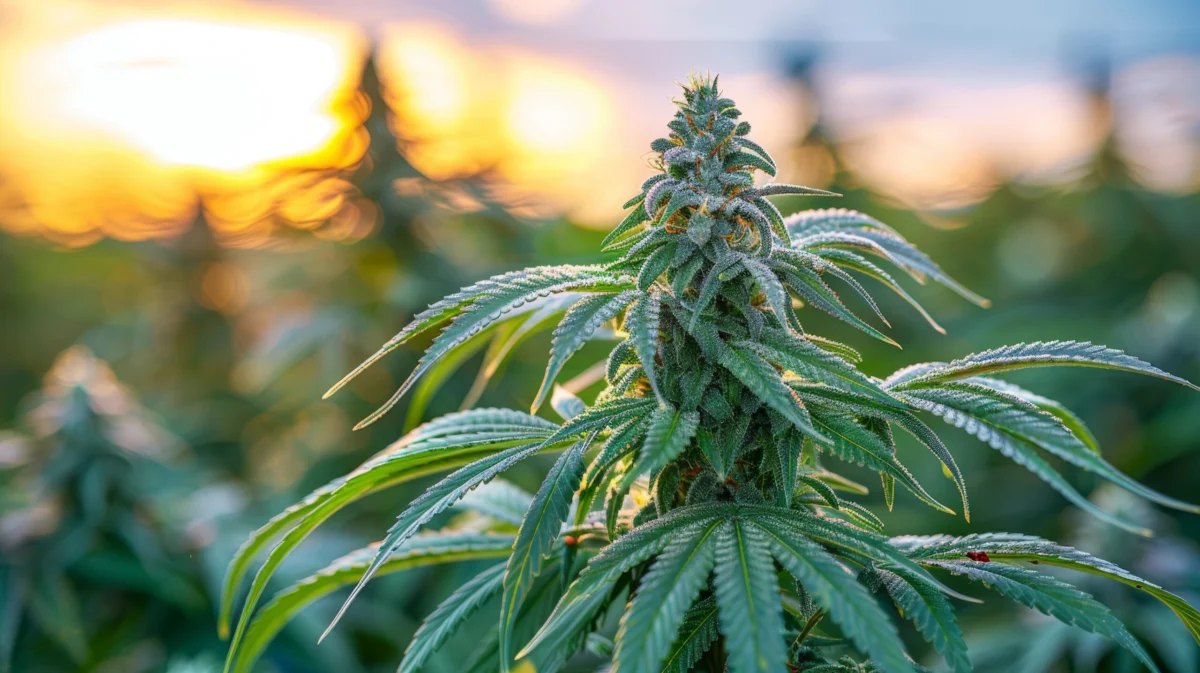
For years, the U.S. hemp industry operated within a regulatory "gray zone," capitalizing on a legislative oversight in the 2018 Farm Bill that inadvertently opened the door for a massive market of intoxicating, hemp-derived cannabinoids. From delta-8 THC gummies sold at roadside gas stations to potent HHC vapes, these products proliferated with little oversight. However, that era of ambiguity has come to a definitive close.
In late 2025, Congress enacted sweeping legislation that effectively shuts down the intoxicating hemp market, reclassifying the vast majority of these products as illegal controlled substances. For the cannabis and hemp sectors, and the insurers tasked with underwriting their risks, the message is clear: the grace period is over, and the clock is ticking toward a December 11, 2026, enforcement deadline.
Main Facts: The New "Total THC" Standard
The cornerstone of the new federal legislation is a radical shift in how hemp is defined. Moving away from the singular focus on delta-9 THC concentration, the law now mandates a "total THC" standard. This metric accounts for all forms of THC—including synthetic and lab-converted cannabinoids like delta-8, delta-10, and THCA—rather than solely focusing on the traditional delta-9 content.
Under these new federal guidelines, finished hemp products are capped at a meager 0.4 milligrams of total THC per container. Industry analysts estimate that approximately 95% of the hemp-derived cannabinoid products currently populating retail shelves will fail to meet this threshold. Any product exceeding these limits will be reclassified as marijuana under the Controlled Substances Act, subjecting manufacturers, distributors, and retailers to the full weight of federal drug enforcement.
A Chronology of the Crackdown
The journey toward this federal intervention was neither sudden nor unexpected for those who have monitored the industry closely since 2021.
- 2021: Intoxicating hemp-derived products begin appearing in mainstream retail outlets, sparking immediate concern among legal cannabis operators and insurance underwriters regarding the "derivatives loophole."
- Late 2025: Congress passes legislation fundamentally rewriting the definition of hemp.
- August 2026: A wave of litigation breaks out, led by industry groups in Texas challenging the state’s attempt to reclassify hemp-derived compounds as Schedule I substances. Federal judges largely side against the industry, signaling a judicial trend of deference to legislative intent.
- August 8, 2026: The U.S. Senate passes H.R. 6500, a bipartisan bill that delays the ban’s implementation.
- September 1, 2026: The U.S. House of Representatives grants final congressional approval to H.R. 6500, pushing the implementation date for naturally derived hemp THC products to December 11, 2026.
- November 12, 2026: The hard deadline for synthetic cannabinoids, which remain excluded from the one-month reprieve.
The Industry’s Fight for Survival
The hemp industry has not accepted these changes passively. A multi-front battle is currently underway, characterized by both courtroom litigation and desperate legislative lobbying.
Texas has emerged as the epicenter of this conflict. Earlier this year, trade groups filed suit against the Texas Department of State Health Services, arguing that the state’s aggressive reclassification of hemp-derived THC violates the 2018 Farm Bill, infringes upon due process, and places an unconstitutional burden on interstate commerce. Despite these arguments, federal courts have been reluctant to intervene, finding the industry’s constitutional claims weak compared to the state’s authority to regulate controlled substances.
Legislatively, the "Hemp Planting Predictability Act" remains the industry’s primary hope. Backed by a bipartisan coalition including Senators Amy Klobuchar, Rand Paul, and Jeff Merkley, the act proposes a two-year extension of the implementation date to November 2028. While the White House has signaled a willingness to protect non-intoxicating CBD products, the appetite for protecting intoxicating hemp-derived products remains low on Capitol Hill.
Implications for the Insurance Sector
For insurers, the transition period between now and December 11 is critical. Ian Stewart, co-chair of Wilson Elser’s Cannabis Law Practice, warns that waiting is the most dangerous risk management strategy an organization can adopt.
The Product Liability Quagmire
The most immediate impact will be felt in product liability and property insurance. Policies written under the assumption of "legal hemp" may, by December 11, be providing coverage for the sale of federally prohibited marijuana. This triggers a cascade of coverage questions:
- Illegal Acts Exclusions: If a policyholder continues to sell products that are now classified as Schedule I substances, do standard "illegal acts" or "controlled substance" exclusions apply?
- Mid-Transit Reclassification: Cargo and stock-throughput programs face massive exposure. If a shipment leaves a warehouse as legal inventory and is reclassified as contraband while in transit, the determination of liability and coverage becomes a legal nightmare.
Collateral Risks and Financial Exposure
Beyond the policy document, the ripple effects will be felt throughout the corporate structure of hemp businesses:
- Contractual Disputes: Landlords may terminate leases if the premises are being used to house, store, or sell newly illegal substances.
- Investor Litigation: Investors who funded hemp ventures under the premise of legality may bring derivative suits against management for failing to navigate the changing regulatory environment.
- The 280E Tax Trap: Perhaps most damaging is the application of Section 280E of the Internal Revenue Code. By moving into the "marijuana" category, businesses lose the ability to deduct ordinary business expenses. This creates an immediate, crushing tax burden that could render many, if not most, of these businesses insolvent.
A Call for Compliance and Diversification
The intoxicating hemp market was an experiment built on a legislative loophole—a "borrowed time" business model that was fundamentally at odds with the tightly regulated cannabis industry. The correction now underway is a return to a more rigid federal structure.
For hemp operators, the path forward requires a stark pivot. The most resilient firms are those currently diversifying into non-intoxicating, compliant CBD products or seeking to enter the regulated, state-legal cannabis markets where compliance infrastructure is already well-established.
For insurers, the directive is to conduct an immediate audit of their books. Underwriters must update policy forms, re-examine their risk appetite, and ensure they have a clear understanding of exactly what their insureds are manufacturing and distributing.
As the December 11 deadline approaches, the distinction between "hemp" and "marijuana" will no longer be a matter of creative interpretation; it will be a matter of federal law. Companies that fail to adapt to this new reality will not only face the scrutiny of regulators but will likely find themselves without the essential safety net of insurance coverage in an increasingly hostile legal environment.
The era of the "legal high" via the Farm Bill loophole is effectively over. For the industry, the future is now defined by total compliance or total cessation.
