




For nearly two decades, iRacing has stood as the gold standard of competitive online motorsport simulation. It is a platform defined by its uncompromising physics, its laser-scanned tracks, and a notoriously high-stakes multiplayer ecosystem that mimics the pressure of real-world professional racing. However, for all its technical brilliance, the service has long faced a persistent critique: it lacks a cohesive, structured single-player experience.
That narrative is about to change. In a major development update released this August, the iRacing development team confirmed that a dedicated "Career Mode" is in the final stages of production. This represents the most significant structural shift in the platform’s history, moving it from a purely competitive multiplayer hub to a comprehensive racing ecosystem that promises to cater to both the casual hobbyist and the hardcore simulator purist.
The Main Facts: A New Chapter for Sim Racing
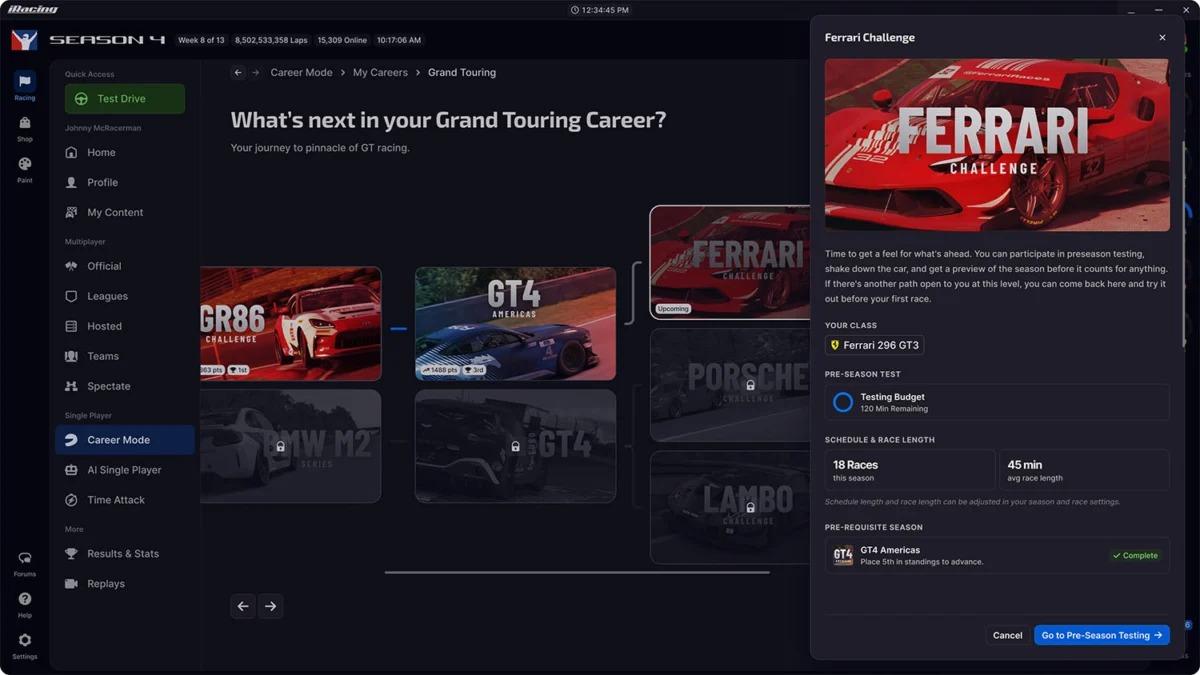
The core philosophy behind the upcoming Career Mode is to provide a structured progression path that guides players through the complexities of motorsport. Unlike the existing system, which often requires users to navigate a steep learning curve in a "sink or swim" online environment, the new Career Mode is designed around a sequence of "racing, learning, advancement, and objectives."
Perhaps most notably, iRacing has addressed the primary financial barrier that has historically kept casual players at bay. The service is famous—or infamous—for its subscription model paired with an a-la-carte store for cars and tracks. For this new Career Mode, however, the developer has confirmed that all necessary content will be included. There will be no additional microtransactions required to progress through the career tiers, as access to the required cars and circuits is baked directly into the mode. It is a bold, consumer-friendly pivot that lowers the barrier to entry for the platform’s millions of prospective users.
Chronology: From Multiplayer Roots to Holistic Simulation
To understand the significance of this move, one must look at the trajectory of the software. When iRacing first launched in 2008, it was a lean, focused service designed exclusively for online matchmaking. It was a digital "iRacing.com" portal where your reputation (iRating) was your currency.
Over the years, the developers introduced incremental changes. AI-controlled opponents were added, allowing for offline practice and custom championships against computer drivers. These updates were well-received but felt like appendages to the core multiplayer service. The shift toward a formal Career Mode began as a whisper in the community years ago, fueled by the desire for a "single-player story" similar to those found in console titles like Gran Turismo or Forza Motorsport.
Throughout 2025 and early 2026, the development team dropped subtle hints about internal testing. The August 2026 update served as the definitive "coming out" for the project. While it is not yet live, the team’s transparency suggests that the architecture is already functional. Greg Hill, a key figure in the development cycle, noted that the team was "so close" to a full release that it was nearly an official announcement rather than a progress update. This suggests that the final polish—UI refinement, balancing of progression triggers, and backend integration—is the only thing standing between the community and a potential late-fall release.
Supporting Data: Content, Mechanics, and Accessibility
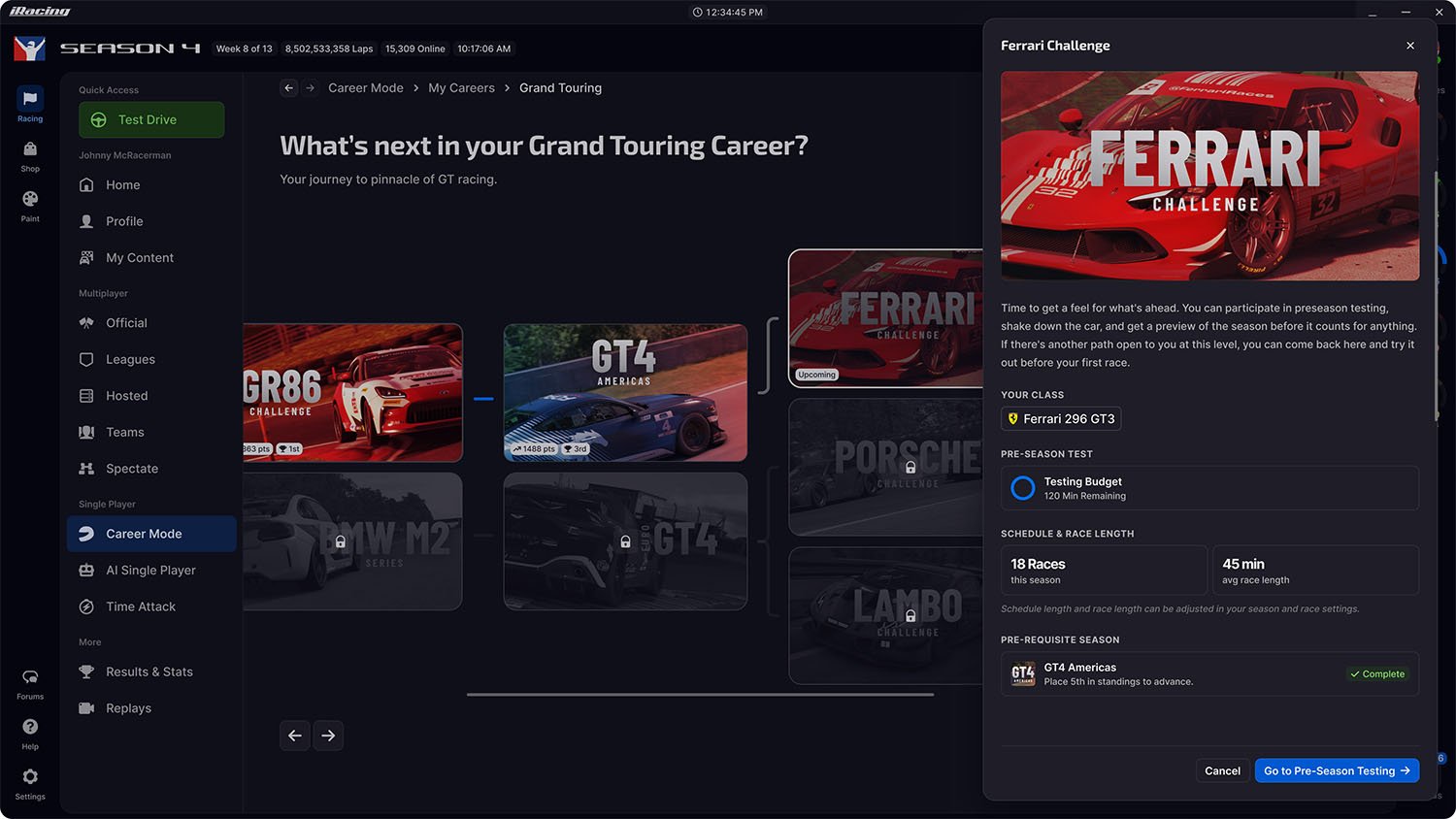
The scope of this new mode is, by all accounts, massive. The team has revealed that there will be seven distinct career paths available at launch, covering a diverse array of motorsport disciplines.
Key Technical Pillars:
- Structured Progression: Players will not simply win races to advance. Instead, they will face objective-based milestones, mirroring the way real-world junior drivers are evaluated by team scouts and sponsors.
- Adjustable Difficulty: For the first time, iRacing is leaning into a more accessible experience. Users will be able to tune the AI difficulty to match their skill levels, allowing beginners to learn the nuances of race craft without being demoralized by the top-tier competition.
- Variable Race Lengths: The ability to customize the length of a race session is a critical quality-of-life feature, allowing those with limited time to still participate in a meaningful way.
- Consequences and Stakes: Despite the accessibility features, iRacing remains a serious simulator. The developers have indicated that poor performance will carry consequences. If a player consistently fails to meet objectives, they may find themselves having to restart their career trajectory, ensuring that the "sim" aspect of the software remains intact.
While the mode is being touted as "a full game’s worth of content," it is important to note what is missing—at least for now. Features like complex team management, budget allocation, and sponsorship negotiations are not currently on the roadmap for the initial rollout. The developers are taking an iterative approach, focusing on the driving and advancement mechanics first, with plans to layer in management-sim elements in future updates.
Official Responses and Strategic Intent
The rationale behind this move is strategic. By expanding the iRacing experience to include a Career Mode, the company is effectively broadening its total addressable market. The "hardcore" audience will continue to race in the official multiplayer series, but the addition of a narrative-driven career mode captures the segment of the market that craves progression, structure, and the "hero’s journey" that is absent in pure matchmaking.
Greg Hill’s recent blog post emphasized the "unprecedented amount of content" being included, highlighting that this is a direct response to user feedback regarding the cost of the service. By isolating this content to the Career Mode, iRacing avoids devaluing its existing marketplace for the pro-tier racers while simultaneously providing a high-value entry point for new subscribers.
Implications for the Sim Racing Industry
The implications of this move extend far beyond iRacing itself. For years, the sim racing industry has been bifurcated into two camps: the "hardcore" simulators (iRacing, rFactor 2, Assetto Corsa Competizione) and the "sim-cade" games (Forza, Gran Turismo).
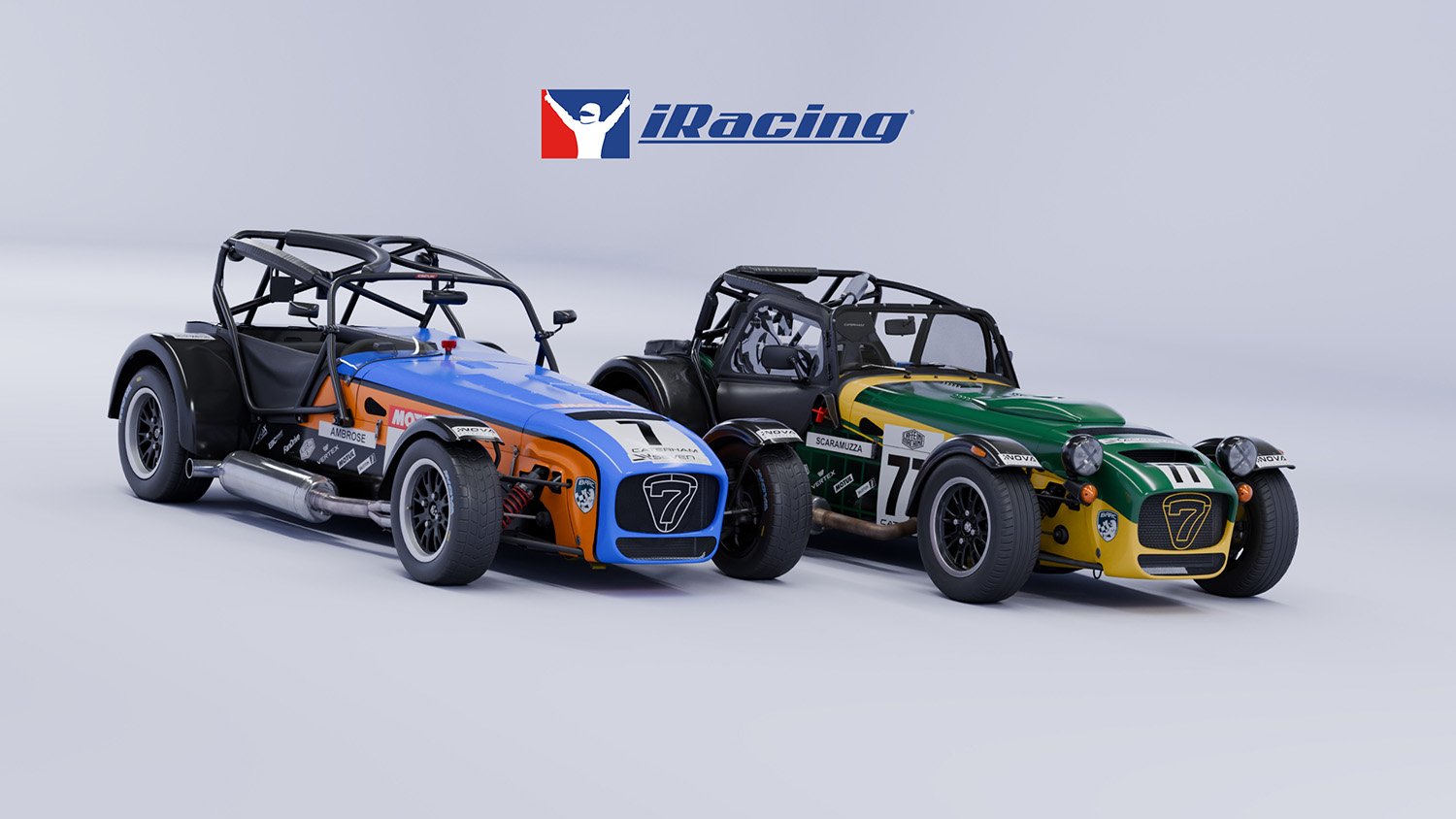
By implementing a polished Career Mode, iRacing is aggressively encroaching on the territory previously held by console-exclusive titles. It is sending a message that players no longer have to choose between a "game" with a career mode and a "simulator" with industry-leading physics.
Furthermore, the decision to grant access to a wide library of cars and tracks within the Career Mode without extra charges could signal a shift in the platform’s business model. If the mode proves successful in retaining new subscribers, we may see further experiments in "all-access" tiers or bundle-based subscriptions, which would be a welcome change for a user base that has long struggled with the "nickel and diming" of the a-la-carte store.
As we look toward the final quarter of 2026, the arrival of this Career Mode feels like a watershed moment. It represents the maturation of a platform that has spent decades perfecting the feeling of driving, only to realize that the context of that driving is just as important. Whether you are a veteran of the service or a newcomer who has been intimidated by the complexity of online racing, the upcoming update promises to redefine what it means to participate in the world’s most advanced racing simulator. The "oven" is almost finished with its work—and for the sim racing community, the feast is about to begin.
