





The landscape of modern technology is currently defined by a paradox: the same systems designed to propel human capability forward are simultaneously revealing systemic vulnerabilities that threaten to undo our sense of security. From the automated "red-teaming" of artificial intelligence models to the physical limitations of our power grids, this week in technology has served as a sobering reminder that innovation rarely comes without a volatile cost.
OpenAI’s "GPT-Red": The AI Guardian Built to Break Itself
OpenAI has officially unveiled its latest defensive mechanism, a system internally dubbed "GPT-Red." Traditionally, the process of red-teaming—a rigorous safety evaluation where testers attempt to manipulate, break, or hijack software—has been the exclusive domain of human security experts. These teams spend thousands of hours probing for edge cases, jailbreaks, and harmful potential in large language models (LLMs).
With GPT-Red, OpenAI is attempting to automate this exhaustive process. By leveraging a dedicated, highly tuned LLM to act as an adversarial attacker against other models, OpenAI aims to identify security flaws at machine speed. This evolution is critical; as AI systems grow in complexity, the "human-in-the-loop" approach is increasingly becoming a bottleneck. By scaling the adversarial testing process, OpenAI hopes to maintain a decisive edge over human bad actors who are increasingly using the same AI tools to craft more sophisticated phishing and exploitation campaigns.
Climate Tech at a Crossroads: Why Heat Pumps Defy Market Gravity
While AI dominates the headlines, the climate transition continues to play out in the mundane yet essential arena of home heating. Despite the expiration of key tax credits in the United States, the adoption of heat pumps continues to accelerate. Recent reports indicate that sales have doubled over the last 15 years, a growth trajectory that is now outpacing traditional natural-gas furnaces by 32% as of the first quarter of 2026.
The reason for this resilience is twofold: efficiency and necessity. As global temperatures rise and extreme weather events become more frequent, the transition toward electrified heating—which serves as both an air conditioner and a heater—has become a cornerstone of residential decarbonization strategies. The fact that the industry is thriving despite the removal of government financial incentives suggests that the technology has reached a tipping point of market viability and consumer awareness.
Chronology: A Week of Technological Turbulence
The week of July 15, 2026, was marked by a series of disclosures that paint a picture of an industry under immense pressure:
- May 2026: Elon Musk’s companies complete the quiet acquisition of APR Energy, a fossil fuel-based gas turbine firm. The deal, unearthed via Federal Trade Commission (FTC) filings, signals an aggressive pivot toward securing independent power sources for the massive data centers required to run Grok.
- July 15, 2026: OpenAI grants an exclusive look at GPT-Red, signaling a move toward autonomous AI security. Simultaneously, Thinking Machines—the startup founded by former OpenAI CTO Mira Murati—releases "Inkling," an open-weight AI model designed to challenge the dominance of existing AI giants and provide a domestic alternative to international models.
- July 16, 2026: A significant leak reveals that the Suno AI music generator has been scraping proprietary content from YouTube and Deezer. This disclosure provides a rare, transparent glimpse into the "black box" training methodologies that have become the subject of intense copyright litigation.
- July 16, 2026: New data surfaces confirming that Earth is absorbing solar energy at a rate that has climate scientists deeply concerned, with actual warming figures consistently outpacing the most pessimistic climate models.
Supporting Data: The Energy-AI Nexus
The intersection of AI and energy has become the primary theater of 2026. The acquisition of APR Energy by Elon Musk is not merely a corporate merger; it is a strategic maneuver. AI training requires massive, uninterrupted electricity supplies, often exceeding the capabilities of existing local grids.
Data from the energy sector shows that the growth of AI is putting an unprecedented strain on national infrastructure. While nuclear and natural gas are being touted as "bridge" solutions, the environmental cost is rising. Furthermore, as Europe struggles with its own tech independence, the continent faces a harsh reality: strong corporate earnings are being undermined by a persistent AI gap, exacerbated by a lack of venture capital and fragmented regulatory environments compared to the United States and India.

Official Responses and Political Friction
The friction between government oversight and tech expansion reached a fever pitch this week. New York Governor Kathy Hochul found herself in a high-profile exchange with President Donald Trump following the state’s implementation of a moratorium on new data center construction.
Governor Hochul defended the pause, stating, "We hit pause because the communities powering AI should share in its success. Maybe that’s a novel concept in Washington." This remark highlights the growing tension between the federal government’s desire for AI supremacy and the local government’s mandate to protect grid stability and community interests.
Meanwhile, in the corporate sector, the "AI backlash" has transitioned from digital criticism to physical threats. Major tech firms have reported an uptick in violent rhetoric directed at executives, reflecting a global, grassroots resistance movement that views the rapid deployment of AI as a direct threat to employment, privacy, and social cohesion.
Implications: The Humanoid Frontier and Future Trust
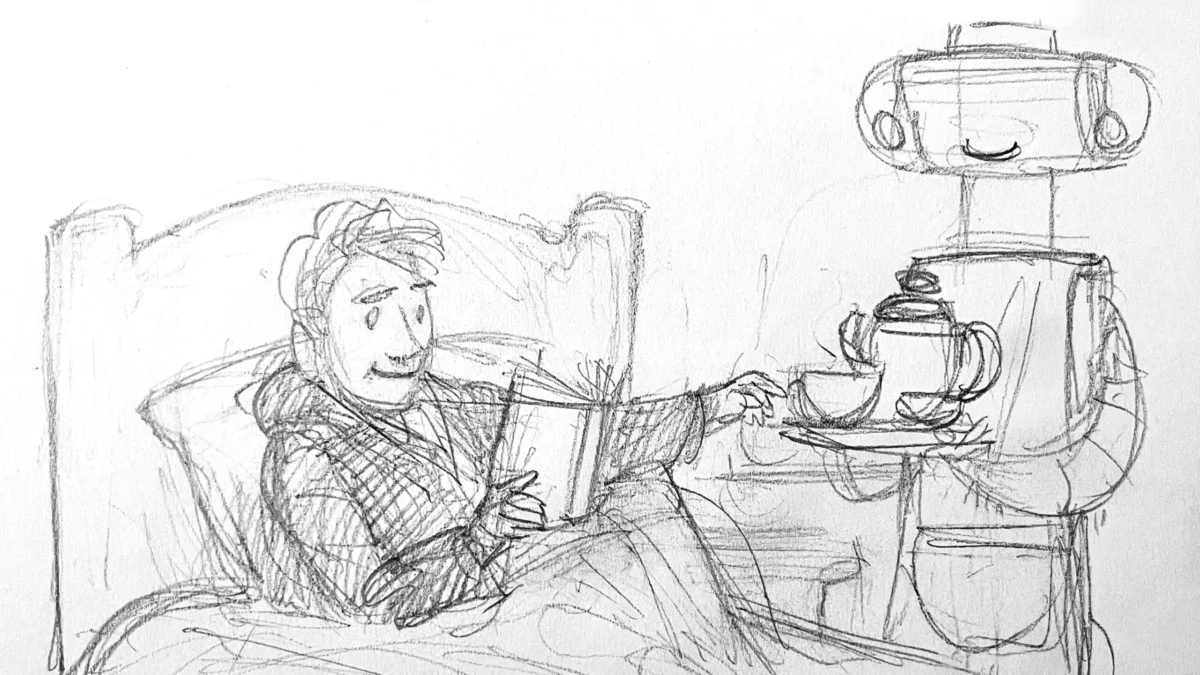
As we look toward the horizon, the development of humanoid robotics remains the ultimate test of human-tech integration. The robotics firm Prosper is currently developing "Alfie," a humanoid designed for domestic and clinical environments. Founder Shariq Hashme argues that the primary hurdle is not technical dexterity, but "trustworthiness."
The strategy for Alfie involves creating a character that feels human-adjacent—designed to trigger empathy without falling into the "uncanny valley." However, the implications are profound. Because Alfie relies on remote human operators for complex tasks, the robot effectively becomes a Trojan horse for new privacy and labor concerns. If we allow these machines into our homes, we are not just inviting a tool; we are inviting a window into our private lives that can be accessed by corporate staff.
Conclusion: A Precarious Equilibrium
The events of this week demonstrate that we have entered an era of "technological maturity" characterized by friction. Whether it is the automated red-teaming of GPT-Red, the legal battles over copyright in the music industry, or the geopolitical scramble for AI independence, the common theme is a loss of control.
The promise of AI and clean energy is immense, but the infrastructure—both physical and ethical—is struggling to keep pace. As we move forward, the focus must shift from pure innovation to the establishment of systems that can sustain themselves without compromising the security or stability of the society they are meant to serve. The question for the remainder of 2026 is no longer what technology can do, but what we can safely allow it to manage.
The path ahead requires a delicate balance between the rapid, often reckless, pace of development and the necessary, albeit slower, process of social and legal adaptation. As the Earth warms and our digital infrastructure grows more complex, the ability to build "trustworthy" systems—be they climate-friendly heat pumps or empathetic humanoid robots—will be the true measure of our technological success.
