




It feels counterintuitive—perhaps even masochistic—to contemplate the intricacies of heating appliances while the Northeastern United States is gripped by the relentless, stifling humidity of mid-summer. Yet, as heat waves shatter temperature records across the country, the conversation surrounding home climate control has never been more urgent. At the center of this dialogue is the heat pump: a technology that, despite the sweltering heat of the present, is quietly reshaping how we power our homes and fight climate change.
In a striking display of market resilience, heat pumps have not only solidified their position as a preferred alternative to traditional fossil-fuel heating but are actively winning the race against natural-gas furnaces. Despite the expiration of federal tax credits that many analysts feared would derail the industry, the "heat pump era" appears more robust than ever.
The Mechanics of a Modern Marvel
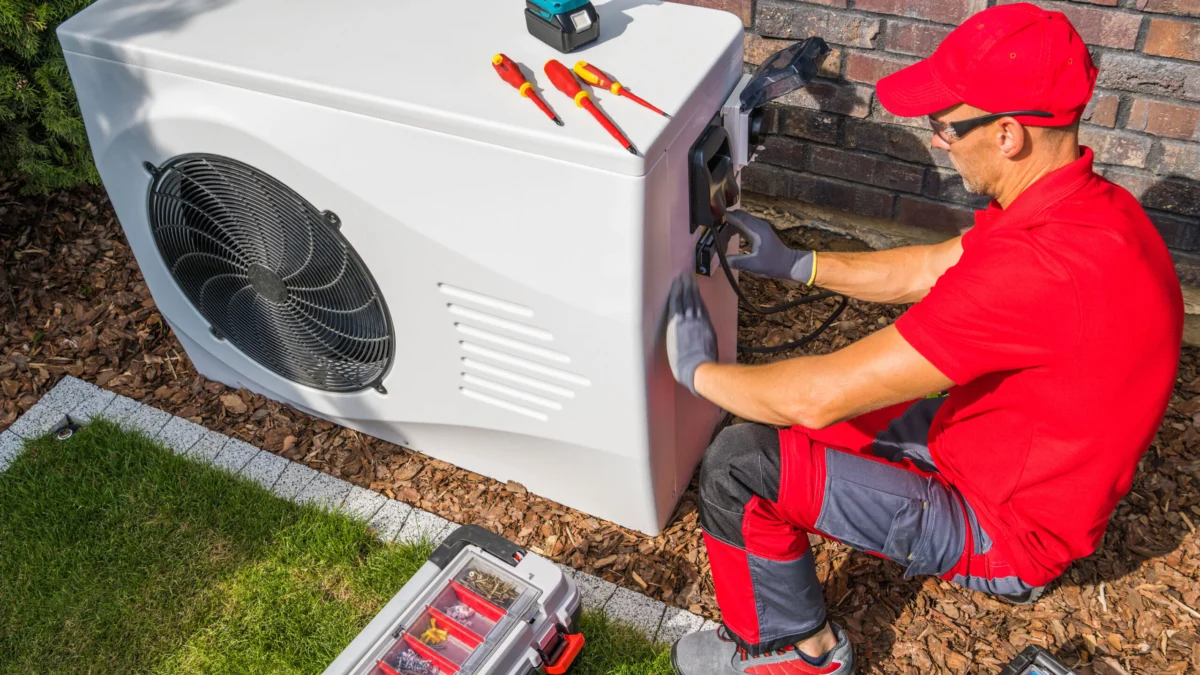
To understand why the heat pump has become the standard-bearer for the transition to electric buildings, one must look past the buzzwords and into the thermodynamics. Unlike traditional furnaces that generate heat by burning fuel—a process inherently limited by the laws of physics—a heat pump simply moves existing thermal energy from one location to another.
By utilizing a refrigerant that cycles through expansion and compression, the device captures heat from the outside air (even in freezing temperatures) or the ground and transfers it indoors. Crucially, the process is reversible. When summer peaks and the air conditioning becomes a necessity rather than a luxury, the heat pump simply flips its cycle, extracting heat from the interior of a building and dumping it outside. This dual-purpose efficiency makes it a cornerstone of residential decarbonization. Because they rely on electricity rather than the combustion of methane, heat pumps offer a direct path to lowering a household’s carbon footprint, especially as the electrical grid becomes increasingly powered by renewable sources.
Chronology of a Policy Shift
The recent trajectory of the heat pump market has been defined by a significant clash between government policy and consumer behavior. For years, the U.S. federal government championed the technology as a key component of the 2022 Inflation Reduction Act (IRA). Households making the switch between 2023 and 2025 were eligible for up to $2,000 in federal tax credits, a subsidy designed to offset the higher upfront capital costs of heat pump equipment compared to standard gas furnaces.
However, the political landscape shifted in 2025. The Trump administration, as part of a broader rollback of climate-focused initiatives, moved to eliminate these subsidies. Effective January 1, 2026, the era of federal financial assistance for heat pump installation officially closed.
For industry observers, this sunset clause was viewed with deep skepticism. Many analysts drew direct parallels to the electric vehicle (EV) market. In late 2025, when the $7,500 federal EV tax credit expired, the market reacted with predictable volatility: sales surged in anticipation of the deadline and subsequently "fell off a cliff" in the following quarter. When the heat pump credits expired, many expected a similar contraction. Instead, the market defied the precedent.
Supporting Data: Why the Demand Persists
The data arriving from the first half of 2026 provides a fascinating case study in market maturation. According to figures from the Air Conditioning, Heating, and Refrigeration Institute (AHRI), which represents roughly 90% of the U.S. HVAC market, heat pump shipments remained stable from December 2025 to January 2026 and have tracked a steady upward trajectory throughout the spring.
Most tellingly, in the first quarter of 2026, heat pumps outpaced natural-gas furnace sales by 32%. This is not merely a seasonal fluke; it is an acceleration of a trend that has seen heat pumps outsell gas furnaces annually for the past four years.
Lucas Davis, an energy economist and professor at UC Berkeley, recently synthesized this data in a detailed analysis. Davis notes that the "cliff" that many feared would follow the removal of the tax credit never materialized. He argues that the U.S. market has reached a critical tipping point—a state of maturity where the technology is no longer reliant on artificial price supports to justify its adoption. The case for the heat pump, rooted in long-term operational cost savings and superior efficiency, has become self-sustaining.
Official Responses and Economic Implications
The resilience of the heat pump market is being viewed by economists as a signal that the "early adopter" phase is over. The technology has successfully transitioned into the "early majority" phase of the product lifecycle.
Industry leaders suggest that the shift is driven by three primary factors:
- Operational Economics: While the upfront cost remains a barrier, the volatility of fossil fuel prices—specifically natural gas—has made the stability of electric heating increasingly attractive to homeowners. Once installed, the monthly savings on energy bills often recoup the price difference within a few years.
- Technological Maturity: Advancements in cold-climate heat pump technology have effectively silenced the myth that these units cannot function in sub-zero temperatures. Modern systems are capable of maintaining high efficiency even in the harshest northern winters.
- The "Network Effect": As more homeowners install heat pumps, the ecosystem of skilled labor, maintenance, and parts availability has expanded. This creates a virtuous cycle where installation becomes faster, cheaper, and more reliable.
However, the expiration of the tax credit does not mean the challenge is over. Policy advocates and environmental groups remain concerned that the removal of incentives will disproportionately affect low-to-middle-income households for whom the upfront cost remains a significant hurdle. While the "market" may be strong, equity in the energy transition remains a point of contention. Without government-backed financing or low-interest loans to replace the defunct tax credits, the transition could stall among those who need the energy-bill savings most.
A Global Perspective
The U.S. experience is mirrored by similar developments on the international stage. In Germany, which has struggled with its own energy transition, heat pumps have become a focal point of residential policy. Despite intense political debate over "heating laws," consumer interest in heat pumps remains elevated. Similarly, China has aggressively scaled its manufacturing capacity for heat pumps, not only to satisfy domestic demand but to dominate the global supply chain, further driving down costs for consumers worldwide.
The IEA’s Global Energy Review for 2026 highlights that the transition to heat pumps is now a global imperative. The technology is no longer an "alternative" energy source; it is becoming the default choice for new construction and home retrofits across developed economies.
Conclusion: The Era of the Heat Pump
In 2024, MIT Technology Review named the heat pump as one of its annual breakthrough technologies, declaring that the world had entered "the era of the heat pump." The events of 2026 have served to validate that assessment.
The path to decarbonizing the world’s building stock is rarely a straight line. Roadblocks, policy reversals, and economic fluctuations are inevitable. Yet, the current data suggests that the momentum behind heat pump adoption is more than just a reaction to government policy—it is a fundamental shift in how society views home climate control.
As we look toward the future, the lessons of 2026 are clear: when a technology provides tangible, long-term value to the consumer, it possesses a resilience that can weather the withdrawal of government support. The heat pump has proven that it can thrive on its own merits, and as the climate continues to change, the demand for this efficient, versatile, and electrified solution is only likely to grow. The era of the heat pump is not just here; it is accelerating.
