





Skift Take
Google Maps is bringing spatial context to AI hotel search. By weaving personal itinerary data into the fabric of real-time location analytics, Google is transforming the platform from a simple navigation tool into a comprehensive travel concierge—all before the booking process even begins.
Main Facts: The Evolution of Search
The digital travel landscape is undergoing a seismic shift. For years, travelers have relied on a fragmented ecosystem: searching for flights on one platform, hotels on another, and using Google Maps merely to find the distance between the two. Today, Google is collapsing that friction. By integrating generative AI directly into the Google Maps interface, the tech giant is moving beyond static lists and into the realm of hyper-personalized, context-aware travel planning.
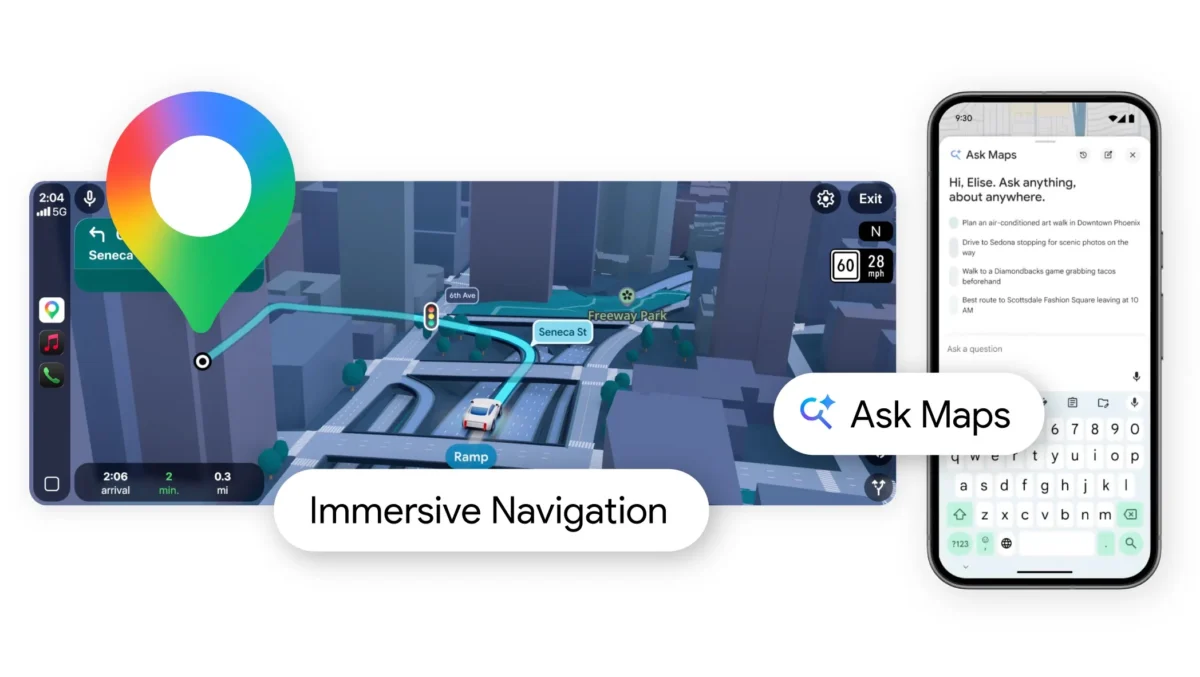
The core of this update lies in the "Ask Maps" feature. Unlike traditional search engines that return a series of blue links or generic hotel aggregators that rely on filtered lists, Ask Maps utilizes Large Language Models (LLMs) to interpret intent. A user can input a complex, multi-layered query—such as, "For next week’s conference in downtown Miami, find me a decently priced, top-rated hotel with an artsy vibe, within walking distance from a gym and restaurants"—and receive a curated response.
Crucially, the data fueling these responses is not a set of cached estimates or speculative price ranges. It is real-time, transactional data. The AI provides actual pricing and availability, bridging the gap between discovery and the final booking funnel.
Chronology: From Static Maps to AI Concierge
To understand the significance of this update, one must look at the trajectory of Google’s mapping technology:
- 2005: Google Maps launches, fundamentally changing how users navigate the physical world through satellite imagery and basic turn-by-turn directions.
- 2010s: Google begins integrating local business data, reviews, and "Nearby" features, transforming Maps into a discovery tool for restaurants and points of interest.
- 2020–2022: The pandemic accelerates the need for real-time data, leading to the introduction of "Live View" and enhanced transit information.
- 2023: Google announces the integration of generative AI into its core search products, setting the stage for the "Search Generative Experience" (SGE).
- 2024: The rollout of "Ask Maps" for hotels signals the beginning of the "Spatial AI" era. By combining deep-learning models with real-time API access to hotel inventory, Google is effectively creating a "travel agent in your pocket" that understands both the user’s preferences and the physical geography of their destination.
Supporting Data: Why Spatial Context Matters
The travel industry has long struggled with the "context gap." A hotel might be rated 4.5 stars, but if it is situated two miles from the traveler’s intended conference center in a city with poor public transit, the rating is irrelevant.
Google’s internal metrics and industry trends suggest that travelers are increasingly suffering from "choice paralysis." With over 200 million places indexed on Google Maps, the ability to filter by subjective criteria—such as an "artsy vibe"—is a massive competitive advantage.
Data shows that users spend, on average, 45 minutes across multiple tabs when planning a trip. By centralizing the discovery phase, Google is aiming to capture that 45-minute window entirely within its ecosystem. The integration of personal itinerary data—pulling details from Gmail and Google Calendar—allows the AI to calculate walking distances, transit times, and even optimal check-in windows based on the user’s specific flight arrival times.
Official Responses and Strategic Vision
While Google has been characteristically guarded about the proprietary technical specifications of its LLM training, company spokespeople have emphasized that the goal is "utility over novelty."
In recent briefings, Google product leads have highlighted that the integration of AI into Maps is an extension of their mission to organize the world’s information. "We are moving from a world where you search for ‘hotels in Miami’ to a world where you can ask, ‘Where should I stay that fits my specific professional and personal needs for this trip?’" said a spokesperson for Google’s Geo division.
The company maintains that the focus remains on providing users with the most accurate, real-time information possible. By surfacing inventory directly within the chat interface, Google is signaling to the travel industry—including OTAs (Online Travel Agencies) like Expedia and Booking.com—that the search experience is becoming an extension of the booking experience itself.
Implications: The Industry Disruption
The End of the "Ten Blue Links"
The implications for the travel industry are profound. For decades, hotel websites and OTAs have relied on Search Engine Optimization (SEO) to rank high on Google’s results page. However, in an AI-driven environment, the "winner-take-all" nature of the top search result is replaced by an AI summary. If the AI identifies a hotel that fits the "artsy, gym-adjacent" criteria, that hotel receives the traffic. This shifts the focus from optimizing for keywords to optimizing for "entities"—ensuring that a property’s digital footprint clearly communicates its vibe, amenities, and proximity to local landmarks to Google’s crawlers.
The Rise of Hyper-Personalization
The integration of personal itinerary data is the "killer app" in this update. By knowing a user’s schedule, Google can preemptively suggest hotels that minimize commute times or align with the user’s preferred morning routine. This creates a "sticky" ecosystem; once a user relies on Google to manage the logistics of their itinerary, the cost of switching to a different platform becomes prohibitively high.
The Shift in Booking Dynamics
While Google currently allows users to view pricing and availability, the ultimate goal is to facilitate the booking transaction without leaving the interface. For hoteliers, this presents a double-edged sword. On one hand, Google provides massive visibility and a streamlined path to conversion. On the other, it creates a dependency on Google as a gatekeeper, potentially increasing the commission fees or marketing spend required to maintain visibility in the AI-generated responses.
A New Standard for Travel Tech
Competitors in the travel space, from startups leveraging LLMs to established booking giants, are now under immense pressure to replicate this level of spatial intelligence. Any platform that fails to provide a conversational interface that understands the relationship between a hotel, a gym, a restaurant, and a user’s flight arrival time will likely find itself relegated to the status of a utility, rather than a destination.
Conclusion: The Horizon of Travel Planning
Google Maps’ integration of AI is not just a feature update; it is a fundamental re-platforming of the travel planning process. By collapsing the distance between geographic data, real-time inventory, and personal context, Google is setting a new standard for what travelers should expect from their digital tools.
As the technology evolves, we can expect to see deeper integrations. Imagine an AI that not only suggests a hotel but also monitors the traffic conditions on the day of your flight to recommend the best time to leave for the airport, or one that updates your restaurant reservations if your flight is delayed.
We are moving away from the era of "search" and into the era of "anticipatory assistance." For the traveler, this means less time staring at spreadsheets and map pins, and more time enjoying the destination. For the industry, it means the rules of the game have changed: the future belongs to those who can provide the most accurate, contextually relevant answers in the blink of an eye. The map is no longer just a guide; it is the travel agent, the strategist, and the concierge, all rolled into one.
