





The American automotive landscape is undergoing a reckoning. For years, the industry’s electrification strategy was defined by a singular, rigid philosophy: bigger is better, further is essential, and luxury is non-negotiable. However, as electric vehicle (EV) market share in the United States stagnates—hovering stubbornly below 10%—the industry is being forced to confront a sobering reality. The strategy of replacing internal combustion engines with high-cost, high-range, heavy-duty battery electric vehicles (BEVs) has hit a wall.
Enter Slate Auto, a disruptor that is betting its future on a radical departure from the status quo. By embracing austerity, simplicity, and a realistic approach to daily driving needs, Slate is attempting to solve the biggest hurdle facing the transition to clean energy: the price tag.
The Philosophy of Austerity: A Return to Basics
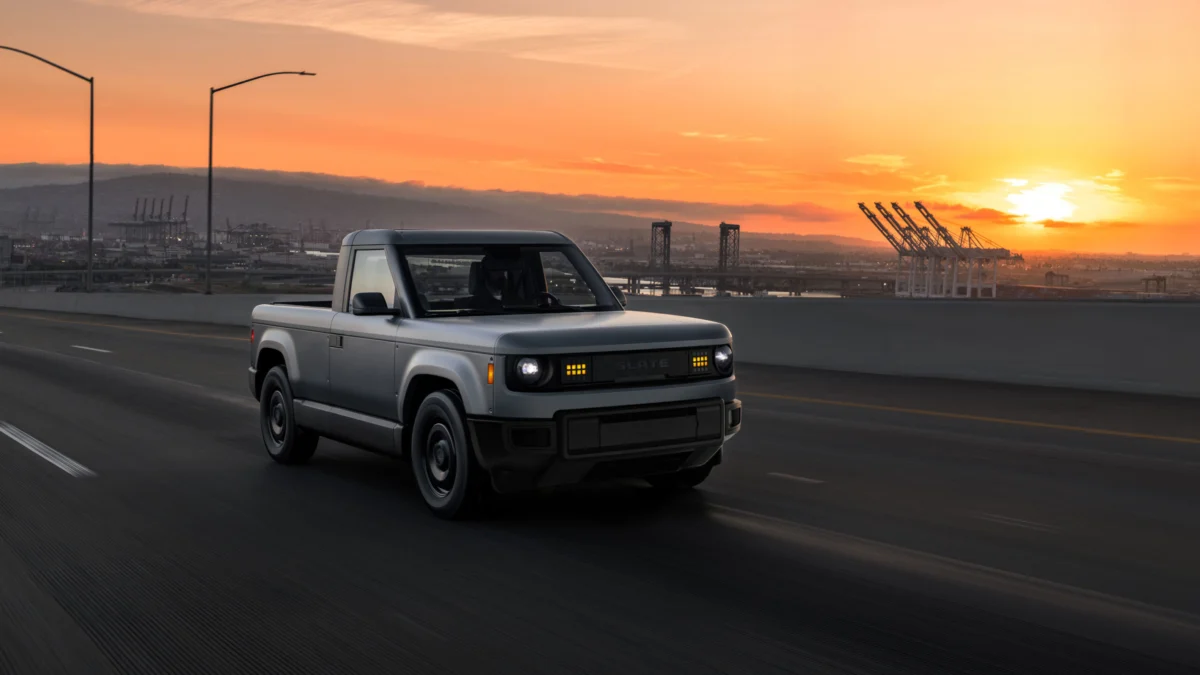
In a market dominated by "range anxiety" and the obsession with SUVs, Slate’s new compact pickup is an anomaly. Shorter than a Honda Civic, the vehicle eschews the bloated dimensions and technological overkill that have pushed the average price of a new U.S. vehicle toward $50,000.
The most discussed feature of the Slate truck is, ironically, its lack of features. The base model arrives with manual, hand-crank windows—a mechanical choice that feels like a deliberate nod to 20th-century utility. Under the hood, or rather, within the chassis, lies a modest 65-kilowatt-hour lithium iron phosphate (LFP) battery. With a quoted range of just 205 miles, the Slate truck makes no attempt to compete with the 300-plus-mile behemoths that define the current premium EV market.
By sacrificing the "frills"—power windows, premium audio, and massive battery arrays—Slate has achieved a price point below $25,000. Even with optional upgrades like vinyl wraps or Bluetooth connectivity, the vehicle remains remarkably affordable. It is a product designed not for the status-conscious road-tripper, but for the pragmatic commuter facing a persistent cost-of-living crisis.
A Chronology of the EV Stumble
To understand why Slate’s approach is so radical, one must look at the recent, turbulent history of the U.S. electric vehicle market.
- 2021: The Peak of Optimism. Ford announces the F-150 Lightning, the electric iteration of the nation’s best-selling vehicle. It is hailed as the "iPhone moment" for American trucking.
- 2022: The Reality Check. As shipments begin, the price of the base model F-150 Lightning climbs from an initial $40,000 to significantly higher, driven by the cost of the massive batteries required to satisfy American range expectations.
- 2025 (December): The Discontinuation. Ford officially shutters the F-150 Lightning line. The move follows a difficult period in which the second Trump administration slashed federal tax credits and subsidies for EV manufacturers, leaving companies struggling to justify the high production costs of these massive vehicles.
- 2026 (Mid-Year): The Affordability Crisis. Data from the Harris Poll indicates that 95% of Americans feel they are in an economic crisis, struggling to cover the basics of gas and groceries. This creates a vacuum in the market for a functional, low-cost vehicle.
- Late 2026: The Slate Launch. Slate Auto prepares to deliver its first fleet of pre-ordered trucks, marking the beginning of a new, smaller-scale era for electric mobility.
The Myth of Range: Supporting Data and Reality
The primary driver behind the failure of many U.S. EV models has been the "range obsession." Automotive manufacturers have spent billions of dollars on larger battery packs to accommodate the hypothetical "long road trip," ignoring the reality of the American driver.
Data from the Oak Ridge National Laboratory and the Department of Transportation paints a clear picture: the average American driver covers less than 35 miles per day. Furthermore, nearly 90% of all personal vehicle trips are 20 miles or less. Recent studies from Recurrent Auto reinforce this, revealing that most EV owners utilize less than 20% of their vehicle’s range on a daily basis.
Globally, other markets have already recognized this. In China, the world’s most advanced EV market, the average range of a new electric vehicle sold in 2025 was 247 miles—significantly lower than the U.S. average of 329 miles. With over 40 million EVs and plug-in hybrids now on Chinese roads, the model for success has proven that range-efficiency, not just raw range, is the key to mass adoption.
Industry and Official Perspectives
The shift toward smaller, more affordable EVs is not going unnoticed by legacy manufacturers. Ford, having learned the lessons of the F-150 Lightning’s high price and subsequent exit, is reportedly working on a new, compact electric truck expected to hit the market in 2027 at a competitive $30,000 price point.
Investors are also placing significant capital behind the shift toward minimalism. Slate Auto has secured roughly $1.4 billion in funding across three rounds, with high-profile backing from investors such as Jeff Bezos. This infusion of capital signals a broader institutional belief that the market for "right-sized" vehicles is ready to explode.
When asked about the strategy, industry analysts point to the "necessity" factor. As inflation continues to squeeze the middle class, the prospect of a $25,000 vehicle that eliminates the need for expensive fuel becomes not just an environmental choice, but a financial imperative.
Environmental and Economic Implications
The environmental stakes could not be higher. The transportation sector remains the single largest contributor to greenhouse gas emissions in the United States. If the electrification of transport continues to rely on luxury-priced, heavy-battery vehicles, the transition will remain stalled, limited to the wealthy demographic.
By lowering the barrier to entry, Slate Auto isn’t just selling a truck; they are attempting to democratize the electric transition. If a vehicle is affordable enough for the average household—the millions of Americans currently struggling to manage rising costs—the environmental impact of shifting those millions of daily commutes to electric power would be profound.
Conclusion: The Road Ahead
The success or failure of the Slate truck will be the definitive test for the U.S. auto industry. Will American consumers, long conditioned to equate size and features with quality, embrace a "less is more" philosophy?
The early indicators are positive. With thousands of pre-orders and a manufacturing capacity slated to hit 100,000 units in its first year, the demand for practical, affordable electric transportation is clearly present. As the industry looks toward 2027 and the entry of legacy competitors like Ford into the compact space, the narrative of the American car market is shifting. We are moving away from the era of the oversized, overpriced electric tank and toward a future where efficiency is prioritized over excess.
If the goal is to lower the national carbon footprint while addressing the domestic cost-of-living crisis, the small, simple, and affordable electric truck may be exactly the vehicle this country needs. The era of the "everything-car" is ending; the era of the "right-sized" car is just beginning.
