





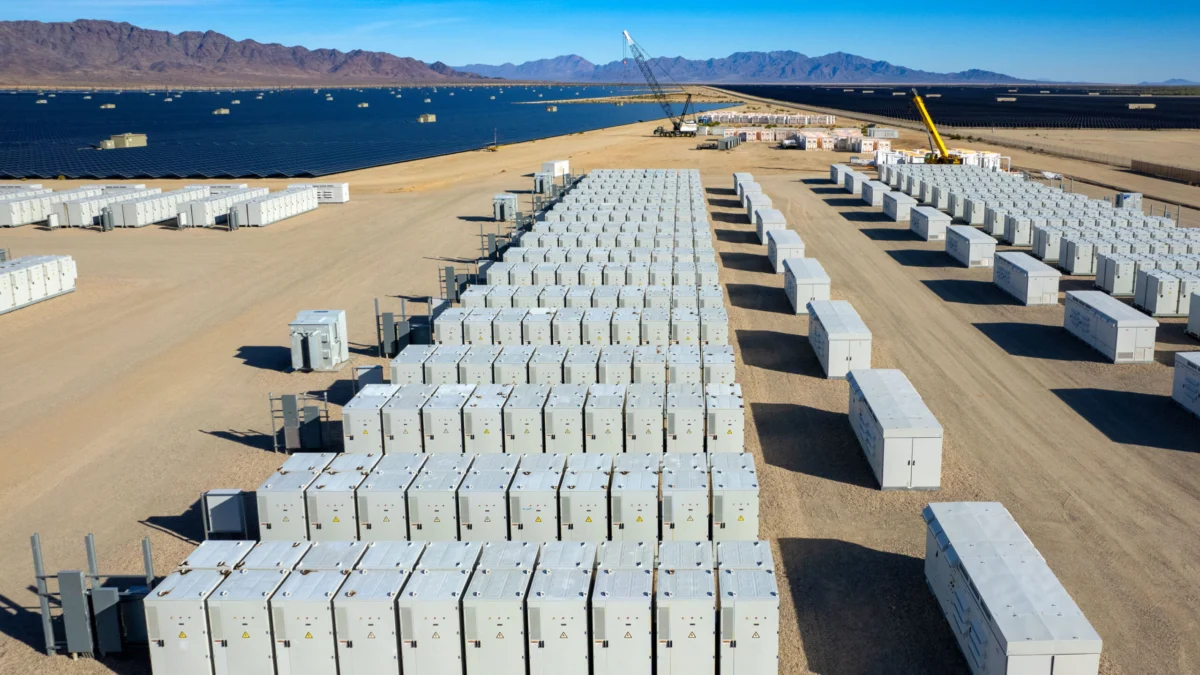
In the second quarter of 2026, the United States achieved a milestone that marks a pivotal shift in its transition toward a renewable-heavy energy future. According to a landmark report released by Benchmark Mineral Intelligence and the Solar Energy Industries Association (SEIA), the nation brought a record-shattering 20.2 gigawatt-hours (GWh) of new battery storage capacity online. This volume of energy is sufficient to power approximately 700,000 American homes for an entire day, signaling that the "storage revolution" has moved from a theoretical necessity to an operational reality.
Main Facts: A Quarter of Unprecedented Growth
The numbers from Q2 2026 are not merely an incremental improvement; they represent a fundamental acceleration in grid-scale infrastructure deployment. The report indicates that the US is now on a trajectory to install 71 GWh of total battery storage capacity by the end of 2026. This would represent a staggering 20% year-over-year increase, defying market headwinds and regulatory uncertainty.
The primary driver of this surge is the utility-scale sector. These massive, multi-megawatt installations are essential for balancing the intermittent nature of wind and solar power. As the grid incorporates higher percentages of renewables, the ability to "time-shift" energy—storing midday solar generation for evening peak demand—has become the linchpin of grid stability. In this quarter alone, seven new "gigascale" projects—defined as those exceeding one gigawatt-hour in individual capacity—were synchronized to the grid, acting as the bedrock for the record-breaking figures.
Chronology: The Evolution of Storage Deployment
The path to the Q2 2026 record was not linear. The industry spent the early 2020s navigating supply chain constraints, volatile lithium prices, and a shifting federal policy landscape.
- 2023-2024: The industry focused on establishing the regulatory framework for the Inflation Reduction Act (IRA), which provided the initial tax incentives that spurred developer interest.
- 2025: A pivotal year where residential solar and storage adoption peaked, largely bolstered by temporary tax credits that incentivized homeowners to invest in backup systems.
- Q1 2026: The market began to see the fruits of long-lead utility projects that had been in the planning stages for years, setting the stage for the Q2 explosion.
- Q2 2026: The current record-setting quarter, characterized by a massive influx of utility-scale projects and a notable decoupling between industrial/commercial growth and residential stagnation.
Supporting Data: The Tale of Two Markets
While the overall headline figures suggest uniform growth, a deeper dive into the data reveals a bifurcated market. The industry is currently experiencing a "tale of two sectors": utility-scale dominance versus residential deceleration.
The Rise of Utility-Scale Gigascale Projects
Utility-scale systems are responsible for the lion’s share of the 20.2 GWh expansion. These projects are massive engineering feats that utilize lithium-ion technology to provide frequency regulation, peak shaving, and black-start capabilities. The emergence of seven gigascale projects in just three months demonstrates a level of project maturity and capital deployment that was unthinkable five years ago.
The Residential Slowdown
Contrastingly, the residential sector is facing a sharp downturn. Data suggests a 16% decline in home-based battery installations for 2026 compared to the previous year. This contraction is directly tied to the expiration of specific residential-focused tax credits at the end of 2025. Without these financial subsidies, the immediate return on investment for the average homeowner has diminished, leading to a temporary pause in consumer adoption.
The Commercial and Data Center Boom
While residential installations have slowed, the commercial sector has surged, particularly within the data center industry. Driven by the explosive demand for AI-driven computing power and the need for 24/7 uptime, data centers accounted for roughly 75% of new commercial-sector battery deployments. These entities are increasingly viewing energy storage not just as a cost-saving measure, but as a critical infrastructure requirement to ensure operational continuity in an era of grid instability.
Official Responses and Expert Analysis
Industry leaders and analysts suggest that while the growth is impressive, the market is entering a more complex phase of development.
"It really came down to a handful of big projects," notes Shan Tomouk, energy storage and energy lead for Benchmark Mineral Intelligence. His assessment highlights that while the macro numbers are healthy, the market’s stability is currently reliant on the successful execution of a few massive, high-stakes infrastructure projects.
Isshu Kikuma, an energy storage analyst at BloombergNEF, remains bullish on the broader trend. "This is one of the strong sectors in the US," Kikuma asserts. He argues that the momentum is now institutionalized, as utilities and grid operators recognize that battery storage is the most effective tool to manage the decarbonization of the US energy portfolio.
Implications: The Quest for Domestic Supply Chains
Perhaps the most significant long-term implication of the Q2 2026 report is the intensifying focus on domestic manufacturing. Currently, the US storage industry remains heavily reliant on Chinese-manufactured cells. While some assembly occurs domestically, the upstream components—the battery cells themselves—are largely imported.
The Tariff and Policy Landscape
Recent federal policy has mandated that to qualify for full energy storage tax credits, projects must demonstrate a reduced reliance on Chinese-made battery components. This "onshoring" requirement is designed to foster a domestic manufacturing base. However, the transition period is expected to be fraught with volatility.
The Manufacturing Gap
While there is a massive pipeline of US battery manufacturing capacity currently under construction, analysts warn of a "gap" period. Factories are coming online, but they are unlikely to reach the scale required to meet total market demand until 2030 or later.
This creates a potential price pressure point. As developers are forced to shift away from cheaper imported cells toward more expensive, domestically produced ones, the cost per kilowatt-hour of storage may tick upward in the short term. However, proponents argue that this is a necessary cost for energy independence and long-term national security.
Looking Ahead: Toward 2030
The trajectory for the remainder of the decade appears clear: the US will continue to lean heavily on battery storage to enable its renewable energy transition. While the residential market may see a temporary cooling-off period until new incentives or price drops occur, the utility and data center markets are poised for sustained, high-level growth.
The energy storage sector is moving past its infancy. The record-breaking performance of Q2 2026 confirms that the grid of the future is no longer a concept on a drawing board; it is being built in real-time, one gigawatt-hour at a time. As the nation moves toward 2030, the success of this transition will depend on the delicate balance between rapid deployment, the scaling of a domestic supply chain, and the ability to maintain economic viability for both the largest utility developers and the individual homeowner.
The energy storage revolution has officially arrived, and it is proving to be the most resilient and dynamic component of the modern American energy transition.
