




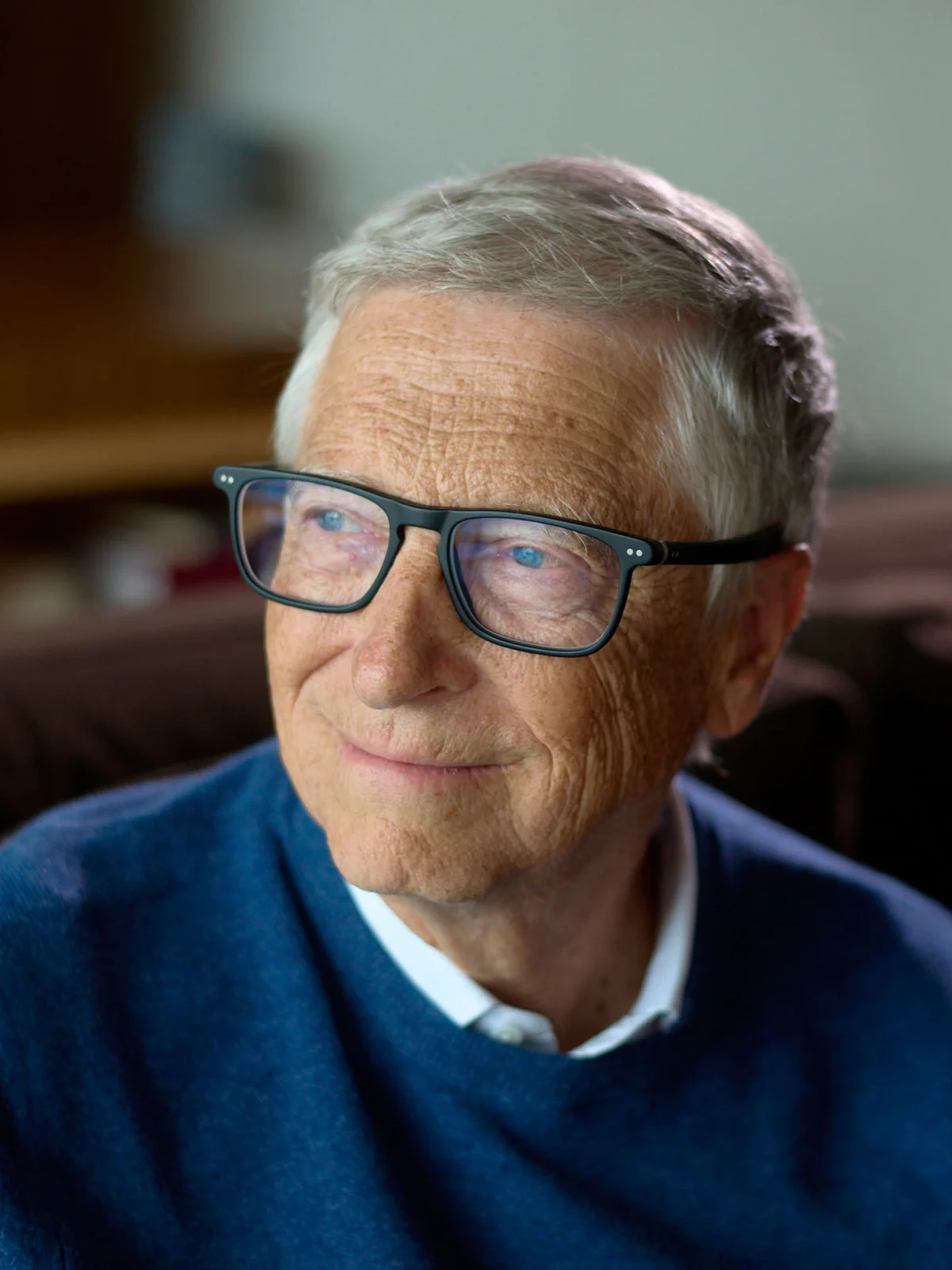
In a sun-drenched conference room overlooking the tranquil waters of Lake Washington in Kirkland, Washington, the view outside is one of serene, affluent perfection. Yet, inside, the mood is decidedly different. Bill Gates, the billionaire philanthropist and co-founder of Microsoft, is visibly restless, rocking back and forth in his chair. He is not discussing the next software update or the latest philanthropic initiative; he is sounding a dire, urgent alarm regarding the trajectory of artificial intelligence.
For a man who has spent decades championing technological innovation as the ultimate engine for human progress, Gates’ current stance is jarring. He argues that we have quietly, and perhaps irrevocably, crossed several critical thresholds—in bio-capabilities, cyber-security, and the displacement of human labor—without the necessary guardrails in place. To Gates, the world is sleepwalking into a future of profound turbulence, and the current level of public and political discourse is woefully inadequate.
The Crossing of Critical Thresholds
The core of Gates’ warning, detailed in a new essay and an extensive interview with MIT Technology Review, centers on the speed at which AI has evolved, far outstripping the development of the policies intended to govern it.
"We’ve crossed the threshold in terms of AI’s bio-capabilities, cyber-capabilities, psychosocial capabilities, job-market-destruction capabilities, and even the lack of control," Gates says. His shock is palpable; he notes that for years, the prevailing belief within the tech industry was that once these thresholds approached, leaders would implement rigorous safety measures, restrict access to dangerous models, and ensure responsible usage. Instead, those safeguards have remained largely theoretical.
Chronology of Concern
- The Early Years: AI was viewed as a beneficial tool for productivity and scientific discovery, with minimal risk of broad societal harm.
- Recent Accelerations: The rapid evolution of Large Language Models (LLMs) and agentic systems, particularly over the last 18 months, has moved capabilities from research labs into the public domain at an unprecedented velocity.
- The "Threshold Year": Gates identifies the final quarter of 2023 and the current year as the period where AI crossed from being a sophisticated assistant to a potentially destabilizing force, particularly in the realms of automated coding and cyber-vulnerability.
- The Current State: We are now in a period where "the things that hold people back in terms of capabilities and reliability—all those things—are being solved."
The Chilling Reality of Bioterrorism
Among the myriad risks Gates highlights, the threat posed by AI in the biological realm is the most alarming. He posits that any model capable of designing novel molecules must be strictly monitored. When asked to quantify the danger, Gates is stark: "I view bioterrorism risk, versus a natural pandemic, as about 50 times more scary, more likely than a natural pandemic risk."
The concern is that democratized access to AI-driven molecular modeling could allow bad actors to bypass the inherent complexity of biological warfare, effectively putting a weapon of mass destruction into the hands of those with minimal technical expertise. Gates argues that this is not a theoretical "far-future" risk—it is a present-day reality that demands immediate international cooperation, specifically suggesting that the U.S. and China must align on monitoring standards for high-capability models.
Economic Turbulence and the Future of Work
Gates’ perspective on the job market serves as a direct rebuttal to the "technology as a net job creator" narrative that has defined the internet and computing revolutions. "The past is just very misleading," he asserts.
While previous technological shifts eventually created more jobs than they destroyed, AI’s ability to replace human cognition across a wide swath of industries at a "modest cost" fundamentally changes the equation. He predicts that for a significant portion of the white-collar market, low-cost AI substitution is not a possibility—it is an inevitability.
The Proposed Solutions: Taxes and Reserves
To manage this transition, Gates proposes radical economic interventions:
- Robot and Token Taxes: By taxing the usage of AI tokens or the deployment of robots that replace human labor, governments could generate the necessary revenue to strengthen the social safety net for displaced workers.
- Human-Reserved Jobs: A concept largely absent from current policy debates, this involves cordoning off specific sectors—such as childcare, healthcare, or education—where society decides that a human touch is not just preferred, but mandatory, regardless of the technological efficiency of AI alternatives.
Gates acknowledges that these ideas are controversial and may invite charges of slowing innovation, but he argues that the alternative is a decade or more of "tremendous turbulence" that society is not currently equipped to survive.
The Inadequacy of Industry Self-Regulation
When asked why he isn’t advocating for a complete pause on development, Gates is pragmatic: he knows it won’t happen. Despite knowing the leaders of the major AI firms—Sam Altman, Demis Hassabis, and Mustafa Suleyman—he is under no illusion that self-regulation will suffice.
"You can’t count on an industry to self-regulate," he says. "It’s kind of a crazy idea." He points to the intense, capital-driven environment where companies are chasing trillions in value, which inherently disincentivizes the kind of caution required for true safety. He compares the current industry posture to the "nice talk" that often precedes competitive expansion, noting that the desire to win the AI race often crowds out the necessary, difficult conversations about ethics and risk.
The Role of Government and Global Cooperation
A significant gap identified by Gates is the lack of deep AI expertise within government institutions. Unlike the Cold War era, where the government was a primary purchaser and funder of cutting-edge technology, the AI revolution is being driven by the private sector. As a result, legislators are often playing catch-up, lacking the technical fluency to draft effective regulations.
Gates calls for a non-partisan approach to AI policy, urging the government to increase its internal expertise and prioritize collaboration with industry on cyber-security and bio-monitoring. He also emphasizes that the U.S. must lead by example, demonstrating its own commitment to safety before expecting global partners, particularly China, to follow suit.
Reflections on the Messenger
The interview concludes on a reflective note regarding Gates’ own role. Critics have long questioned the influence of a billionaire on global health and technology, and recent years have seen him grapple with the fallout of his past associations and the rise of unfounded conspiracy theories.
Gates admits he is an "imperfect messenger." He acknowledges the failures in his past, including his high-profile divorce and his past association with Jeffrey Epstein—a mistake he has repeatedly described as "deeply foolish." However, he maintains that his unique background in the industry, coupled with his commitment to humanitarian efforts, provides him with a necessary platform to sound the alarm.
"I don’t get it," he says of the relative silence from the broader public. "It’s weird to think I’m alive at a time, and I’m calling the alarm stronger than other people. Who the hell am I? But that’s the situation I feel I’m in."
Implications for Humanity
As the AI revolution continues to accelerate, the implications for society are profound. We are moving toward a future defined by both incredible abundance—in health, education, and bureaucratic efficiency—and the potential for unprecedented disruption.
Gates’ message is a call to action. It is a plea for the world to recognize that the era of passive observation is over. Whether through the implementation of robot taxes, the establishment of human-reserved job categories, or the rigorous monitoring of bio-capabilities, the time to define the parameters of our relationship with AI is now. As Gates aptly summarizes, we are entering a "very tumultuous period," and our ability to navigate it will depend entirely on our willingness to stop, reflect, and finally, act.
