



Skift Take
Radisson Hotel Group’s latest development figures underscore a growing divergence in the Gulf hospitality market. While the UAE faces headwinds, Saudi Arabia’s robust domestic demand acts as a strategic hedge, allowing major operators to maintain aggressive growth targets despite geopolitical instability.
Main Facts: A Strategic Pivot Toward the Kingdom
The hospitality landscape in the Middle East is currently defined by a tale of two markets. As geopolitical tensions—fueled by the ongoing conflict involving Iran and its regional proxies—cast a shadow over the broader Gulf Cooperation Council (GCC) tourism sector, Radisson Hotel Group has emerged as a bellwether for institutional confidence in Saudi Arabia.
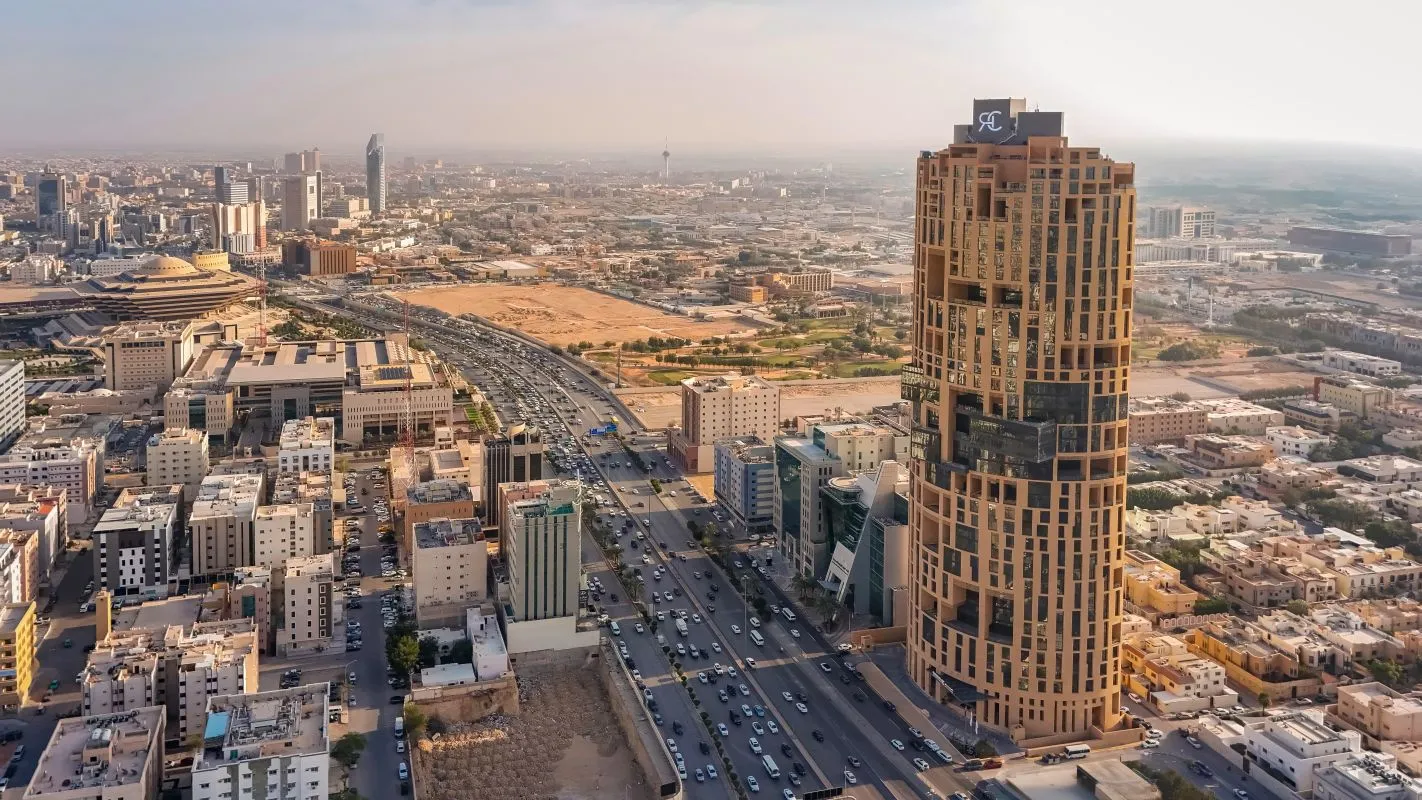
Currently, Radisson manages 35 hotels across the Kingdom of Saudi Arabia. With an additional 15 properties currently under active construction, the group is firmly on a trajectory to reach its stated goal of 100 hotels—both operational and under development—by 2030. This ambitious roadmap aligns perfectly with the Saudi government’s "Vision 2030," a massive socio-economic transformation plan aimed at diversifying the economy away from oil dependency and positioning the nation as a global tourism powerhouse.
While the wider industry has expressed concerns regarding the impact of regional instability on luxury travel and international arrivals, Radisson’s leadership maintains that their commitment to the Kingdom is unshakable. The strategy is clear: focus on the resilience of the Saudi domestic market, which serves as a protective buffer against the fluctuations of international tourism that typically plague more export-dependent markets like the United Arab Emirates.
Chronology of Expansion: From Foundation to 2030
To understand the scale of Radisson’s current commitment, one must look at the timeline of their expansion in the region:
- Pre-2015: Radisson established a foundational presence in the Gulf, primarily catering to corporate travelers and expatriate business in Dubai and Riyadh.
- 2016 (Vision 2030 Announcement): Following the launch of the Saudi Vision 2030, Radisson shifted its development pipeline to prioritize secondary and tertiary Saudi cities, anticipating the surge in domestic tourism and internal business travel.
- 2020–2022 (The Pandemic Resilience): During the global health crisis, while international travel collapsed, Radisson’s Saudi portfolio proved remarkably resilient. Domestic "staycations" and government-led infrastructure projects kept occupancy rates in the Kingdom significantly higher than in markets like Dubai, which were heavily reliant on international flight corridors.
- 2023–Early 2024 (Regional Instability): As the U.S.-Iran conflict escalated, causing a ripple effect of uncertainty across the Gulf, Radisson reassessed its global pipeline. While they acknowledged a "slight slowdown" in signing new contracts, they reaffirmed their commitment to the 100-hotel target.
- 2030 (The Horizon): The target date for the fulfillment of the current expansion strategy, coinciding with the maturation of Saudi mega-projects like NEOM, the Red Sea Project, and Qiddiya.
Supporting Data: The Tale of Two Markets
The divergence in performance between Saudi Arabia and the UAE is not merely anecdotal; it is supported by structural differences in demand.
The Domestic Hedge
Saudi Arabia possesses a massive, affluent, and increasingly mobile domestic population. With a population of over 36 million, the Kingdom has a built-in customer base that does not require international air travel to reach hotels. In contrast, the UAE—specifically Dubai—operates as a global hub. While this makes it a world-class destination, it also renders the market highly susceptible to geopolitical shocks. If international flight paths are disrupted or travel insurance premiums spike due to regional war, the UAE’s occupancy rates suffer immediately.
Pipeline Analysis
- Saudi Arabia: Radisson’s pipeline is heavily weighted toward "lifestyle" and "mid-scale" brands, which cater to the growing Saudi middle class and young travelers. This ensures consistent RevPAR (Revenue Per Available Room) even during periods of lower high-end international demand.
- UAE: The pipeline in the Emirates is heavily skewed toward ultra-luxury properties. While profitable, these assets have higher overheads and are more sensitive to the "fear factor" associated with regional wars.
Comparative Occupancy Trends
Internal industry data suggests that during the last 18 months, Saudi hotels maintained occupancy levels roughly 15–20% higher than the regional average during periods of heightened political tension. This stability is the primary reason why developers are prioritizing Saudi lease agreements over expansion in more saturated markets like Dubai or Doha.
Official Responses: The View from the C-Suite
Elie Younes, Executive Vice President and Global Chief Development Officer at Radisson Hotel Group, recently addressed the paradox of expanding in a region characterized by conflict.
"Our targets for the region have not changed," Younes stated. "Although there may be a slight slowdown in signing volumes and business expansion this year because of the war, if you’re in it for the long run, there’s no change."
Younes’ perspective is rooted in the philosophy of "long-term horizon management." For hotel groups of Radisson’s size, the volatility of a single calendar year—or even a single geopolitical cycle—is secondary to the decade-long trends of economic development.
"We still believe in Saudi Arabia, Vision 2030, Dubai, and the region," he added. The emphasis on the "long run" is crucial. Radisson is not looking for quick returns on luxury city-center hotels; they are investing in the infrastructure of a nation that is systematically rebuilding its tourism identity. By diversifying their brand presence—ranging from Radisson Blu to Park Inn—they are capturing different segments of the Saudi market, ensuring that they remain relevant whether the traveler is a government official, a business consultant, or a domestic leisure seeker.
Implications: What This Means for the Future of Gulf Tourism
The Radisson strategy signals a broader shift in how global hospitality giants view the Middle East.
1. The End of "One-Size-Fits-All" Gulf Strategy
For decades, the Gulf was treated as a monolithic bloc. Developers would mirror their Dubai success in Riyadh. That era is over. The current reality demands a granular understanding of local demand. Developers are now realizing that the UAE is an international luxury destination, while Saudi Arabia is a massive domestic market with the added potential of becoming an international tourism hub.
2. Geopolitical Insulation as a Competitive Advantage
Companies that can demonstrate that their revenue streams are insulated from regional conflict will be the ones that succeed in the next decade. By leaning into domestic demand, Radisson is essentially "de-risking" its portfolio. This is a model that other international chains, such as Marriott, Accor, and IHG, are likely to emulate as they increase their footprint in the Kingdom.
3. The Impact on "Vision 2030"
The commitment of major international players like Radisson is a vote of confidence that helps the Saudi government achieve its goals. When major brands sign long-term development contracts, it encourages secondary investments in logistics, retail, and entertainment. It creates a self-fulfilling prophecy of growth: the more hotels that open, the more attractive the Kingdom becomes to tourists, which in turn necessitates more hotels.
4. The Potential for Contagion
While Radisson remains optimistic, there is a lingering risk. If the conflict in the region were to escalate into a full-scale regional war, even the "domestic hedge" could fail. A total regional shutdown would impact consumer confidence, regardless of where the hotels are located. However, for now, the strategy of focusing on internal growth remains the most viable path forward for the hospitality industry in the Middle East.
Conclusion
Radisson Hotel Group’s continued expansion in Saudi Arabia is more than just a business decision; it is a calculated bet on the structural resilience of the Saudi economy. By leveraging domestic demand to offset the volatility of the regional geopolitical climate, Radisson has effectively insulated itself from the worst of the current uncertainty. As the 2030 deadline approaches, the hospitality map of the Middle East will continue to change, with the Kingdom of Saudi Arabia poised to become the definitive anchor of the region’s tourism industry.
