





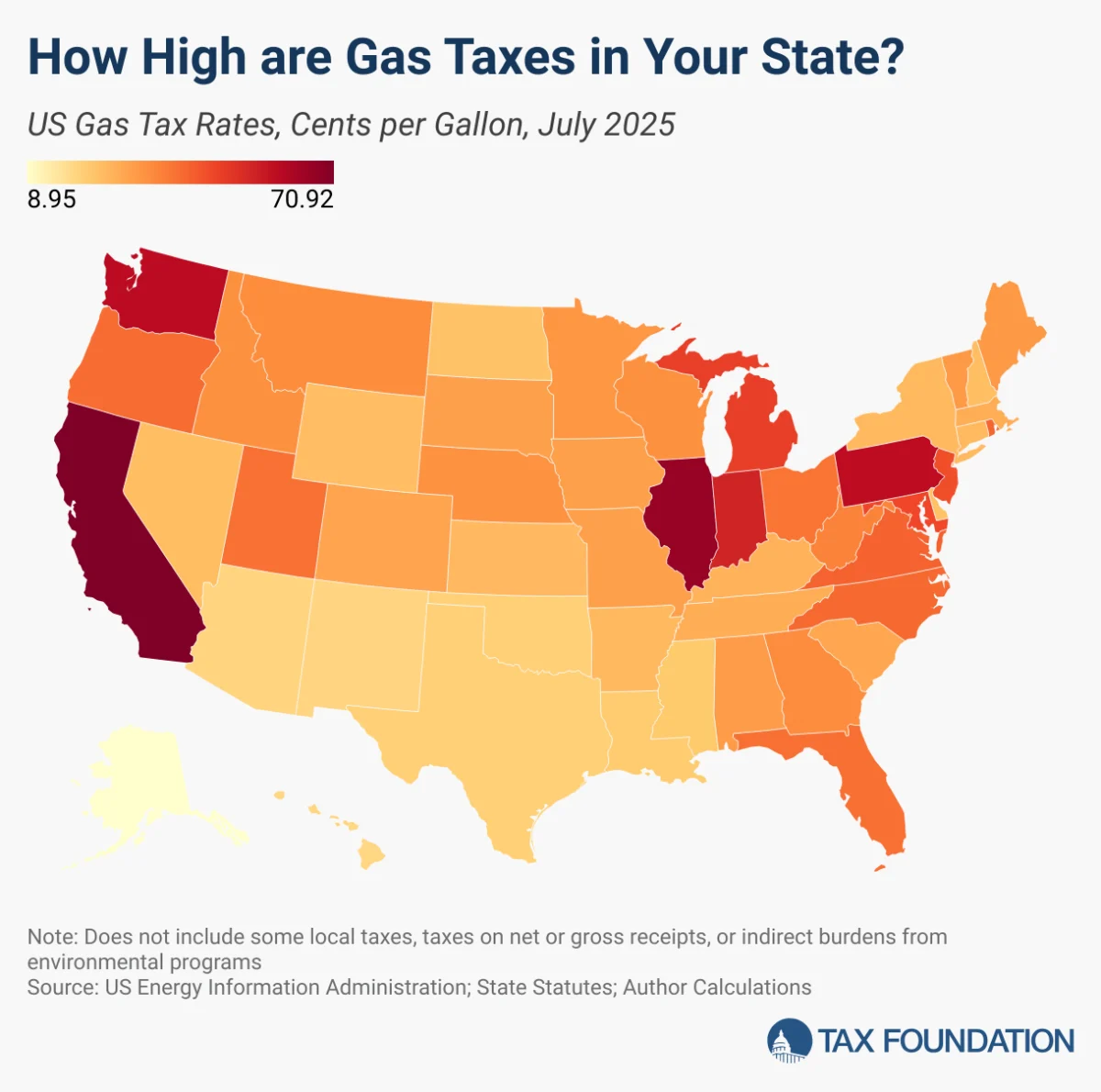
For the average American motorist, the price displayed on the digital sign at the local service station is more than just the cost of a commodity; it is a complex mosaic of federal, state, and local levies, environmental surcharges, and market-driven premiums. While traditionally viewed as a "user fee"—a mechanism to ensure that those who utilize public infrastructure contribute to its maintenance—the modern gas tax has evolved into a labyrinthine policy instrument that is increasingly disconnected from its original purpose. As we move through 2026, the intersection of infrastructure funding, climate mandates, and geopolitical instability has created a volatile landscape for fuel pricing across the United States.
The Evolution of the User-Fee Model
At its core, the gas tax was designed as a direct "user fee." The logic is elegant in its simplicity: those who drive on government-maintained roads consume the service and, therefore, should bear the cost of its upkeep. By earmarking these funds specifically for highway repair, bridge maintenance, and infrastructure projects, the government creates a closed-loop system where the beneficiary pays for the utility.
Unlike broad-based income or sales taxes, which collect revenue from the general public regardless of their interaction with the infrastructure, the user-fee structure aims to minimize economic distortions. However, this model is under profound pressure. As vehicle fuel efficiency improves and the market share of electric vehicles (EVs) grows, the "per-gallon" tax becomes a diminishing return. With EVs contributing little to nothing to the traditional fuel-tax-funded highway trust funds, the long-standing social contract of road funding is fraying.
A Chronology of Policy Shifts and Market Pressures
The fiscal landscape of 2026 is defined by several converging factors. Early in the year, global energy markets were rattled by geopolitical tensions, particularly regarding supply constraints linked to the ongoing conflict with Iran. This volatility has pushed retail fuel prices to significant heights, triggering political calls for "gas tax holidays"—temporary suspensions of excise taxes meant to provide immediate relief to consumers.
Economists have long argued that such holidays are inefficient. By artificially lowering the price of fuel during periods of tight supply, these suspensions can inadvertently stimulate demand, exacerbating shortages and failing to address the fundamental causes of high prices. Moreover, these gimmicks create massive holes in state transportation budgets, forcing governments to pivot toward less efficient, general-fund revenue sources to maintain basic road infrastructure.
Simultaneously, 2026 marks a pivotal year for environmental policy. Several states have moved to solidify or expand "Clean Fuel" mandates and carbon pricing mechanisms. Unlike traditional excise taxes, these programs are not designed to fund roads; they are designed to shape human behavior by making the consumption of fossil fuels more expensive, thereby incentivizing a transition to cleaner alternatives.
Geographic Disparities in Tax Burdens
The tax burden on American drivers is anything but uniform. California currently leads the nation in total fuel-related levies, with a staggering 73.6 cents per gallon (cpg) in direct state taxes. When combined with the estimated impacts of its cap-and-trade system and the more stringent Low Carbon Fuel Standard (LCFS) implemented in July 2025, the total burden in the Golden State approaches an eye-watering $1.15 per gallon.
In contrast, Alaska maintains the lowest tax rate in the country at just 8.95 cpg, reflecting the state’s unique geography and reliance on oil production. Hawaii and New Mexico round out the lower end of the spectrum, though these figures often mask the hidden costs of local municipal taxes.
The complexity is perhaps best illustrated in Nevada. While the state has a base tax, local levies can be transformative. In Washoe County, for instance, local taxes push the total to 67.8 cpg—a figure that rivals some of the highest state-wide rates in the nation. Similarly, Connecticut utilizes a unique "Petroleum Products Gross Earnings Tax" of 8.1 percent on wholesalers, a structure that complicates a direct "cents-per-gallon" comparison but adds a significant, fluctuating layer of cost to the end consumer.
Environmental Mandates: The New Frontier of Fuel Costs
The most contentious addition to the fuel price calculation is the integration of environmental program costs. State environmental agencies frequently clash with independent economic analysts over how much these policies—such as cap-and-trade or low-carbon fuel standards—actually add to the price at the pump.
- California: The Legislative Analyst’s Office estimates that the state’s cap-and-trade program adds approximately 23 cpg to the price of gas. With the LCFS amendments, the California Energy Commission places the additional burden at roughly 19 cpg, though previous projections were significantly higher.
- Washington: The state’s "Climate Commitment Act" remains a point of intense scrutiny. While the Department of Ecology estimates the impact of the Clean Fuel Standard and the cap-and-invest program at roughly 12 to 23 cpg combined, historical projections were far more aggressive, suggesting that market volatility in carbon credit auctions makes long-term price forecasting nearly impossible.
- Oregon: The state’s Clean Fuels Program added an estimated 9.35 cpg to prices in 2025, but the looming implementation of the broader "Climate Protection Program" suggests further upward pressure. Legal challenges, however, have created an air of uncertainty regarding the program’s long-term viability and cost structure.
- New Mexico: As of April 2026, the state’s new Clean Transportation Fuel Program is in its infancy. While state officials emphasize that it is not a direct tax at the pump, the reality of market-based carbon credits ensures that these costs will inevitably be passed down to the consumer.
Implications for the Future of Infrastructure
The erosion of the traditional gas tax as an effective funding mechanism is forcing states to innovate. With inflation reducing the purchasing power of unindexed fuel taxes and the transition to electric mobility accelerating, the "per-gallon" model is increasingly viewed as a relic.
The Rise of the VMT Tax
The most significant policy shift on the horizon is the transition toward a Vehicle Miles Traveled (VMT) tax. By charging motorists based on the distance they drive rather than the fuel they burn, a VMT system achieves three primary goals:
- Neutrality: It removes the disparity between gas-powered, hybrid, and electric vehicles, ensuring all users pay their fair share for road maintenance.
- Sustainability: It decouples infrastructure funding from fuel efficiency gains, providing a stable revenue stream even as vehicles become more efficient.
- Alignment: It more accurately reflects the actual wear and tear on public infrastructure.
However, the implementation of VMT taxes faces significant hurdles, including concerns over privacy, the administrative cost of tracking mileage, and the political challenge of transitioning from a hidden tax (at the pump) to a more visible fee.
The Political and Economic Outlook
As we look toward the remainder of 2026 and beyond, the trend toward decentralized and diverse funding mechanisms will likely continue. The states that succeed in maintaining their infrastructure will be those that move away from the volatile, policy-heavy "gas tax" model and toward a transparent, usage-based fee structure.
The "hidden" costs currently baked into the price of gasoline—ranging from local infrastructure surcharges to complex carbon-reduction mandates—have created a system that is difficult for the average consumer to navigate. For the policy-maker, the challenge is twofold: securing the funding necessary to keep the nation’s roads operational while managing the economic impacts of a transition toward a lower-carbon future.
The era of the simple "gas tax" is drawing to a close. In its place, we are seeing the emergence of a multi-layered, data-driven, and highly localized approach to funding the transportation networks that define American life. Whether through direct VMT levies or the continued reliance on environmental-based surcharges, the cost of driving is undergoing a structural transformation that will affect every taxpayer in the country for decades to come.
Conclusion
The complexities of the 2026 fuel market underscore a fundamental truth: infrastructure funding in the United States is at a crossroads. As traditional excise taxes become less effective, the reliance on supplemental fees and environmental surcharges has created a patchwork of costs that vary wildly from state to state. While these policies aim to address both road maintenance and environmental goals, they also highlight the urgent need for a more sustainable, equitable, and transparent system for funding the public goods upon which our economy depends. As the debate over the VMT tax and the future of fuel standards continues, the primary concern remains ensuring that the burden of these costs is distributed fairly while maintaining the essential connectivity of the American landscape.
