




By Global Urban Policy Desk
As the world turns its eyes toward the horizon of 2028, the Los Angeles Olympic and Paralympic Games loom as a monumental paradox. While an estimated five billion spectators are expected to tune in to witness the pinnacle of human athletic achievement, the host city finds itself at a precarious intersection of global spectacle and climate instability.
In the wake of devastating wildfires that have scarred the Southern Californian landscape, the promise of the “Greenest Games ever” is no longer merely a marketing slogan—it is a survival strategy. On June 23, 2026, experts will convene for a pivotal webinar as part of London Climate Action Week to dissect whether Los Angeles can truly reshape the template for mega-sporting events in an era of environmental volatility.
Main Facts: The Vision for 2028
The Los Angeles 2028 organizing committee has made a radical departure from traditional Olympic planning. Faced with the exorbitant costs and environmental footprints of constructing new, bespoke stadiums—the "white elephants" that have plagued previous host cities—LA28 has committed to a "no-build" strategy.
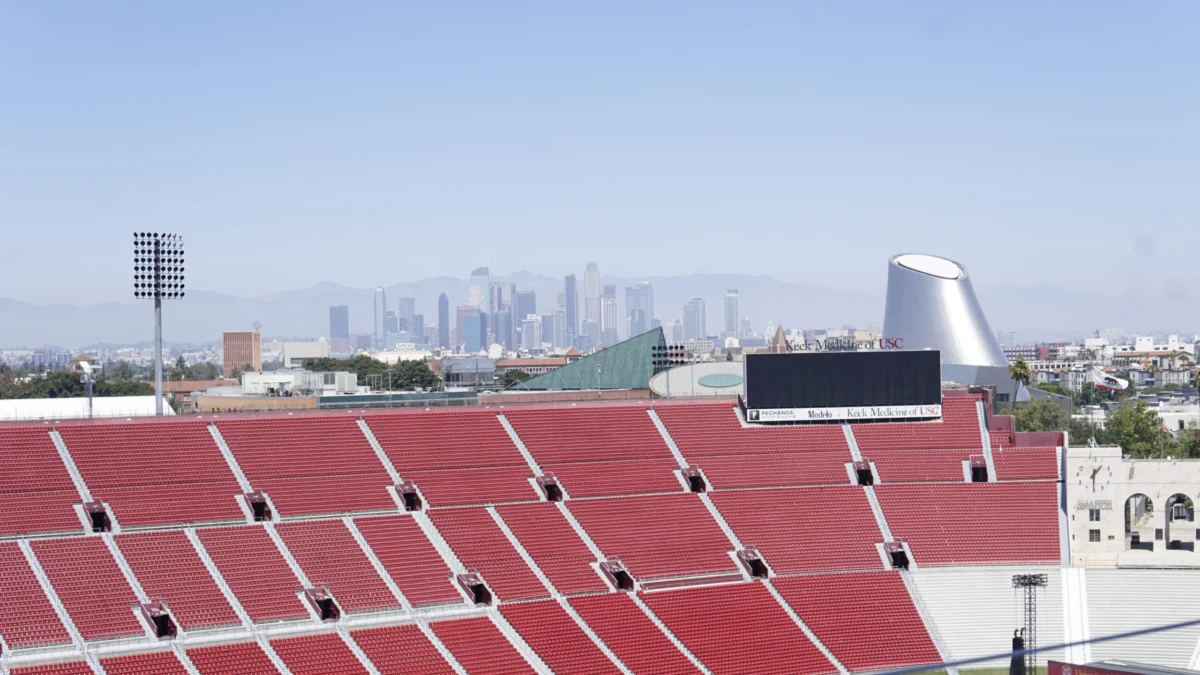
- Venue Strategy: The Games will utilize only existing and temporary venues. From the iconic Los Angeles Memorial Coliseum to the SoFi Stadium, the footprint is designed to be entirely pre-existing.
- Mobility: The committee has pledged to minimize car dependency, a daunting task in a city historically defined by its sprawling freeway system.
- Sustainability Pledges: Organizers aim to demonstrate that global events can be scaled back without sacrificing the spirit of the Games, positioning LA as a laboratory for urban resilience.
Chronology: From Wildfire Recovery to Olympic Readiness
To understand the stakes of 2028, one must trace the timeline of Southern California’s recent ecological struggles and the subsequent planning efforts.
2020–2024: The Era of Escalation
The region experienced a sequence of record-breaking heatwaves and catastrophic wildfires. These events forced a shift in local governance, as urban planners began to prioritize "Climate Resilience" over "Urban Growth."
2025: The Integration Phase
LA28 organizers accelerated their integration with municipal planners. This period saw the launch of the "Twenty-Eight by ’28" initiative, a collection of major transportation projects intended to overhaul the city’s transit network in time for the opening ceremony.
2026: The Critical Junction
The current year represents a moment of intense scrutiny. With two years of planning remaining, the city is pressure-testing its infrastructure. The upcoming webinar on June 23 serves as a bridge between the theoretical promises of 2020 and the physical reality of the looming Games.
2028: The Global Stage
The Games will officially commence, serving as the ultimate test of whether a city can reconcile the carbon-intensive nature of international tourism and broadcasting with a strict commitment to sustainability.
Supporting Data: The Cost of the Climate Crisis
The climate reality for Los Angeles is grounded in sobering statistics. According to the U.S. National Climate Assessment, Southern California is experiencing an increase in "extreme heat days," defined as temperatures exceeding the historical 95th percentile.
- Wildfire Impact: Over the past decade, wildfire suppression costs in California have surged by 300%. The loss of natural carbon sinks—the forests surrounding the LA basin—has fundamentally altered the region’s air quality index (AQI).
- The "Five Billion" Metric: Broadcasting to five billion people requires a massive technological infrastructure. The energy consumption of the digital delivery of the Games—servers, cloud computing, and broadcast satellites—is a hidden, yet massive, component of the carbon footprint that organizers are struggling to quantify.
- Infrastructure Stress: The LA Metro, while expanding, currently faces a shortfall in ridership relative to the projected millions of visitors who will descend upon the city in 2028.
Official Responses and Strategic Shifts
Organizing committees and municipal officials have been quick to defend their approach, citing a "new model for the future."
"We are not just hosting a sporting event; we are testing the resilience of a 21st-century city," stated a spokesperson for the LA28 organizing committee. The committee maintains that by eschewing new construction, they are already avoiding the vast majority of the carbon emissions associated with cement and steel production—the two primary culprits in stadium construction.
However, critics argue that the "no-build" policy is a strategic necessity rather than a moral choice. By utilizing existing venues, the committee minimizes its financial liability in a market where public support for Olympic spending has historically been volatile.
The city’s urban planners have emphasized the "Legacy Aspect": "The infrastructure we build for 2028—the bike lanes, the rapid transit, the heat-mitigation urban canopies—must serve the residents of LA long after the athletes have returned home," said a representative from the Mayor’s Office of Sustainability.
Implications: The Future of the Olympics
The implications of the LA28 experiment extend far beyond the borders of California. If Los Angeles succeeds in delivering a high-quality Games with a minimal footprint, it could permanently change the International Olympic Committee’s (IOC) requirements for future hosts.
The Resilience Paradox
Can a mega-event actually increase a city’s resilience? Some experts suggest that the "Olympic spotlight" acts as a catalyst for funding. Projects that would normally take a decade of bureaucratic wrangling are being fast-tracked because of the hard deadline of 2028. This "acceleration of progress" is perhaps the most significant, if unintended, benefit of the Games.
The Risk of Performative Sustainability
Conversely, there is the risk of "greenwashing." When the world’s cameras turn on, the city’s underlying systemic issues—homelessness, air pollution, and income inequality—do not vanish. Critics argue that the Olympics risk creating a "façade of sustainability" while failing to address the fundamental structural problems that make the city vulnerable to climate change.
A Stage for Athletic Prowess
Finally, there is the question of the athlete experience. Can the Games remain a stage for peak human performance if the environment is hostile? The 2028 event will likely be defined by the heat. Whether organizers can protect the health of athletes while maintaining a low-carbon energy profile—such as cooling systems that rely on renewable sources—will be the defining technical challenge of the era.
Conclusion: Join the Conversation
As we approach June 23, 2026, the global community is invited to engage with these complex questions. The webinar will feature a panel of urban ecologists, sports administrators, and policy experts who are working on the front lines of the LA28 project.
Webinar Details:
- Date: 23 June 2026
- Time: 16.00-17.00 CEST / 15.00-16.00 BST
- Format: Digital Webinar
- Audience: Open to all, with a focus on policy-makers, environmental advocates, and sports industry stakeholders.
The Los Angeles Olympics of 2028 will not be remembered for the medals won alone, but for whether the host city managed to survive its own reality. As wildfire recovery efforts collide with the pressure to put on a "standout global show," the world will be watching—not just to see who wins the gold, but to see if we can still celebrate our common humanity on a planet that is changing beneath our feet.
For those interested in the intersection of urban policy and global sporting events, this session is an essential examination of the future of the Olympic movement. Registration is currently open through the official London Climate Action Week portal.
Photo Credit: Carolina Kyllmann. This image captures the tension between the natural beauty of the California landscape and the looming threat of environmental degradation.
