





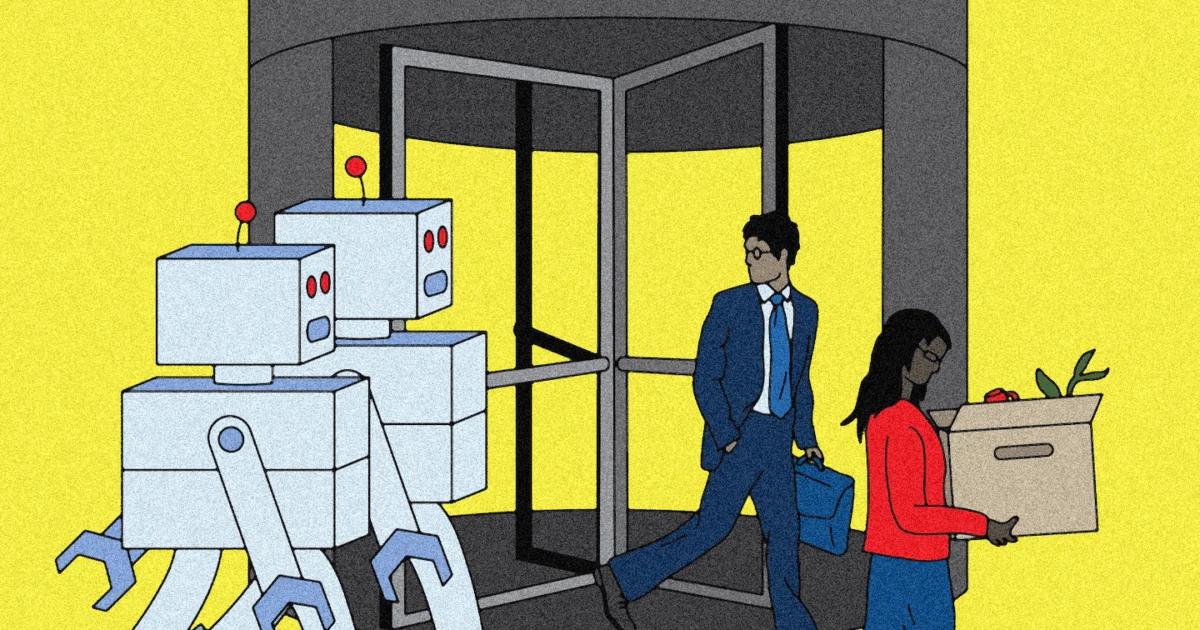
As the rapid integration of artificial intelligence into the professional landscape accelerates, a growing chorus of labor economists and policy experts is raising an urgent alarm: America’s unemployment insurance (UI) system is fundamentally ill-equipped to handle the coming wave of white-collar displacement.
Rebecca Dixon, CEO of the National Employment Law Project (NELP), has become a central figure in this debate, arguing that the current patchwork of state-level benefits is dangerously insufficient. With AI poised to disrupt sectors ranging from software engineering to legal analysis, the fragility of the nation’s "safety net" is no longer just a concern for blue-collar workers—it is a ticking time bomb for the entire middle class.
The Main Facts: A System Built for a Bygone Era
The American unemployment insurance system was designed in the mid-20th century to address cyclical manufacturing layoffs. It relies on a state-federal partnership, resulting in vast discrepancies in coverage, duration, and payout amounts.
Dixon points to the extreme disparity in state maximums as evidence of a broken system. In Mississippi, the maximum weekly payout is a meager $235—a figure that barely covers subsistence, let alone the standard of living expected by a displaced white-collar worker. Conversely, Massachusetts offers up to $1,105 per week.
"Unemployment benefits are too stingy, particularly if AI-related job losses land hardest on white-collar workers," Dixon stated in a recent Washington Post analysis. Her concern is not merely about the dollar amount, but about the eligibility criteria. As the nature of work shifts toward gig-based contracts, part-time roles, and project-based employment, the traditional "employer-employee" framework that qualifies workers for UI is becoming increasingly obsolete.
Chronology: The Escalation of the AI Labor Crisis
To understand why this conversation is reaching a boiling point in 2026, one must look at the recent trajectory of labor market shifts:
- 2023–2024: The Early Warnings: As Generative AI gained widespread adoption, initial fears centered on creative and administrative roles. Companies began pilot programs to automate entry-level drafting and data analysis.
- 2025: The "Skills Gap" Widens: The job market for recent college graduates began to tighten. Computer science graduates, once considered "future-proof," found themselves competing against automated systems capable of writing and debugging code at a fraction of the cost.
- Early 2026: The Recession-Level Warning: Data released in June 2026 indicated that unemployment for young workers reached levels typically seen during formal economic recessions. NELP issued a warning that this was not a temporary fluctuation, but a structural shift in the labor market.
- Mid-2026: The Policy Pivot: Advocacy groups, led by organizations like NELP, began pushing for legislative overhauls. The conversation shifted from "how to stop AI" to "how to provide a floor for those displaced by AI."
Supporting Data: The Disparity of Disruption
The vulnerability of the modern workforce is highlighted by the restrictive nature of current benefits. Under existing state laws, millions of workers are effectively invisible to the UI system.
The Eligibility Gap
- Recent Graduates: Many students entering the workforce after graduation lack the "base period" of employment required to file a claim. If their first foray into the job market is met with AI-driven hiring freezes, they are left with no support.
- Part-Time and Gig Workers: The rise of the "1099 economy" means that even highly skilled workers are often classified as independent contractors. Because these individuals do not pay into the traditional unemployment insurance funds, they are ineligible for benefits when contracts dry up.
- The Cost-of-Living Mismatch: In high-cost urban centers where AI-heavy industries are concentrated (such as the Bay Area, Seattle, or New York), a maximum benefit of $400–$600 per week is effectively a poverty-level income, failing to account for rent, healthcare, and student loan obligations.
Comparative Benefit Structures
| State | Max Weekly Benefit | Context |
|---|---|---|
| Mississippi | $235 | Represents the floor of the US system. |
| Florida | $275 | Significant gaps in coverage for low-wage earners. |
| New York | $504 | Moderate, but strained by high cost of living. |
| Massachusetts | $1,105 | Higher end, yet often insufficient for tech professionals. |
Official Responses and Policy Proposals
The debate over how to reform the safety net has moved into the halls of government. NELP, under the leadership of experts like those recently appointed to their senior policy roles, is advocating for a "Universal Unemployment" model.
The NELP Platform
Rebecca Dixon and her team are calling for three primary reforms:
- Federal Minimum Standards: Establishing a federal floor for benefits that prevents states from offering sub-poverty payments.
- Expanding Eligibility: Allowing part-time workers, independent contractors, and recent graduates to qualify for partial or full benefits based on prior experience or a new "AI-Transition" grant.
- Modernizing the Base Period: Updating the "base period" calculation to allow workers with shorter, more recent work histories to qualify, acknowledging the reality of modern, fluid career paths.
Legislative Hurdles
While advocacy groups are vocal, the legislative path is fraught with opposition. Fiscal conservatives argue that increasing benefits will disincentivize re-employment, particularly in a market that still has a high volume of job openings. However, labor advocates counter that the current "job openings" are not matching the skills of those being displaced, creating a mismatch that necessitates a bridge for retraining.

Implications: The Social and Economic Consequences
If the safety net is not updated, the implications for the American economy could be profound.
1. The Erosion of the Middle Class
If white-collar workers—the traditional backbone of consumer spending—face sudden, long-term unemployment without an adequate safety net, the secondary effects on housing markets, retail, and credit could trigger a broader economic downturn.
2. Widening Inequality
Without reform, the benefits of AI will continue to accrue to capital owners, while the risks of unemployment are borne entirely by the workforce. This risks exacerbating the racial and economic disparities that have been a focal point of recent social justice movements, such as those highlighted during this year’s Juneteenth observances.
3. The Need for "Active Labor Market Policies"
Beyond just "passive" unemployment payments, experts are calling for "active" policies—government-funded retraining programs that are directly linked to the emerging AI sectors. The goal is to turn the unemployment system from a "holding pen" into a "launchpad" for the next phase of the digital economy.
Conclusion: A New Social Contract
The transition to an AI-augmented economy is inevitable. Whether that transition results in a "Great Prosperity" or a "Great Displacement" depends largely on the courage of policymakers to rewrite the rules of the game.

As Rebecca Dixon aptly noted, the current stinginess of the system is a policy choice, not a necessity. By expanding who is eligible and ensuring that benefits reflect the economic realities of 2026, the United States can ensure that the technological revolution works for the worker, rather than against them.
The question remains: will Washington act before the next wave of automation renders a significant portion of the American workforce obsolete, or will the system wait until the crisis is already at the doorstep of every household? For now, the push for reform continues, driven by the belief that a resilient economy requires a resilient workforce—one that is protected, even when the ground shifts beneath its feet.
