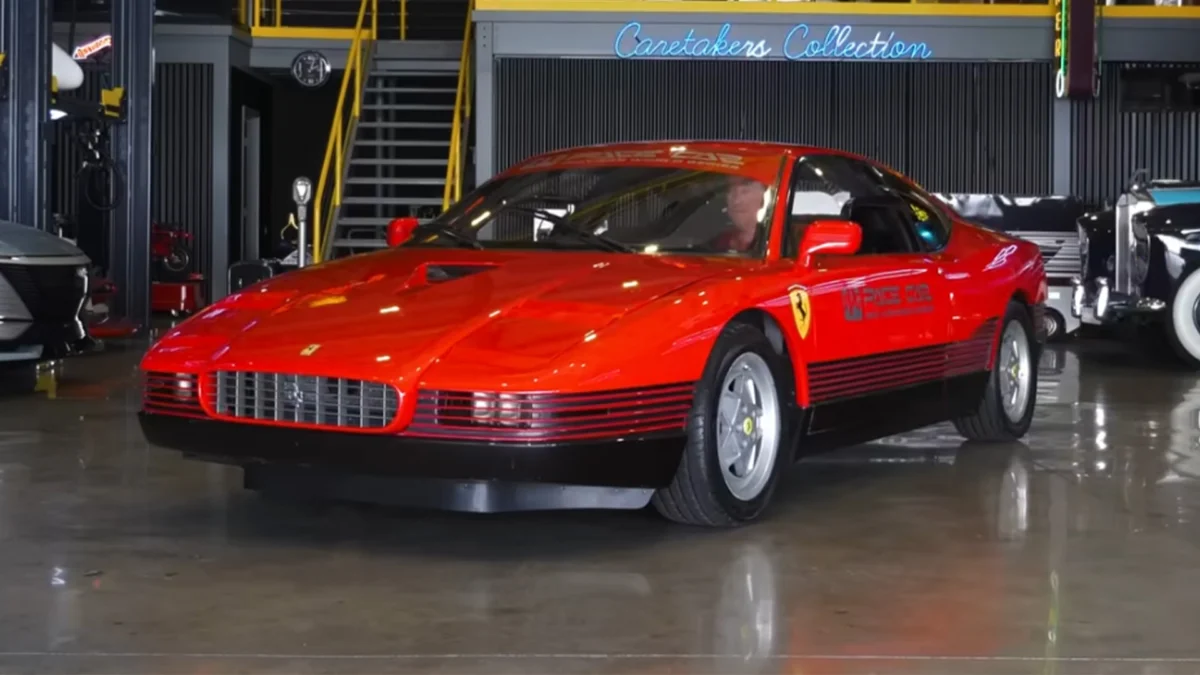




In the high-octane world of professional motorsports, the role of the pace car is often relegated to a functional afterthought—a stock production model adorned with sponsor decals, tasked with merely keeping the field orderly under caution. However, for a brief, golden era in the 1980s and 1990s, the PPG Pace Car program transformed these field-leading vehicles into radical, high-concept engineering exercises. Among these, one outlier stands as a monument to corporate ambition and design experimentation: the Ferrari Mondial T PPG Pace Car.
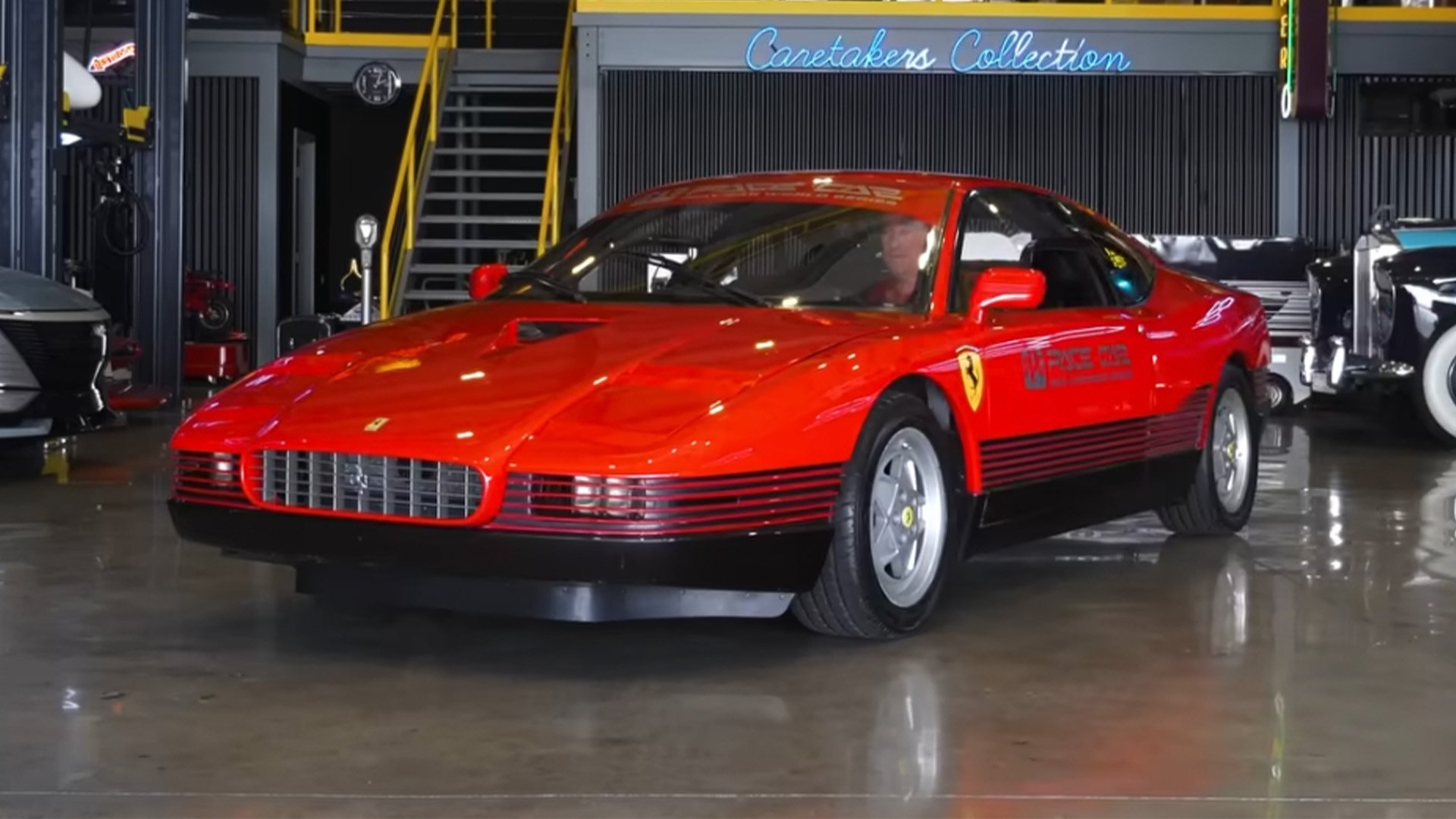
Long thought to be lost to the annals of automotive history or destroyed by the ravages of time, this singular machine has recently resurfaced within the prestigious Caretakers Collection. A masterpiece of mid-eighties excess, the vehicle represents a $1 million investment—roughly $3 million in today’s currency—by Ferrari to plant a flag in the heart of American open-wheel racing, despite the Italian marque having no formal business being there.
The Genesis of an Unlikely Collaboration
To understand the existence of the Mondial T PPG Pace Car, one must first look at the landscape of the late 1980s. The CART (Championship Auto Racing Teams) series was the undisputed heavyweight champion of American open-wheel racing. PPG Industries, a glass and coatings giant, was the series’ primary sponsor and sought to elevate the spectacle of the pace car from a mundane chore to a rolling marketing event.
While PPG commissioned various domestic manufacturers to build wild, one-off concepts, Ferrari’s involvement was a shock to the industry. By 1987, Ferrari had effectively soured on the American IndyCar scene, having famously abandoned a planned CART entry only a year prior. Yet, for reasons that remain part mystery and part pure corporate vanity, Ferrari greenlit the development of this specialized machine.
The project bypassed Ferrari’s legendary design house, Pininfarina, in a departure from tradition. Instead, the automaker contracted the Institute of Development in Automotive Engineering (I.DE.A.), a Turin-based firm with deep ties to the Fiat Group. This decision afforded the designers a level of creative license that would have been unthinkable on a standard production line.
Chronology: From Concept to Collection
The timeline of this vehicle reflects the shifting tides of the late twentieth-century automotive industry:
- 1980: The Ferrari Mondial is introduced at the Geneva Motor Show. While it would eventually become a "cult classic," its initial reception was lukewarm, with critics citing its styling as a departure from the sleek, aggressive Ferraris of the 1970s.
- 1987 (October): The custom Mondial T PPG Pace Car makes its grand debut at the Laguna Seca Raceway. It is unveiled as a technical tour-de-force, boasting radical bodywork modifications and a modernized interior.
- 1988–1991: The vehicle enters active duty, serving as the official pace car for the CART Indy Car World Series. It is frequently seen at the front of the pack, representing a rare moment where a Prancing Horse led the most American of racing series.
- 1991–2024: Following its retirement from the track, the vehicle slips into obscurity. Many similar PPG concept cars were crushed after their useful life expired, a standard practice for manufacturers to mitigate liability. This specific car, however, avoids this fate.
- 2024–Present: The car is acquired by The Caretakers Collection, a sanctuary for rare automotive artifacts including a 1948 Tucker 48 (number 29 of 51) and a GM Futureliner.
Engineering and Design: Anatomy of an Outlier
The Mondial T, upon which this pace car was built, was a significant evolution of the Mondial platform, featuring a 3.4-liter V8 engine that produced 300 horsepower. In its production guise, the car was capable of a 158-mph top speed and a 0-to-62 mph sprint in roughly 6.3 seconds.
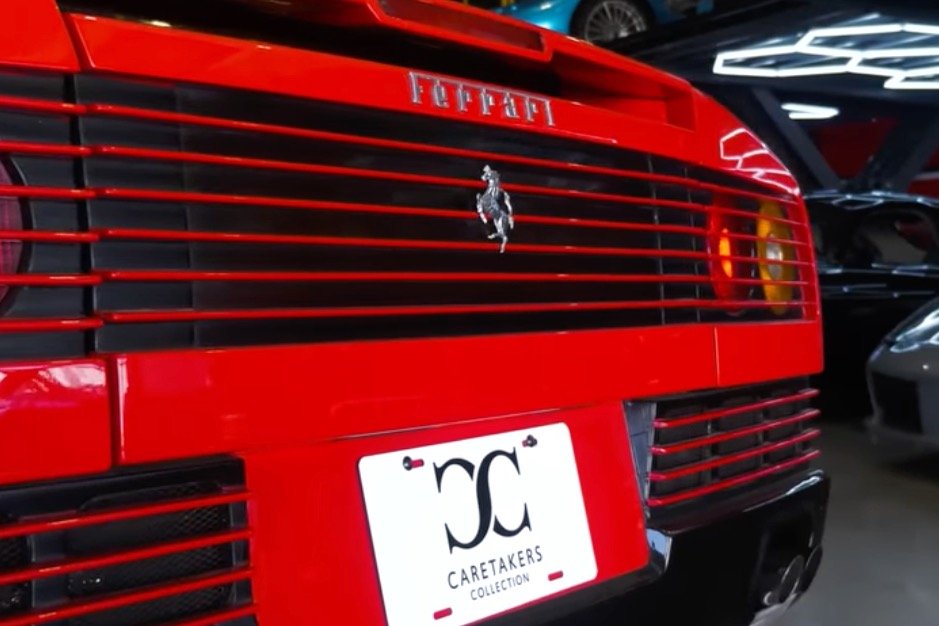
However, the PPG version was far more than a stock chassis with a lightbar. I.DE.A. completely re-sculpted the exterior. The wheelbase was stretched, providing a more aggressive, planted stance. The front and rear fasciae were replaced with aerodynamic, integrated components, connected by a distinct, corrugated trim that circled the vehicle’s midsection.
Perhaps most striking were the safety lights. Rather than a crude roof-mounted beacon, the lighting was integrated into the bodywork, most notably within transparent, flying-buttress-style sections flanking the engine cover. Inside, the cabin was a masterclass in period-correct futurism, stripped of traditional appointments and replaced with high-end Kevlar and suede. The dashboard was redesigned to centralize telemetry and controls, prioritizing the driver’s interface—a nod to its primary function as a track-focused vehicle.
Supporting Data: Performance vs. Reality
While the aesthetics were undeniably futuristic, the Mondial T pace car was plagued by the mechanical temperament for which Ferraris of that era were notorious. According to a 2025 retrospective in Forza magazine, the car’s reliability record was, to put it mildly, inconsistent.
Despite the $1 million investment, the car frequently required specialized attention to maintain the consistent, high-speed pacing required by the CART field. The chassis modifications, while intended to optimize track performance, were fighting against a platform that was fundamentally designed for spirited touring rather than the grueling, sustained thermal loads of professional racing.
Yet, in the context of the PPG program, reliability was secondary to the marketing impact. The car was a "halo" object, designed to draw eyes toward the sponsor and the series. In this regard, the Mondial T was a resounding success, capturing the imagination of race fans who were accustomed to seeing Fords, Chevrolets, and Buicks leading the pack.
The Significance of Preservation
The rescue of the Ferrari Mondial T PPG Pace Car by The Caretakers Collection is a victory for automotive historians. It serves as a physical manifestation of a time when the boundaries between "production vehicle" and "racing prototype" were blurred by pure, unadulterated creativity.
In the contemporary era, the pace car has become standardized. Modern IndyCar events utilize production vehicles from manufacturers like Honda or Chevrolet, often with minimal modifications beyond safety lighting and livery. While this ensures parity and reliability, it lacks the theatricality of the 1980s PPG era. The Ferrari represents a moment when an automaker was willing to spend millions of dollars on a "what if" scenario—a commitment to design that, while perhaps not always practical, was perpetually daring.
Implications for Modern Motorsports
Looking back at the Mondial T, one must consider what the modern sport has lost. The trend toward homogenization in automotive design, driven by crash-test regulations and platform sharing, has made it increasingly difficult for manufacturers to create one-off concepts with the same level of freedom seen in the 1980s.
However, the resurgence of this vehicle serves as a poignant reminder of the importance of "out-of-the-box" thinking. The Ferrari was not a good racing car by traditional standards, nor was it a perfect production vehicle, but it was an unforgettable spectacle. For current IndyCar organizers, the lesson is clear: the pace car is not just a safety tool; it is a vital part of the theater of racing. By embracing the creative spirit that allowed for such a bizarre, beautiful, and expensive experiment, the series could reignite the sense of wonder that defined the golden age of CART.
The Ferrari Mondial T PPG Pace Car is now a permanent resident of a collection that values the unique, the odd, and the historically significant. It stands as a testament to the fact that sometimes, the most interesting cars aren’t the ones that won the race, but the ones that led the way.
