



The automotive aftermarket is undergoing a seismic transformation. For decades, the industry’s business model was anchored in a simple, reactive cycle: a vehicle breaks, a customer arrives at the shop, a technician diagnoses the mechanical failure, and a part is replaced. Today, that model is not only becoming obsolete—it is becoming a liability.
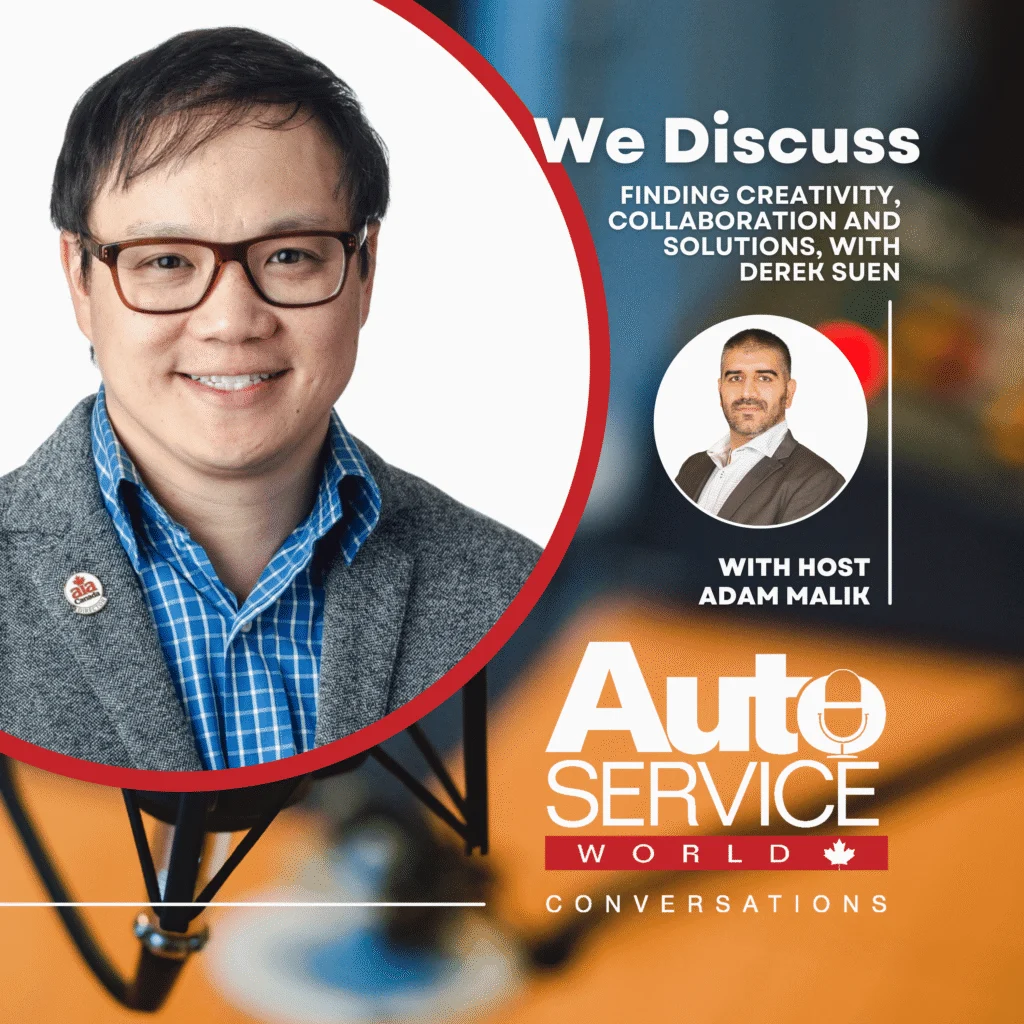
According to longtime industry expert Derek Suen, the future of automotive repair lies in the ability to anticipate failures before they leave a driver stranded. Speaking on a recent episode of Auto Service World Conversations, recorded at AAPEX 2025, Suen argued that as vehicles become increasingly complex, the aftermarket must pivot from being a collection of “fixers” to becoming a network of “predictors.”
The Main Facts: A Paradigm Shift in Vehicle Maintenance
The fundamental reality of the modern repair shop is that the complexity of the average vehicle has outpaced the traditional diagnostic workflow. Suen notes that while the industry once thrived on “ideation through failure”—watching what broke in the field and manufacturing a more durable replacement—that approach is no longer sufficient.
“Ten years ago, ideation was mostly about reacting to failures, seeing what’s happening in the field, and seeing what’s breaking and making a better version,” Suen explained. “Today, I think it’s a lot about predicting what’s going to fail next. Vehicle technology has exploded.”
This shift is driven by the integration of sophisticated software and hybrid propulsion systems into the standard automotive architecture. As cars evolve into “computers on wheels,” the data points available to technicians are vast, yet often siloed. The aftermarket’s ability to harness this data to provide predictive maintenance is the new frontier for profitability and customer retention.
Chronology of the Transformation: From Mechanical to Digital
To understand why the industry is at this crossroads, one must look at the historical trajectory of the Canadian automotive landscape:
- The Mechanical Era (Pre-2000s): Repair shops focused on internal combustion engines, basic electrical systems, and manual transmissions. Diagnostics were largely tactile and visual.
- The Diagnostic Era (2000–2015): The introduction of the OBD-II port and computerized engine management forced technicians to adopt scanning tools. The industry moved toward a “plug-and-play” diagnostic culture.
- The Predictive Era (2015–Present): With the proliferation of Advanced Driver Assistance Systems (ADAS), telematics, and hybrid powertrains, vehicles are now generating constant streams of data. The challenge is no longer just finding the error code, but interpreting the trend lines that indicate a component is approaching its end-of-life.
Supporting Data: The Canadian Context
The urgency of this shift is compounded by the demographic state of the Canadian vehicle fleet. Currently, the average age of a vehicle on Canadian roads sits at approximately 10.5 years. This creates a unique “dual-tech” challenge for the average repair shop.
The Aging Fleet Dilemma
Technicians are now required to be experts in two distinct worlds. They must maintain aging mechanical components—suspensions, gaskets, and traditional drivetrains that are reaching the end of their service life—while simultaneously troubleshooting cutting-edge electronic systems that govern everything from battery management to sensor-based safety features.
The Data Gap
The supply chain remains fragmented. While manufacturers possess massive amounts of diagnostic data, that information is rarely shared effectively with the jobbers who supply the parts or the technicians who install them. Suen highlights that the supply chain is only as smart as the data it shares. Currently, the lack of a unified digital ecosystem means that predictive modeling is often hampered by incomplete information.
Official Perspectives: Where Do Solutions Begin?
One of the most compelling insights provided by Suen is the origin point of innovation in the aftermarket. Despite the heavy focus on R&D in corporate labs, the most transformative ideas often emerge from the dirt and grease of the service bay.
The Role of the Technician as Innovator
“Most of our great ideas, they don’t start in the lab,” Suen noted. “They actually come when a technician gets really frustrated in the bay and they just need someone to talk to, to vent their frustration.”
This "venting" process is, in effect, a form of crowdsourced R&D. When a technician encounters a recurring issue that standard manuals don’t address, they develop workarounds. If these frustrations are documented—if patterns are identified across multiple shops—they lead to the creation of better tools, more accurate diagnostic software, and improved parts. The key to the industry’s future, Suen suggests, is formalizing this feedback loop between the bay and the manufacturer.
Lessons from Europe
Having spent significant time working within the European automotive market, Suen offers a sobering perspective on North American progress. Europe has been forced to innovate faster due to stricter sustainability mandates and a higher concentration of electric vehicles (EVs).
European shops have already mastered the art of integrating EV-specific diagnostic equipment and high-voltage safety protocols. While North America is just beginning to embrace this transition, the lessons are clear: sustainability and electrification are not just environmental goals; they are the next major revenue streams for the aftermarket.
Implications: Breaking Down the Silos
The implications for Canadian automotive businesses are profound. To survive in an era of tightening margins and increasing complexity, companies must dismantle the barriers that have historically separated them.
The Call for Data Collaboration
Suen identifies "data collaboration" as the single greatest opportunity for the Canadian market. This involves creating a transparent, interconnected ecosystem that links:
- The Technician: Who identifies the failure in real-time.
- The Distributor/Jobber: Who manages the inventory and logistics.
- The Manufacturer: Who utilizes the data to refine product quality and predict future failures.
The Necessity of Communication
The "siloed" nature of the current aftermarket—where information is guarded rather than shared—acts as a drag on efficiency. If a part consistently fails on a specific vehicle model at 80,000 kilometers, that information should travel instantly to the manufacturer. Currently, this process is often delayed by months or years, costing shops time and customers money.
“If there’s one thing that we all really need to improve, it is communication,” Suen emphasized. “Breaking down silos between techs, jobbers, and manufacturers… is essential.”
Future-Proofing the Aftermarket
The shift from reactive to predictive maintenance is not merely a technological upgrade; it is a cultural change. It requires a commitment to lifelong learning, an investment in data analytics, and a willingness to share information across the supply chain.
For the independent repair shop, the transition presents a challenge: it requires a shift in how they bill for their services. Moving from a “labor hours” model to a “value-based” model—where the shop charges for the intelligence and predictive diagnostics they provide—will be necessary to sustain margins in the coming decade.
As the industry looks toward the future, the message is clear: the shops that succeed will be those that view themselves not just as repair centers, but as data-driven partners in vehicle longevity. By embracing the feedback of their technicians, fostering deeper collaboration with the supply chain, and staying ahead of the curve on emerging vehicle technologies, the Canadian aftermarket can ensure it remains the backbone of the transportation sector, regardless of how complex the vehicles of tomorrow become.
For those interested in the full discussion, you can tune into the latest episode of Auto Service World Conversations. The podcast offers a deep dive into these topics, providing listeners with actionable insights from industry leaders. Access the full library of episodes to stay informed on the rapidly changing automotive landscape.
