





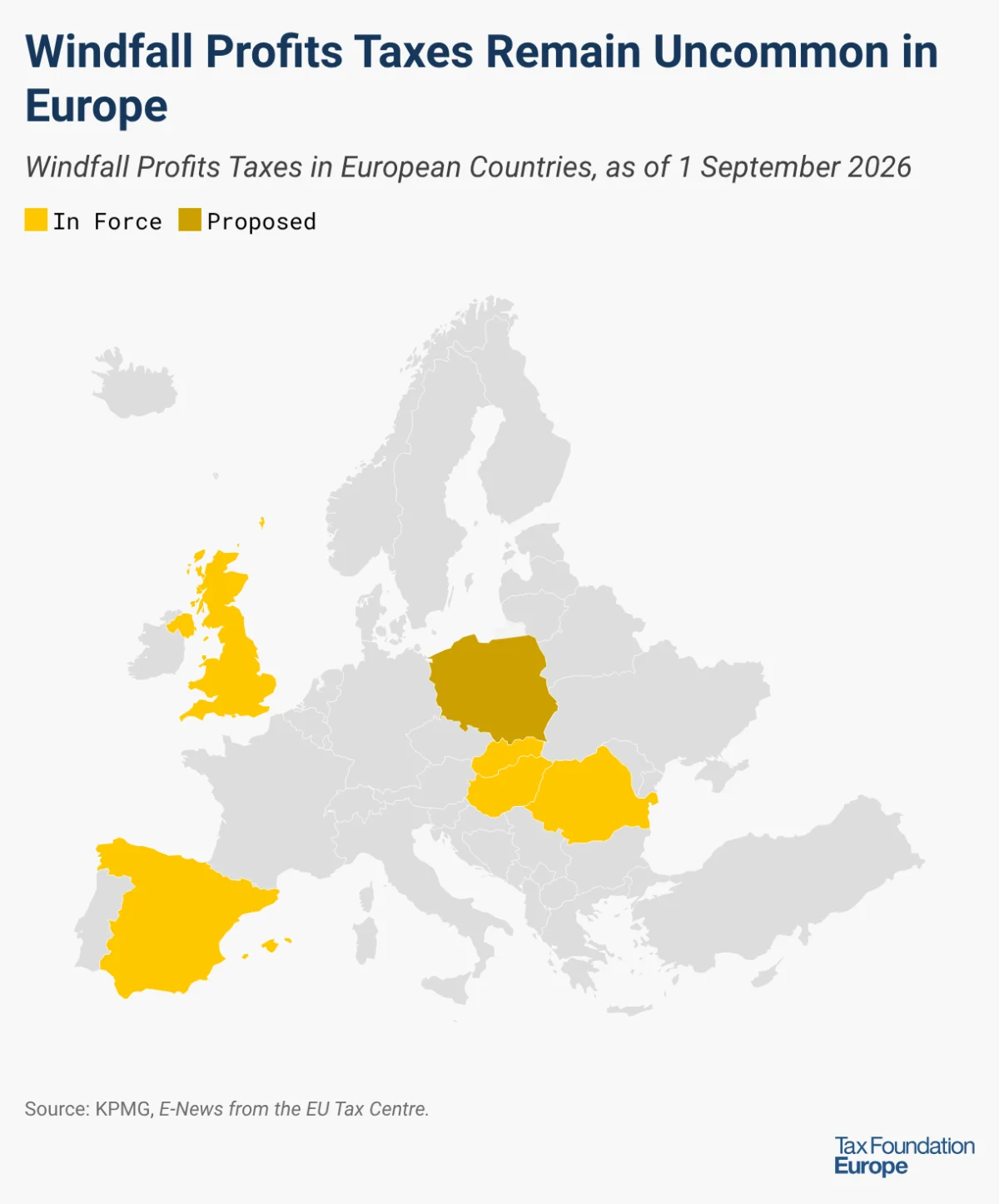
As the European Union navigates the tail end of the post-pandemic recovery, the specter of energy instability has returned to haunt the continent. With fresh geopolitical tensions in the Middle East threatening to disrupt global oil and gas supply chains, energy prices have once again begun a volatile climb. In response, European policymakers are dusting off a controversial fiscal tool that defined the early years of the Ukraine conflict: the windfall profit tax.
While initially framed as a temporary "solidarity contribution" to alleviate the burden of skyrocketing household utility bills, the prevalence and permanence of these taxes have become a point of intense debate. As of 2026, what began as a pragmatic emergency measure is increasingly being criticized as a structurally flawed, non-neutral policy that threatens long-term investment, hampers economic resilience, and distorts the European single market.
The Chronology of a Crisis Measure
The trajectory of windfall taxation in the EU reflects the rapid evolution of the continent’s energy strategy.
- March 2022: In the immediate wake of the Russian invasion of Ukraine, the European Commission released its REPowerEU communication. It recommended that Member States impose temporary windfall taxes on energy providers, stipulating that such measures should be technologically neutral and designed to avoid retroactive punishment or interference with wholesale market trends.
- October 2022: The Council of the European Union formalized these recommendations, moving beyond the Commission’s initial guidance to mandate an EU-wide "solidarity contribution" specifically targeting fossil fuel companies (oil, gas, coal, and refining). Simultaneously, a revenue cap was implemented for electricity generators utilizing "infra-marginal" technologies, such as renewables, nuclear, and lignite, to curb excess profits born of high electricity prices.
- 2023–2024: As energy prices began to stabilize, the focus of windfall taxation shifted. Several Member States, finding the energy sector less lucrative for taxation, began pivoting toward the banking and financial services sectors, viewing them as a new source of "unexpected" profit due to rising interest rates.
- 2025–2026: The European Commission published a comprehensive report on the solidarity contribution’s effectiveness, revealing significant discrepancies in implementation and revenue generation. By 2026, the temporary nature of these taxes has been called into question, with several countries, including Hungary and Slovakia, extending their mandates, while Romania has moved to make its bank-focused windfall tax permanent.
Supporting Data: A Mixed Fiscal Legacy
The ambition behind the EU’s windfall tax initiative was significant. The bloc projected that the combined impact of the solidarity contribution and revenue caps would generate approximately €140 billion. Of this, €25 billion was earmarked specifically from the oil and gas sector to offset household energy costs.
However, the reality of the 2022–2023 collection period tells a more complex story. According to the 2025 European Commission report:
- Implementation Gap: While 16 Member States applied the solidarity contribution and eight others used equivalent national measures, three countries (Luxembourg, Latvia, and Malta) reported having no in-scope companies, and Cyprus opted out entirely.
- Revenue Discrepancies: While total revenues collected reached €26.15 billion—slightly exceeding the €25 billion target—the distribution was uneven. Six countries reported zero revenues, and data transparency remains a major hurdle.
- Fiscal Insignificance: Perhaps most telling is the scale of these collections relative to the total cost of energy support measures across the EU, which totaled a staggering €340 billion. Revenues from the solidarity contribution accounted for a mere 7 percent of the total support provided to consumers.
Official Responses and Institutional Skepticism
The proliferation of these taxes has not gone unnoticed by supranational financial institutions. The European Central Bank (ECB) has been particularly vocal in its opposition, particularly regarding taxes aimed at the banking sector.
The ECB has repeatedly cautioned that taxing bank profits indiscriminately risks reducing the sector’s capacity to lend, thereby stifling credit supply. In the context of an economic downturn, this is particularly dangerous, as it limits the ability of banks to absorb losses from loan defaults. The ECB’s interventions in Spain, Lithuania, and Italy highlight a fundamental disagreement between fiscal authorities looking for quick revenue and monetary authorities focused on the structural stability of the financial system.
Furthermore, the European Parliament has conducted its own research, concluding that historical evidence suggests windfall taxes exert a chilling effect on long-term capital investment. The fear is that by treating "excess" profits as a target for extraction rather than a sign of a healthy, productive industry, governments are inadvertently scaring away the very investors needed to drive the green energy transition.
The Structural Implications: Why Design Matters
The primary criticism leveled by economists at these measures is that they often fail the test of a "proper" windfall tax. In theory, a windfall tax should target extraordinary profits that arise from external, unforeseen factors. In practice, many of the European measures function more like excise taxes.
1. The Erosion of the Tax Base
By targeting total sales or implementing arbitrary price thresholds, countries like Spain have moved away from the concept of "excess" profit and toward the taxation of revenue. This is inherently inefficient. When a tax is levied on total sales, it ignores the cost of production, meaning a company could potentially be taxed into a loss.
2. Double Taxation and Non-Neutrality
Many of these policies apply on top of existing corporate income taxes. Because the definition of "excess" profit is often loosely tethered to historical averages, these taxes frequently capture standard returns, resulting in the double taxation of normal business activities. This lack of neutrality discourages the very companies that are most efficient and profitable.
3. The Green Energy Paradox
A particularly ironic outcome of these policies is their impact on the energy transition. In countries like Spain and the UK, the imposition of windfall taxes has led to the reconsideration or cancellation of renewable energy projects. Investors, facing a landscape where profits—regardless of source—might be subject to sudden, punitive tax hikes, are shifting their capital toward more predictable, stable regulatory environments.
The Path Forward: From Crisis to Principle
The evidence gathered through 2026 suggests that while windfall taxes may offer a superficial political victory in the short term, they are a poor substitute for sound fiscal policy. The European Union is now at a crossroads: it must decide whether to continue down a path of ad-hoc, sector-specific taxation or to return to the principles of stability and predictability.
The "temporary" nature of these measures has been undermined by their persistence. When crisis measures are extended for years—or, in the case of Romania, made permanent—they cease to be emergency tools and become a permanent feature of the tax code. This creates a "tax uncertainty" premium that increases the cost of capital for European businesses.
To secure a competitive future, EU policymakers should:
- Repeal Existing Windfall Taxes: Existing measures should be phased out as the energy market stabilizes to prevent further damage to investment sentiment.
- Avoid Targeted Sectoral Taxes: Taxation should be broad-based and predictable, rather than punitive toward specific industries that are currently performing well.
- Prioritize Structural Reform: Rather than relying on volatile revenue streams from unexpected price spikes, governments should focus on broadening tax bases and lowering rates, which provides a more sustainable and equitable way to fund public services.
As Europe looks toward the future, the lessons of the last four years are clear: market distortions created in the name of "solidarity" often have long-term consequences that outweigh their short-term benefits. A return to fiscal discipline and a commitment to a predictable regulatory framework are essential if Europe is to avoid the pitfalls of short-sighted revenue gathering and restore its appeal as a global destination for capital.
