





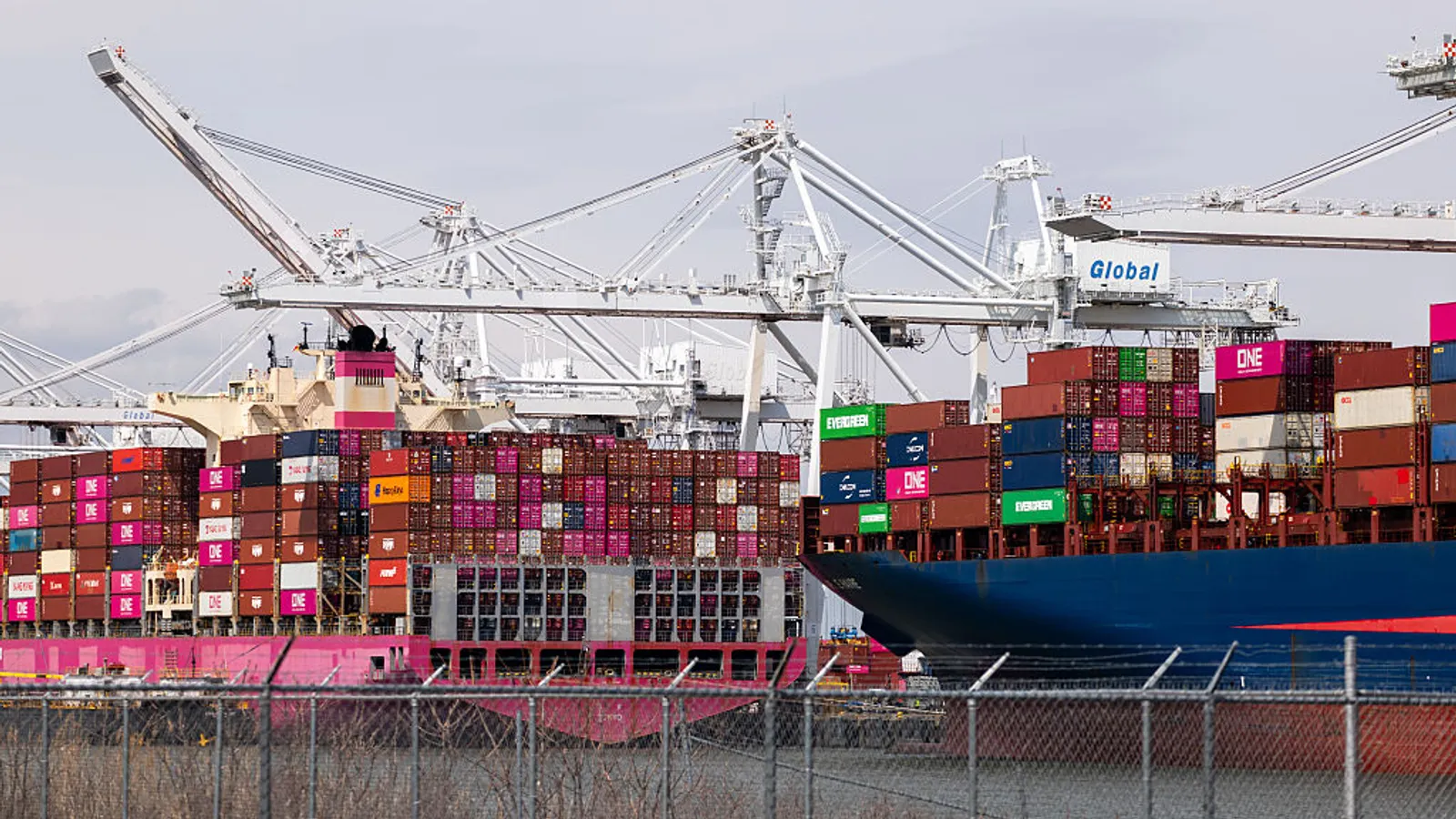
The global logistics landscape is undergoing a critical transition as the traditional peak shipping season enters its final, high-stakes weeks. According to the latest data from the Freightos Baltic Index (FBX), spot rates for Transpacific trade lanes have begun to show signs of stabilization, signaling a potential plateau after a summer of unprecedented cost surges. As of September 8, the spot rate per forty-foot equivalent unit (FEU) stood at $7,569 for Asia-to-U.S. West Coast routes, while shipments destined for the U.S. East Coast commanded $9,505 per FEU.
While these figures remain historically elevated, the pace of rate escalation has decelerated. Industry analysts suggest that the market, which has been battered by a confluence of surging consumer demand and systemic supply chain bottlenecks, is unlikely to see further significant spikes as the industry moves toward the fourth quarter. However, the cooling of rate growth does not imply a return to normalcy; rather, it highlights a complex interplay between shifting demand patterns and severe operational hurdles, particularly in East Asian port hubs.
Main Facts: The Current State of Transpacific Freight
The current freight environment is defined by a "peak season hangover." Throughout May and July, a combination of early holiday inventory stocking and pandemic-driven consumer spending pushed global shipping capacity to its breaking point. This surge effectively absorbed the available global container fleet, leaving little room for error when operational disruptions occurred.
The stabilization of spot rates is largely attributed to carriers successfully deploying additional capacity and shippers potentially front-loading their inventory earlier than usual to avoid the chaos that defined the 2020-2021 period. Yet, the cost of moving goods remains a significant burden on importers. The disparity between current spot rates and pre-pandemic levels continues to compress margins for retailers and manufacturers alike, forcing a fundamental rethink of supply chain management strategies.
Chronology of Disruptions: A Summer of Storms
The stability of the global supply chain has been frequently tested by environmental factors, most notably a series of powerful typhoons that swept through East Asia starting in mid-July. This weather pattern has created a cascading effect on logistics, turning minor port delays into systemic congestion.
- Mid-July to August: Persistent weather disturbances began to impact port throughput across major Asian export hubs, preventing the steady flow of empty containers back to terminals.
- Late August: The backlog in major Chinese ports reached a tipping point, as vessels were forced to wait at anchorage due to unsafe berthing conditions.
- September 3–4: The severity of the situation became public through official industry reports. Kuehne + Nagel confirmed that the port of Ningbo had been shuttered for 78 hours, while the port of Shanghai—the world’s busiest—was forced to manage 42 vessels at berth and a staggering 99 vessels at anchorage simultaneously.
- Post-September 4: Freightos reported that the storm systems continued to track northward, impacting port operations as far as Busan, South Korea, and threatening the industrial powerhouse of Shenzhen.
This chronology illustrates how environmental events have acted as a force multiplier for existing infrastructure weaknesses, preventing ports from clearing their backlogs even during short windows of favorable weather.
Supporting Data: By the Numbers
The volatility of the market is best understood through the granular data provided by Freightos. The reliance on spot rates—rather than long-term contract rates—has left many small-to-medium enterprises (SMEs) vulnerable to price spikes.
| Route Segment | Spot Rate per FEU (as of Sept 8) | Trend |
|---|---|---|
| Asia to U.S. West Coast | $7,569 | Plateauing |
| Asia to U.S. East Coast | $9,505 | Plateauing |
Beyond these headline figures, the operational data paints a bleaker picture of "skipped calls." When vessels are delayed by typhoons, carriers have increasingly chosen to skip port calls at highly congested locations to recover their schedules. This maneuver, while essential for the efficiency of the vessel rotation, has resulted in massive transshipment spikes at secondary ports. This creates a "bottleneck migration," where the congestion merely moves from one terminal to another, rather than being resolved.
Official Responses and Industry Sentiment
The logistics community has responded to these challenges with a mix of caution and strategic realignment. Carriers have been under intense scrutiny from regulatory bodies and the shipping public to explain the rate hikes and the reliability of service.
In their recent market update, representatives from Kuehne + Nagel emphasized that the congestion in Shanghai and Ningbo was not merely a product of volume, but a failure of "fluidity." When a port shuts down for days, the recovery period—often called the "rebound effect"—takes weeks to normalize. During this time, containers sit idle, and the velocity of the global supply chain grinds to a halt.
Freightos, in its assessment, highlighted that while the typhoon activity is a transient factor, the underlying pressure on rates is a result of structural systemic imbalances. Their analysts noted: "The typhoon disrupted operations as far north as Busan and could stay strong enough to impact Shenzhen. These disruptions exacerbate the already tight capacity, making it difficult for shippers to secure space even at current high rates."
Industry associations have urged stakeholders to move away from "just-in-time" delivery models. The current crisis has highlighted the risks of lean inventories when faced with the "Black Swan" events—like typhoons or unexpected port closures—that have become increasingly frequent.
Implications for the Future of Global Trade
The implications of the current shipping climate extend far beyond the immediate financial impact on companies. Several long-term shifts are already emerging:
1. The Death of Predictability
The reliability of ocean freight schedules has plummeted. Shippers can no longer rely on published transit times, leading to a "buffer stock" mentality. Companies are now holding more inventory in the U.S. to protect against future disruptions, which in turn places higher demand on domestic warehousing and trucking, creating secondary bottlenecks in the land-side supply chain.
2. Diversification of Sourcing
The reliance on major hubs like Shanghai and Ningbo is being re-evaluated. Multinational corporations are increasingly looking to diversify their manufacturing footprints, moving production toward Southeast Asia, India, or near-shoring in Mexico to reduce dependency on a single port or region that may be susceptible to localized climate events.
3. Digital Transformation
The current crisis has served as an accelerant for logistics technology. Shippers are increasingly investing in real-time visibility tools and predictive analytics to better forecast disruptions. The ability to monitor vessel locations and port congestion in real-time is no longer a luxury; it is a competitive necessity.
4. Regulatory Scrutiny
As spot rates remain at historic highs, global regulators are taking a closer look at the practices of ocean carriers. The carrier alliance model, while designed to maximize efficiency, is now being scrutinized for its impact on market competition. Future legislative efforts may seek to mandate more transparency in how rates are set and how capacity is managed during times of crisis.
Conclusion
As we move into the final stages of the 2021 peak season, the logistics sector remains in a state of high alert. While the stabilization of spot rates offers a glimmer of hope that the most extreme inflationary pressures may be abating, the underlying structural issues—port congestion, equipment shortages, and the increasing frequency of climate-related disruptions—remain potent threats to supply chain continuity.
The industry is currently in a "wait and see" mode. Whether these rates hold steady or begin a slow descent depends entirely on the ability of global ports to navigate the remainder of the typhoon season and manage the massive inflow of holiday goods. For now, the resilience of the global supply chain is being tested as never before, and the lessons learned during this volatile summer will undoubtedly shape the operational strategies of importers, exporters, and carriers for years to come. The era of cheap, reliable, and invisible shipping has ended, replaced by a new reality where logistics is a boardroom priority rather than a back-office function.
