



In an era defined by the rapid, often dizzying evolution of electric drivetrains and software-defined vehicles, it is easy to view the internal combustion engine as a monolith of progress. We track horsepower figures, battery densities, and regenerative braking efficiencies as if they are the inevitable conclusion of a linear journey. However, the history of automotive and industrial propulsion is far from a straight line; it is a graveyard of "dead ends," ingenious prototypes, and bold experiments that ultimately lost the race to market dominance.
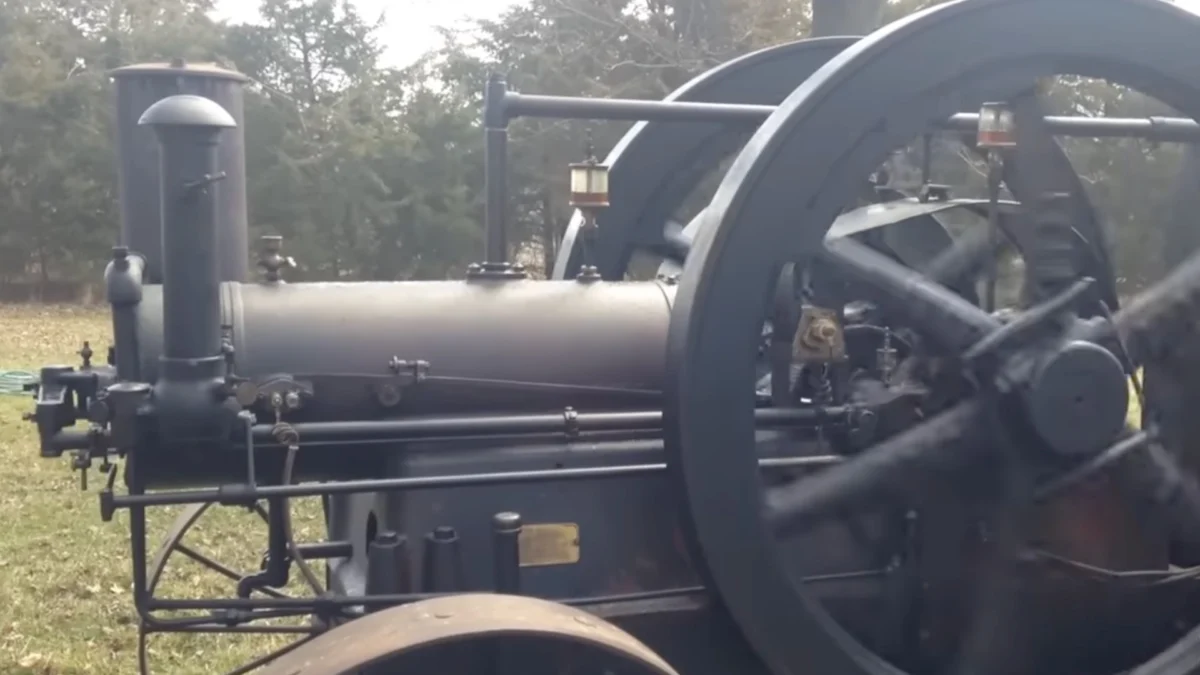
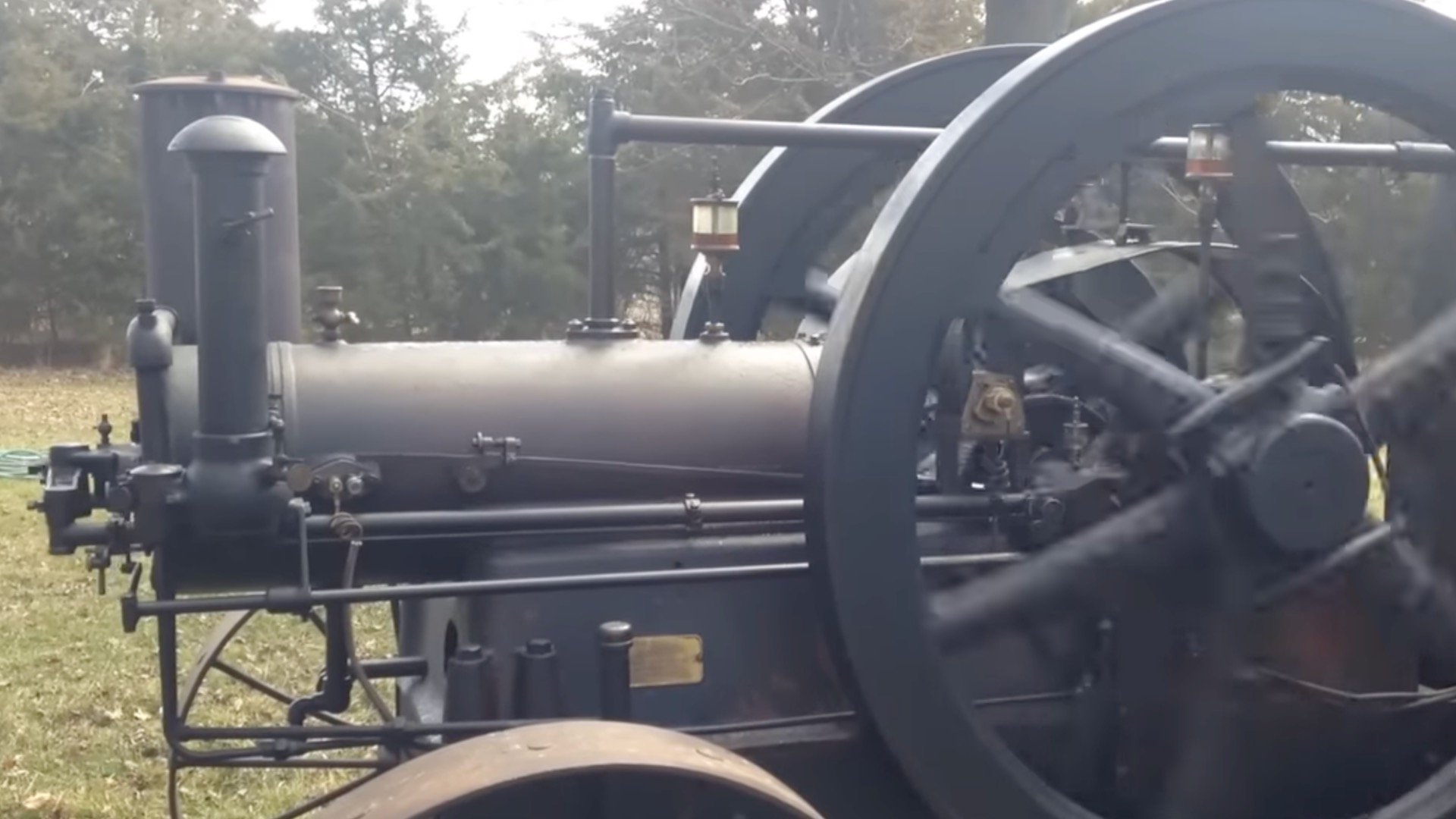
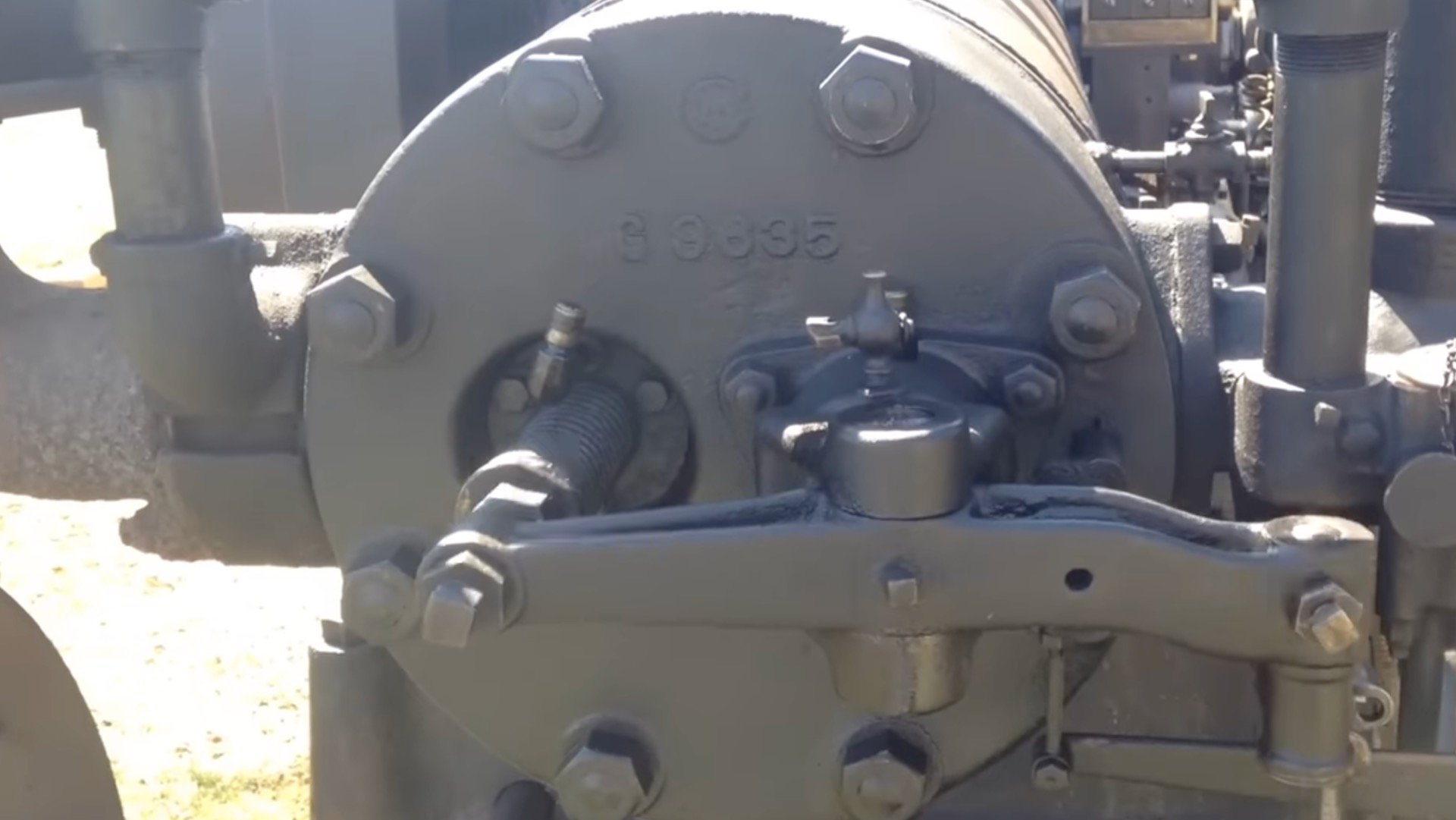
Few artifacts illustrate this better than a rare 1915 International Harvester "hit-and-miss" engine. Recently brought to public attention by the YouTube channel Antique Tractor Life, this 25-horsepower behemoth is one of only three known to exist. Having spent seven decades hidden away in a Pennsylvania planing mill, the engine serves as a tangible bridge to a time when engineering was less about computing power and more about brute force, mechanical simplicity, and the sheer necessity of getting work done.
The Mechanics of "Hit-and-Miss"
To understand why this engine is a historical marvel, one must first understand its peculiar method of operation. The term "hit-and-miss" refers to the governing system used to regulate the engine’s speed. In modern engines, the throttle controls the air-fuel mixture to match the load, providing a constant, smooth power delivery. In a hit-and-miss engine, the device only fires (the "hit") when it drops below a predetermined RPM threshold. If the engine is running fast enough, the governor locks the exhaust valve in an open position.
With the exhaust valve held open, the combustion chamber cannot create the vacuum necessary to draw in a new fuel-air charge, and the spark plug remains inactive. The engine simply coasts, or "misses," until the rotational momentum decays to the point where the governor releases the valve, allowing the cycle to begin anew.
The intake valve on this specific 1915 International Harvester model is an atmospheric valve, operated solely by the suction created during the intake stroke. It remains shut if the exhaust valve is held open, effectively rendering the engine a silent, spinning flywheel during its "miss" cycles. This design is the antithesis of modern thermal efficiency. To produce its 25 horsepower, the engine relies on a staggering 1,100 cubic inches—approximately 18 liters—of displacement. For context, that is nearly four times the displacement of a modern heavy-duty diesel truck engine, producing a fraction of the power output.
A Chronology of Industrial Power
The lineage of this engine traces back to International Harvester’s Milwaukee manufacturing plant, which served as a crucible for agricultural and industrial innovation between 1904 and 1917.
- 1904–1909: International Harvester enters the stationary engine market, focusing on smaller 6-, 8-, and 15-hp gasoline engines designed to replace manual labor on farms and in small workshops.
- 1910: The 25-hp variant enters production, marking the upper echelon of the company’s stationary power offerings.
- 1913: As the burgeoning automotive industry drives up the price of gasoline, International Harvester pivots, introducing kerosene-fueled variants to provide a more economical alternative for industrial clients.
- 1935: The specific engine in question, already considered obsolete by the standards of the automotive age, is salvaged from a scrap yard after a fire destroys the steam-powered equipment at a Pennsylvania planing mill. It is installed as a reliable, cost-effective replacement.
- 1935–1997: The engine serves as the heart of the mill, operating in the harsh, sawdust-filled environment of a woodshop for over 70 years.
- 1997: The mill closes, and the engine is sold at auction, eventually entering the world of private collection and preservation.
Supporting Data: The Cost of Progress
The survival of this engine is a testament to the durability of early 20th-century American manufacturing. While we often associate "efficiency" with fuel economy, the 1915 International Harvester defined efficiency through longevity and repairability.
The engine was originally engineered to be modular. While it was installed as a stationary unit in the Pennsylvania mill, it was built on a wheeled chassis, intended to be moved from field to field or building to building as a "portable power plant." Before the widespread adoption of electrical grids, such engines were the lifeblood of rural industry.
When comparing this to modern propulsion, the shift is stark. The International Harvester engine is a low-compression, heavy-mass machine designed to run at very low RPMs for days on end with minimal lubrication. Its "primitive" nature is actually its greatest asset; with a few basic tools and a bit of oil, it can be coaxed into operation even after a century of dormancy. Modern engines, by contrast, are tightly integrated systems that rely on complex electronics, high-pressure fuel injection, and precise thermal management. When these systems fail, they often require specialized diagnostics, highlighting the trade-off we have made between "serviceability" and "performance."
Official Perspectives: Preservation vs. Utility
The preservation community views these engines not merely as scrap metal, but as critical historical documents. Organizations like the Early Day Gas Engine & Tractor Association (EDGE&TA) often weigh in on the importance of these finds.
"The significance of an engine like this," notes one expert in vintage agricultural machinery, "is that it tells the story of the transition from steam to internal combustion. These engines were the bridge. They didn’t have the danger of a boiler explosion, but they had the same, slow-thumping reliability that the industrial revolution was built on. To find one in such original condition is rare because, by the 1930s, most of them were melted down to support the war effort or sold for parts."
The fact that this engine remained in the same mill for 70 years is an anomaly. Usually, these machines were traded, scrapped, or modified beyond recognition. The thick, protective coating of oil and sawdust that covered the engine acted as a natural preservative, shielding the cast iron from the elements and preventing the oxidation that claimed so many of its contemporaries.
Implications for Modern Innovation
As we stand on the precipice of the "Electric Era," the story of the International Harvester hit-and-miss engine offers a sobering perspective on the nature of technological adoption.
The hit-and-miss engine was eventually replaced by more efficient, multi-cylinder internal combustion engines that could produce more power with less fuel and less noise. The transition happened because the marketplace demanded better performance, and the "dead end" of hit-and-miss technology could no longer compete.
However, looking back at the 1915 model, we see that "obsolescence" is a relative term. In the 1930s, when the Great Depression made capital investment nearly impossible for small businesses, this "obsolete" engine became the difference between the survival and bankruptcy of the Pennsylvania mill. It was the "appropriate technology" for its time—affordable, repairable, and capable.
Today, we are witnessing a similar, albeit faster, transition. Electric vehicles are being heralded as the ultimate solution to mobility, yet we are already seeing the complexities of the transition: the need for massive infrastructure overhauls, the volatility of battery raw material prices, and the challenges of high-speed charging.
The 1915 International Harvester reminds us that there is no "final" version of technology. Just as the hit-and-miss engine gave way to the modern inline-four, today’s electric motors may eventually be supplanted by something we haven’t even conceived of yet. The real lesson of the planing mill is not that the old way was better, but that the "future" is often just a temporary solution to the problems of the present.
For the collectors who now maintain this piece of history, the engine is more than a curiosity. It is a reminder that engineering is a cycle of trial and error. Every time the flywheel spins and the exhaust valve snaps open with a distinct clack-hiss, it is a heartbeat from 1915, echoing through a century of change, proving that while technology may become obsolete, the spirit of mechanical innovation remains timeless.
