




The global logistics industry is currently caught in a high-stakes tug-of-war between the necessity of decarbonization and the brutal physics of long-haul trucking. While passenger vehicles have embraced electrification with relative ease, the heavy-duty sector faces a massive hurdle: the "energy density" problem. To haul an 80,000-pound load over hundreds of miles, a fully electric semi-truck requires a battery pack so massive that it significantly eats into the truck’s cargo capacity and adds prohibitive weight.
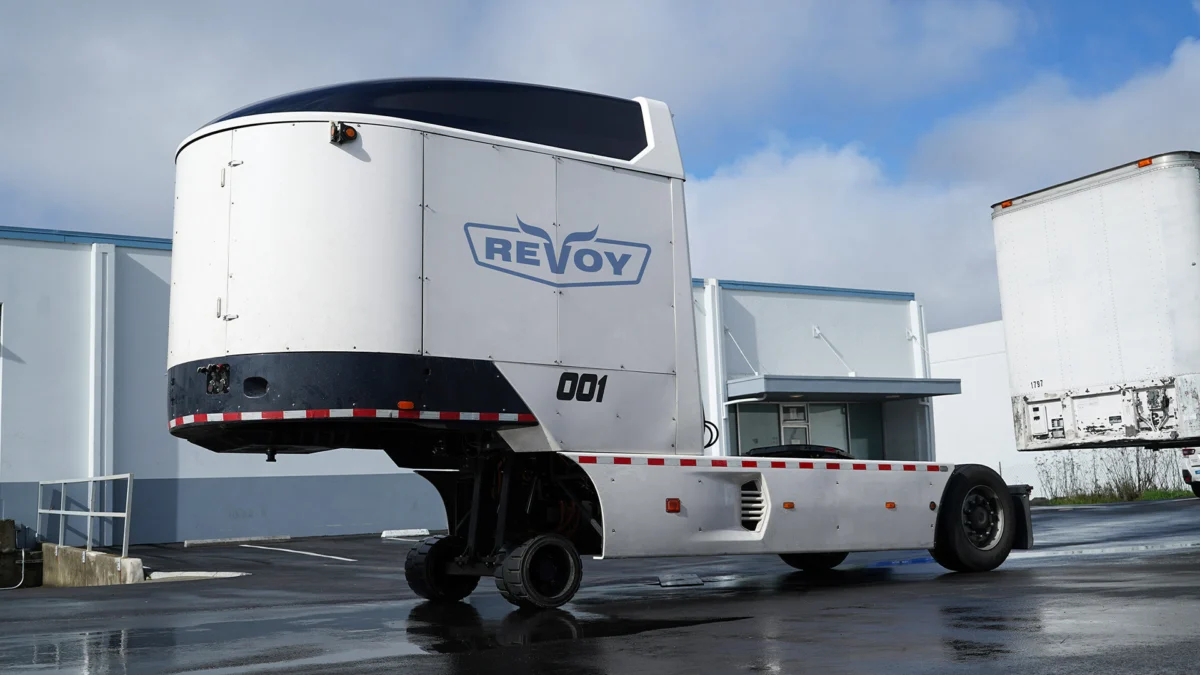
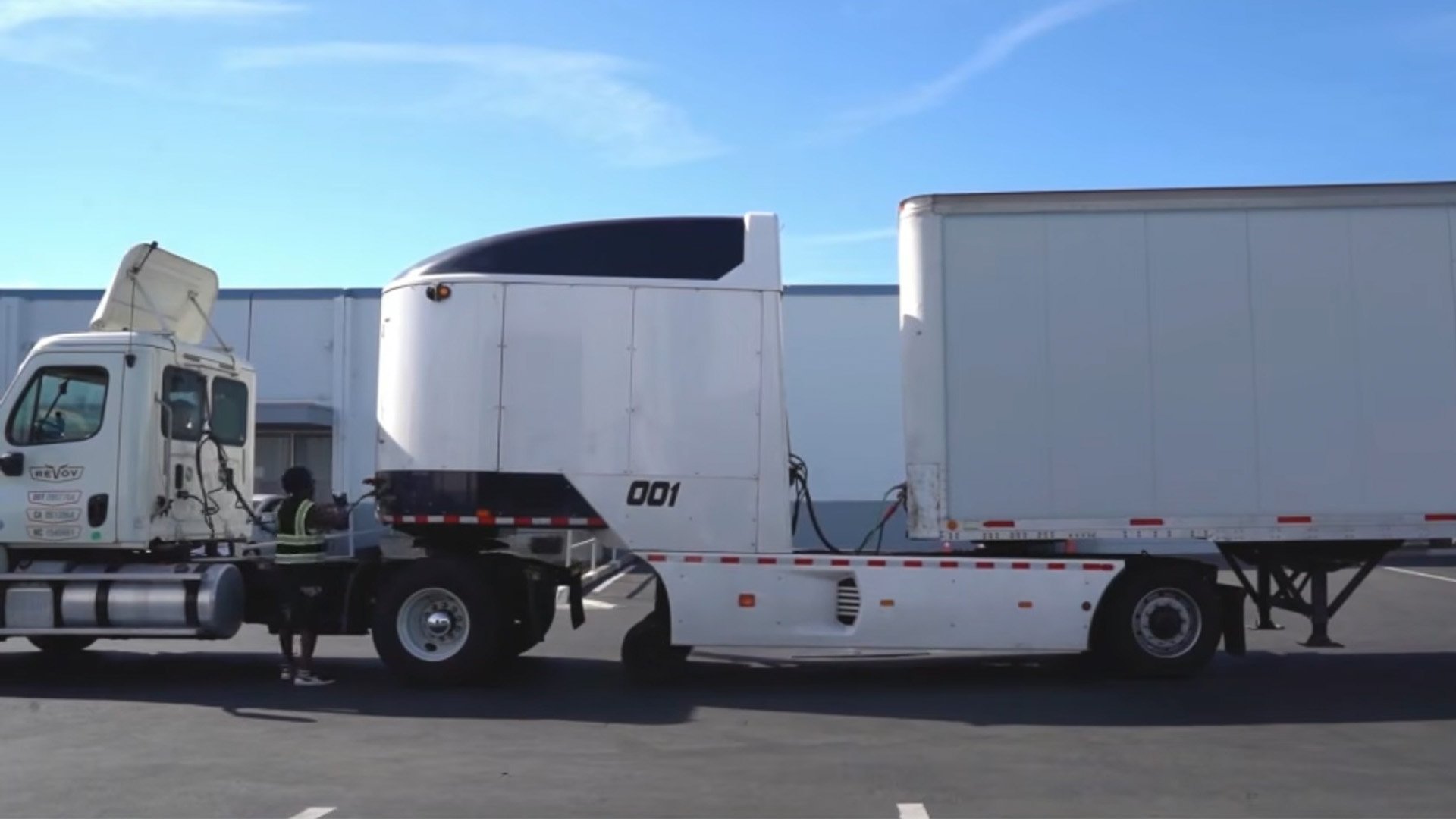
Enter Revoy, a California-based startup that is bypassing the need for a total vehicle overhaul by introducing a "modular hybrid" solution. Instead of replacing the diesel tractor, Revoy has developed a self-contained, autonomous electric "pusher" unit that sits between the tractor and the trailer. It is a bold, albeit unconventional, attempt to turn the existing fleet of diesel semis into temporary hybrids without requiring manufacturers to build new electric trucks from the ground up.
The Core Concept: How the Revoy Module Works
At its heart, the Revoy unit is an electrified dolly. It functions as a sophisticated, battery-powered auxiliary drive system. When attached, the module syncs with the primary diesel tractor’s engine. As the driver accelerates, the Revoy unit provides immediate electric torque to assist the engine, effectively reducing the load on the internal combustion powertrain.
This "hybridization" is designed to kick in during high-load scenarios, such as climbing steep grades or accelerating from a stop, where diesel engines are traditionally least efficient and produce the highest levels of emissions. Furthermore, the unit features a sophisticated regenerative braking system, capturing energy that would otherwise be lost as heat during descents or deceleration and funneling it back into the battery pack.
According to the company, the current iteration of the hardware provides 200 miles of electric-assist range. However, because the unit cannot be fully replenished through regenerative braking alone, Revoy is developing a "hub-and-spoke" infrastructure model. Similar to how trains swap engines or trailers are exchanged at depots, Revoy envisions a network of service hubs where drivers can quickly swap out a depleted module for a fully charged one, minimizing downtime.
A Chronology of Development
The path to commercializing such a disruptive technology is fraught with regulatory and logistical hurdles. Revoy’s journey, though brief, has been marked by rapid development:
- 2020: Revoy is founded in California with the goal of creating a "bolt-on" electrification solution for the heavy-freight industry.
- 2023: A significant milestone is reached when the startup receives official approval from the National Highway Traffic Safety Administration (NHTSA) to test its equipment on public roads. This validation was critical to proving the unit’s safety and mechanical stability in real-world traffic conditions.
- 2024: The company launches a high-profile pilot program with logistics giant Ryder. This partnership allowed Revoy to stress-test its hardware in a genuine commercial environment, gathering data on fuel savings and system reliability.
- 2026 (July): The company announces a successful $27 million funding round, bringing its total capital raised to approximately $41 million. This injection of cash is earmarked for R&D and the expansion of operations.
- Late 2026: Revoy plans to initiate commercial operations on a specific 200-mile route near Portland, Oregon. This deployment will utilize modules assembled from international components, supported by a specialized team of trained operators.
Supporting Data and Performance Metrics
The business case for Revoy rests on the promise of drastic efficiency gains. CEO Peter Reinhardt has stated that the modular hardware can lower carbon emissions by as much as 85% compared to a standard diesel semi-truck.
Economically, the company pitches the system as a "cost-neutral" transition. By offsetting diesel consumption with electric assistance, the operating costs of a Revoy-equipped truck are intended to remain comparable to—or lower than—those of a traditional diesel rig, even when accounting for the added complexity of the module. Reinhardt noted that these calculations were validated even against the backdrop of lower fuel prices seen prior to recent geopolitical instability in the Middle East.
However, the weight of the hardware is a constant engineering variable. While Revoy avoids the "megawatt-hour" battery packs found in full-EV semis, the unit must still be robust enough to handle the stresses of hauling 80,000 pounds. The current focus is on optimizing this power-to-weight ratio to ensure that the module doesn’t negate the fuel savings it provides by simply being too heavy to pull efficiently.
Implications for the Freight Industry
The emergence of the Revoy module creates a complex set of implications for the transportation sector.
1. The "Life-Extension" Strategy
One of the most compelling arguments for Revoy is its ability to extend the working life of the millions of diesel trucks currently on the road. With governments worldwide tightening emissions regulations, many fleet operators are worried that their current assets will become "stranded" or obsolete before they have reached the end of their mechanical life. Revoy offers a bridge, allowing these fleets to comply with greener standards without the massive capital expenditure required to replace an entire fleet with new, expensive electric trucks.
2. Infrastructure and Complexity
Despite the promise, there are significant "infrastructure" concerns. A module-swapping network is not a plug-and-play solution; it requires a massive, dedicated infrastructure of hubs, charging stations, and logistics managers to track and maintain the units. For a trucking company, adding a layer of "module management" to the already complex process of dispatching drivers and managing freight is a non-trivial increase in operational overhead.
3. Geopolitical and Regulatory Headwinds
Revoy’s current reliance on components sourced from China puts it in the crosshairs of a shifting political climate in Washington. There is a growing bipartisan push to incentivize domestic manufacturing and decouple supply chains from Chinese hardware. If Revoy is forced to move production to the U.S. to satisfy regulatory or subsidy requirements, the cost of the hardware could skyrocket, potentially undoing the economic benefits that make the system attractive to price-sensitive trucking companies.
The Competitive Landscape
Revoy enters a market that is becoming increasingly crowded. It is not only competing against diesel efficiency improvements but also against the "all-electric" push led by companies like Tesla and legacy manufacturers like Daimler (Mercedes-Benz) and Volvo.
The "all-electric" movement has received a significant boost from government subsidies, such as California’s $1 billion rebate program for zero-emission commercial vehicles. These programs are specifically designed to make the high purchase price of a dedicated electric semi-truck more palatable. If these subsidies become more widespread, the "hybrid" middle-ground occupied by Revoy may face a shrinking window of opportunity. Fleet operators may decide that if they are going to invest in infrastructure, they would rather invest in a permanent, all-electric fleet than a hybrid system that still requires them to purchase and maintain diesel fuel.
Conclusion: A Pivot Point for Logistics
Revoy’s $27 million funding success proves that investors are eager for "quick-fix" solutions to the heavy-duty emissions problem. The idea of turning the existing, massive fleet of global diesel trucks into hybrids is theoretically brilliant, potentially saving billions of tons of carbon emissions without waiting for a total turnover of the world’s vehicle inventory.
However, the road ahead is steep. The company must navigate a minefield of potential trade tariffs, the logistical nightmare of creating a swapping network, and the rapidly falling costs of dedicated battery-electric vehicles. Whether Revoy becomes the standard-bearer for a new "pusher" industry or a cautionary tale of a well-funded but overly complex engineering experiment remains to be seen. For now, the logistics world will be watching the Portland-based pilot program closely. If they can prove that a modular unit can survive the grueling pace of daily commercial haulage, they may just have invented the bridge the freight industry has been desperately waiting for.
