




The global automotive landscape is currently undergoing a structural shift that is proving to be a windfall for the aftermarket industry. While sectors ranging from retail to luxury goods are grappling with the effects of inflation, high interest rates, and waning consumer confidence, the business of keeping existing vehicles on the road is experiencing a period of robust, steady growth. According to industry experts, the "age of the fleet" is the primary engine driving this phenomenon, creating a unique economic climate where vehicle maintenance has become a non-negotiable expense for the American household.
The State of the Market: A Convergence of Economic Pressures
At the recent Auto Care Connect conference held in Atlanta, Michael Chung, senior director of market intelligence at the Auto Care Association, provided a comprehensive outlook on the sector. During his keynote presentation, Why Consumer Behavior and Market Shifts Matter Now, Chung underscored a fundamental truth of the current automotive economy: the decision to delay a new car purchase is the aftermarket’s greatest asset.
For the average consumer, the path to a new vehicle has become increasingly fraught. With new vehicle prices hovering at historic highs and financing costs elevated by sustained interest rate hikes, the traditional cycle of replacing a vehicle every three to five years has been disrupted. Consumers are no longer viewing their cars as short-term assets to be traded in, but as long-term investments that must be sustained through proactive, and sometimes reactive, maintenance.
"The longer people keep their cars, it necessitates service and repair," Chung explained. "That is good for our industry."
Chronology of the Trend: From Post-Pandemic Shortages to Structural Permanence
To understand the current state of the aftermarket, one must look at the supply chain disruptions that began in 2020. The semiconductor shortage, which crippled new car production for nearly two years, created a "missing" generation of new vehicles. As inventories thinned, prices soared, forcing consumers to keep their aging vehicles longer.
As the industry moved into 2023 and 2024, those supply chain issues largely resolved. However, the economic reality shifted. The inflation that followed the pandemic eroded purchasing power, and high-interest-rate environments made the prospect of financing a $45,000 to $50,000 new vehicle financially unfeasible for millions of households.
This created a "lock-in" effect. The vehicle fleet in the United States has been steadily aging for over a decade, but the acceleration of this trend in the last three years is unprecedented. Data suggests that the average age of a light vehicle in the U.S. has hit record highs, and there is no indication that this trajectory will reverse in the near term.
Supporting Data: The Anatomy of an Aging Fleet
The strength of the aftermarket is built upon three pillars: vehicle age, vehicle usage, and the expiration of manufacturer warranties.
1. The Warranty Cliff
The most significant driver for independent repair shops and parts retailers is the "warranty cliff." When a vehicle exits its manufacturer’s warranty—typically around the three-to-five-year mark—the owner is suddenly responsible for 100% of the repair costs. As a higher percentage of the total vehicle population crosses this threshold, the demand for non-dealer, aftermarket services increases.
2. Sustained Vehicle Utilization
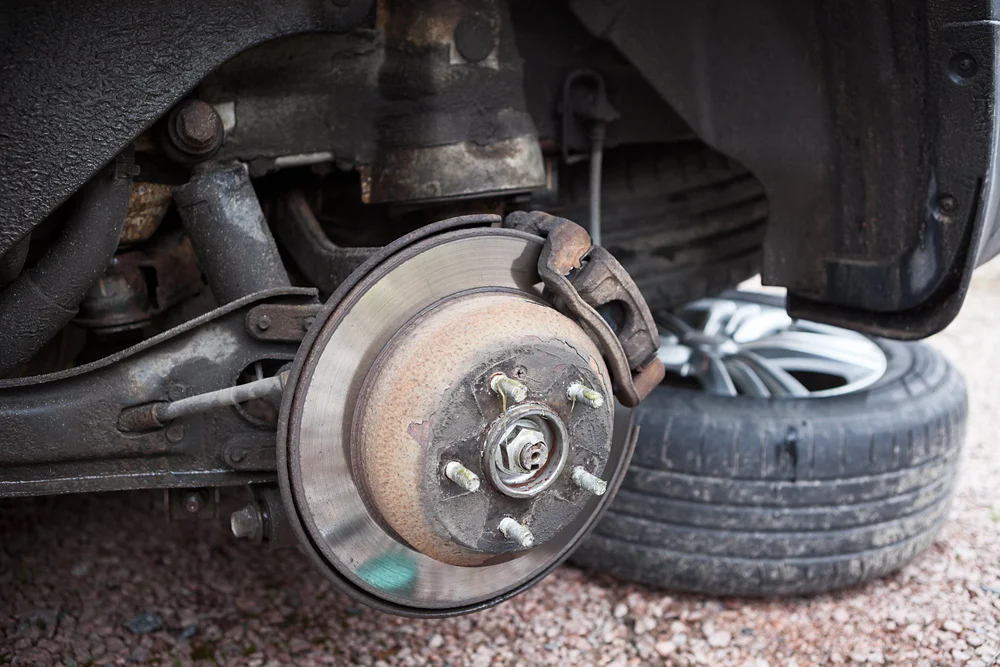
Contrary to fears that remote work would permanently reduce the need for vehicle maintenance, data shows that overall driving activity has remained remarkably stable. The "miles driven" metric—a key performance indicator for parts wear and tear—has recovered to, and in many areas exceeded, pre-pandemic levels. As long as Americans continue to commute, run errands, and travel, the physical degradation of parts like brakes, tires, batteries, and suspension components is an inevitability.
3. The "Service Necessity" Index
Chung’s market intelligence indicates that while consumers are cutting back on discretionary spending—such as dining out, electronics, or travel—they are ring-fencing their budgets for vehicle repairs. A car is often a prerequisite for employment and essential daily life; therefore, the "non-discretionary" nature of vehicle maintenance insulates the aftermarket from the typical volatility of the broader retail sector.
Official Responses and Strategic Perspectives
Michael Chung’s insights at Auto Care Connect serve as a roadmap for industry stakeholders. When asked about the longevity of this trend, Chung was emphatic: "The vehicle age keeps incrementally increasing, and I would expect that to continue increasing, not just for 2025 but for the next several years. That’s my expectation."
The industry, he noted, has historically shown a unique resilience during economic downturns. While other sectors see a "demand shock" during recessions, the automotive aftermarket experiences what can be described as a "deferred maintenance surge." If a consumer cannot afford a new car, they will fix the old one. If the economy worsens, they may postpone minor cosmetic repairs, but they will prioritize the repairs necessary to keep the engine running and the car safe to operate.
This creates a floor for market performance that is much higher than that of most consumer goods. The "steady increase in vehicles, steady increase in mileage, and steady increase in spend" that Chung identified suggests that the aftermarket is currently in a "Goldilocks" zone—where the fundamentals are strong enough to withstand macroeconomic headwinds.
Implications: The Future of the Aftermarket
The implications of these findings are profound for manufacturers, distributors, and independent service centers.
For Manufacturers and Retailers
The demand for replacement parts is shifting toward older vehicle models. This requires a supply chain that can pivot away from "just-in-time" delivery for new, high-tech components toward a robust catalog of parts for vehicles that are 8, 10, or even 15 years old. The ability to source parts for an aging fleet is now a competitive advantage.
For Service Centers
Independent workshops are positioned to capture a larger share of the market as vehicles fall out of warranty. However, this shift also brings challenges. Modern vehicles, even those that are 10 years old, are becoming increasingly computerized. Service centers must invest in training and diagnostic software to ensure they can handle the complex electrical systems of vehicles that were designed with mid-2010s technology, while simultaneously preparing for the integration of more advanced driver-assistance systems (ADAS) that are now appearing in the used car market.
For the Consumer
While the aftermarket is thriving, the consumer is facing a "cost-of-ownership" squeeze. As vehicles age, the frequency of repairs increases. While these repairs are cheaper than a monthly car payment, the cumulative cost of maintaining an older vehicle is rising. This creates a market opportunity for financing companies that specialize in "repair-now, pay-later" programs, which are becoming increasingly common at service counters across the country.
Conclusion: A Resilient Path Forward
The automotive aftermarket has proven itself to be a cornerstone of the American economy. By providing the essential infrastructure that keeps the nation mobile, the industry has decoupled itself from the whims of discretionary spending.
As Michael Chung summarized, the combination of aging vehicles, consistent usage, and the high cost of replacement will continue to act as a buffer against economic instability. For the foreseeable future, the "steady increase" in the vehicle population will ensure that the aftermarket remains not just a surviving industry, but a thriving one. While consumers may be more selective about how they spend their money, the road remains a necessity—and keeping that road accessible is a business that shows no signs of slowing down.
Image credit: Depositphotos.com
