



By Zoya Mirza | Published August 21, 2026
In a significant stride toward its ambitious goal of reaching net-zero emissions by 2040, retail electronics giant Best Buy has announced that 29 of its supply chain facilities have officially been certified as "zero waste." This milestone represents a culmination of years of operational restructuring, emphasizing the company’s commitment to circular economy principles and resource efficiency. As the retail sector faces increasing scrutiny regarding its environmental footprint, Best Buy’s latest move serves as a blueprint for how large-scale logistics operations can integrate sustainability into their bottom line.
Main Facts: A Commitment to Zero-Waste Logistics
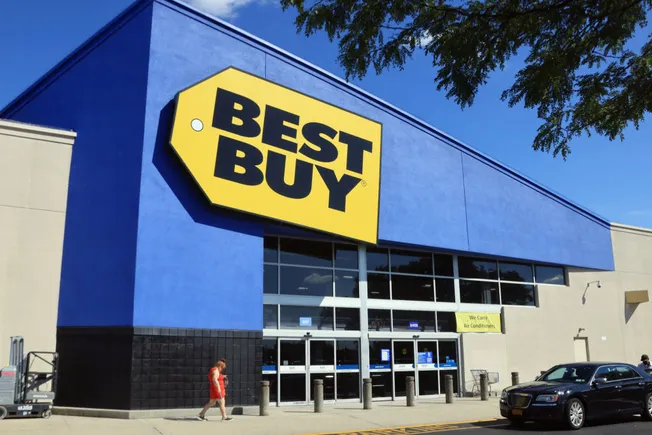
Best Buy’s recent announcement highlights that 29 distinct supply chain facilities have successfully met the rigorous requirements for resource use and efficiency certification. While the company has not identified every facility by name or location, the achievement signals a major shift in how the retailer manages its warehouse operations, from packaging logistics to waste diversion protocols.
The "zero waste" certification is not merely a label; it requires a facility to demonstrate that it diverts a significant percentage of its waste from landfills through recycling, composting, or repurposing. For a consumer electronics retailer—which deals with high volumes of cardboard, plastic, and expanded polystyrene (Styrofoam)—this is a logistical challenge of immense proportions. By optimizing its supply chain, Best Buy has managed to transform potential waste streams into valuable secondary raw materials, effectively proving that sustainability and operational efficiency are not mutually exclusive.
Chronology: From Pilot Program to Enterprise-Wide Adoption
The journey to this 29-facility milestone was not an overnight success. It began as a targeted effort to refine specific high-impact locations before scaling the program to the broader network.
- 2021: The Genesis of the Initiative. The path toward this certification began in Chino, California, where Best Buy’s supply chain facility became the company’s first location to earn zero-waste certification. The success in Chino provided the data-driven proof-of-concept needed to justify further investment in similar infrastructure across the country.
- 2022–2025: The Scaling Phase. Over the following years, Best Buy implemented a standardized "green" operational framework. The company began systematically upgrading its waste management technology and training staff on diversion practices.
- August 2026: The Milestone. Best Buy confirmed that the program has successfully scaled to 29 facilities. While the company has not disclosed which specific facility was the last to achieve the certification, the collective achievement marks a turning point in the retailer’s logistical strategy.
Supporting Data and Innovative Practices
The success of the zero-waste initiative relies on three pillars: advanced material processing, employee engagement, and data-driven waste management.
The Role of "Green Teams"
At the heart of the initiative are the employee-led "green teams." Operating at each facility, these teams are responsible for the daily execution of waste diversion goals. Their duties go beyond simple recycling; they provide peer-to-peer training, monitor waste streams to identify inefficiencies, and champion new sustainability ideas. By decentralizing the sustainability effort, Best Buy has fostered a culture where individual warehouse employees feel ownership over the company’s environmental impact.
Technological Advancements in Material Handling
Cardboard and plastic constitute the bulk of the waste generated by the retail supply chain. To manage this, Best Buy has deployed industrial densifiers. These machines are particularly effective for handling Styrofoam, which is notoriously difficult to recycle due to its volume and low density. By melting and condensing foam into solid, transportable blocks, the company turns waste into a sellable commodity. These blocks are shipped to partners who repurpose the material into consumer goods, ranging from new protective packaging to durable construction materials and picture frames.

Solar Integration
The zero-waste certification is part of a broader environmental strategy. Just last month, the company announced the expansion of its solar power portfolio. By installing a solar garden at a New York retail location—the company’s first solar project co-located directly at a store—and additional generation capacity near its California distribution center, Best Buy is addressing the energy consumption side of its footprint alongside its waste management goals.
Official Responses: Sustainability as a Business Imperative
Leadership at Best Buy has been vocal about the strategic importance of these efforts. Tim Dunn, the company’s Head of Environmental Sustainability, emphasized that these initiatives are as much about fiscal health as they are about ecological responsibility.
"This achievement reaffirms our dedication not only to minimize our environmental impact but also improve our efficiency for the long-term success of the company," Dunn said in an August 18 press release.
The retailer’s internal messaging underscores a shift in corporate philosophy. Rather than viewing waste management as a cost center or a regulatory burden, Best Buy is positioning it as an opportunity for process optimization. By reducing the volume of waste sent to landfills, the company saves on disposal fees and generates revenue from the sale of recycled materials, effectively creating a "circular" supply chain that benefits the balance sheet.

Implications: Setting the Standard for Retail Logistics
The implications of Best Buy’s 29-facility certification extend well beyond the company’s own warehouse walls.
Industry-Wide Pressure
As one of the largest consumer electronics retailers in North America, Best Buy’s operational standards influence the expectations of its partners and competitors. By proving that a zero-waste supply chain is achievable at scale, the company has raised the bar for the entire retail industry. Peers and competitors will likely face increased pressure from shareholders and consumers to demonstrate similar transparency and progress regarding their own waste diversion metrics.
Challenges to Full Net-Zero Ambitions
Despite this success, the path to the company’s 2040 net-zero goal remains steep. Achieving zero waste in facilities is a critical step, but it is only one component of the broader carbon footprint. The company must now contend with "Scope 3" emissions—those generated by the manufacturing of the electronics themselves and the transportation of goods to end-consumers.
The success of the "green teams" and the use of densifiers provide a roadmap for how the company might tackle these larger challenges. If the company can apply the same rigorous, decentralized approach to its vendor relationships and logistics networks, it may well hit its 2040 target.
Strengthening Brand Loyalty
In the modern market, environmental, social, and governance (ESG) factors are increasingly influencing consumer behavior. By openly reporting its progress and highlighting specific technological solutions like industrial densifiers, Best Buy is building "sustainability brand equity." Consumers, particularly in the Gen Z and Millennial demographics, are more likely to support retailers that provide concrete evidence of their environmental commitments rather than relying on vague corporate promises.
Conclusion: A Foundation for the Future
The certification of 29 facilities is a testament to what is possible when a large corporation prioritizes sustainability as a core operational pillar. Through a combination of employee engagement, infrastructure investment, and a circular approach to raw materials, Best Buy has demonstrated that the retail industry can transition toward a more sustainable future. As the company continues its march toward its 2040 net-zero goal, these 29 facilities will stand as the foundation of a new, more efficient, and environmentally conscious model for global retail.
