




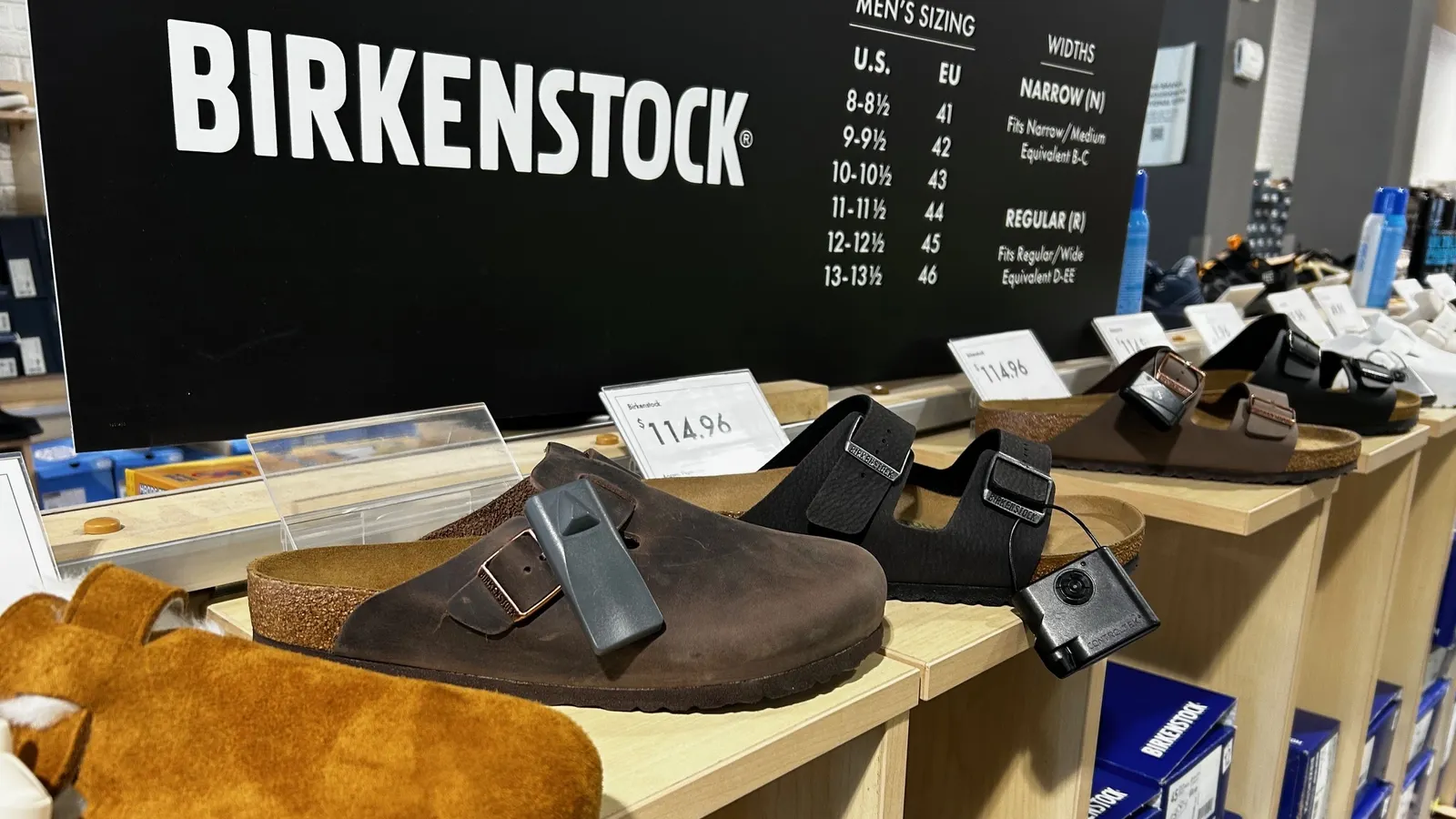
In an era defined by volatile global supply chains and shifting consumer demands, Birkenstock is doubling down on a strategy that seems almost counter-intuitive in the modern retail landscape: radical vertical integration. While many global footwear brands have leaned heavily into third-party outsourcing and asset-light models, the German footwear giant is reinforcing its commitment to "Made in Germany" quality, announcing ambitious plans to double its production capacity over the next three years while simultaneously overhauling its global distribution network.
This strategic recalibration comes as the company seeks to capitalize on surging demand for its iconic silhouettes. By maintaining near-total control over its manufacturing ecosystem—operating seven factories across Germany and a critical component plant in Portugal—Birkenstock is positioning itself to be more than just a footwear trend; it is establishing a resilient, self-sustaining industrial machine.
The Core Pillars of Birkenstock’s Industrial Strategy
Main Facts: The Blueprint for Growth
Birkenstock’s growth strategy, unveiled in March 2024, is anchored by a three-year roadmap designed to resolve the bottleneck issues that have historically capped the brand’s revenue potential. The central thesis is that by owning the means of production, the company can insulate itself from the external shocks that have crippled competitors reliant on disparate, third-party contract manufacturers in Southeast Asia.
The expansion plan involves:
- Capacity Doubling: A massive investment in machinery and labor force training across its existing German facilities to increase total output.
- Vertical Control: Retaining the entirety of the assembly process in-house, ensuring that the legendary Birkenstock footbed and leather finishing processes meet exact quality standards.
- Distribution Consolidation: Moving away from a fragmented logistics model toward a centralized hub system, allowing for faster, more direct shipments to retail partners and end consumers in the Americas, Europe, and the Asia-Pacific (APAC) region.
Chronology: A Roadmap to Modernization
From Craftsmanship to Industrial Scale
The journey to this current expansion phase has been marked by a series of deliberate, measured steps that reflect the company’s long-term philosophy rather than short-term profit-chasing.
- Early 2023: As Birkenstock navigated its post-IPO landscape, internal audits revealed that demand was consistently outstripping supply. The company identified manufacturing constraints as the primary barrier to further growth.
- March 2024: Birkenstock officially announces its multi-year investment plan. The focus is set on optimizing the "German-centric" production model.
- January 2025: During an analyst and investor day, leadership provided a status update. Jakub Nachtigall, VP of Operational Excellence, highlighted the progress made in warehouse consolidation and the search for an APAC distribution hub.
- Mid-2025 and Beyond: The company enters the aggressive implementation phase of the warehouse overhaul, aiming to integrate the new APAC hub into its global logistics network.
Supporting Data: Resilience in the Face of Volatility
The decision to keep production domestic is not merely a branding exercise; it is a calculated risk-mitigation strategy. In the current global climate, where port congestion, geopolitical tensions, and labor shortages are commonplace, the "resilience" narrative is gaining traction among investors.
Benchmarking Against the Industry
Birkenstock’s approach stands in stark contrast to the broader manufacturing landscape. While peers like Deere & Co. and La-Z-Boy are currently engaged in significant capital expenditure to bolster their own North American supply chains, they are largely reacting to the aftershocks of the pandemic-era disruption.
- Deere & Co.: As of January 2025, Deere announced plans to open a massive Indiana distribution center and a North Carolina manufacturing campus. This reflects a broader trend of "near-shoring" to reduce the transit times of heavy machinery.
- La-Z-Boy: Similarly, the furniture manufacturer is nearing the conclusion of a multi-year distribution overhaul, aiming to streamline its Midwest and Eastern hubs to gain operational efficiencies.
For Birkenstock, the logic is identical: by shortening the distance between the factory floor and the consumer, the company reduces inventory carrying costs and improves responsiveness to regional fashion trends.
Official Responses: Leadership’s Vision
The leadership team at Birkenstock has been transparent about the "why" behind their operational shift. According to Jakub Nachtigall, the company’s internal philosophy is built on the belief that manufacturing isn’t just a cost center—it is a competitive moat.
"We are resilient to supply chain risks and shocks," Nachtigall stated during the January 2025 investor briefing. "We are resilient to, also, changes in customer demand."
This confidence stems from the company’s ability to pivot its production lines with a level of agility that outsourcing partners cannot match. By keeping the manufacturing process in-house, Birkenstock can adjust its production volume based on real-time data from its direct-to-consumer (DTC) channels, effectively minimizing the risk of overproduction and the subsequent need for markdowns.
Implications: The Future of Global Footwear
1. The Death of the "Asset-Light" Model
For years, business schools preached the virtues of the "asset-light" model, encouraging brands to focus on marketing and design while outsourcing the "messy" work of production. Birkenstock is proving that, in a world of high uncertainty, there is a premium on owning the factory floor. This could signal a shift in how legacy footwear brands view their supply chains, potentially leading to a wave of re-industrialization in traditional European and North American hubs.
2. Supply Chain as a Marketing Tool
The "Made in Germany" label is more than a quality marker; it is a value proposition that resonates with modern, conscious consumers. By linking its supply chain resilience to its brand identity, Birkenstock is creating a story that appeals to both institutional investors—who value stability—and the end consumer, who values transparency and ethical labor practices.
3. The APAC Challenge
The most critical hurdle in this strategy is the Asia-Pacific expansion. As the company moves to establish a new regional hub, it must navigate complex regulatory environments and diverse logistics infrastructures. If successful, this hub will serve as the final piece of a global jigsaw puzzle that allows Birkenstock to serve the massive, growing middle-class markets in China, Japan, and Southeast Asia with the same efficiency it currently enjoys in Europe.
4. Financial Performance and Investor Sentiment
The market has responded positively to this disciplined approach. By controlling the supply chain, Birkenstock maintains higher gross margins compared to competitors who suffer from the "middleman" tax of contract manufacturing. For analysts, the focus has shifted from "can they grow?" to "can they scale?" The current investment in infrastructure is the definitive answer to that question.
Conclusion: A Masterclass in Industrial Patience
Birkenstock’s strategy is a rare example of industrial patience in a world that demands quarterly results. By doubling down on its German heritage, the company is not just expanding its capacity; it is fortifying its future.
The path forward will not be without challenges. The integration of new facilities, the complexities of international logistics, and the constant pressure to innovate in a saturated footwear market will require unwavering execution. However, by positioning resilience as its core competency, Birkenstock is proving that the oldest way of doing business—owning your own factories and managing your own destiny—might just be the most modern strategy for success.
As the company continues its expansion, the footwear industry will be watching closely. If Birkenstock succeeds in scaling its vertical model to a global level, it may well provide the blueprint for the next generation of consumer goods brands, proving that when it comes to the supply chain, control is the ultimate currency.
