





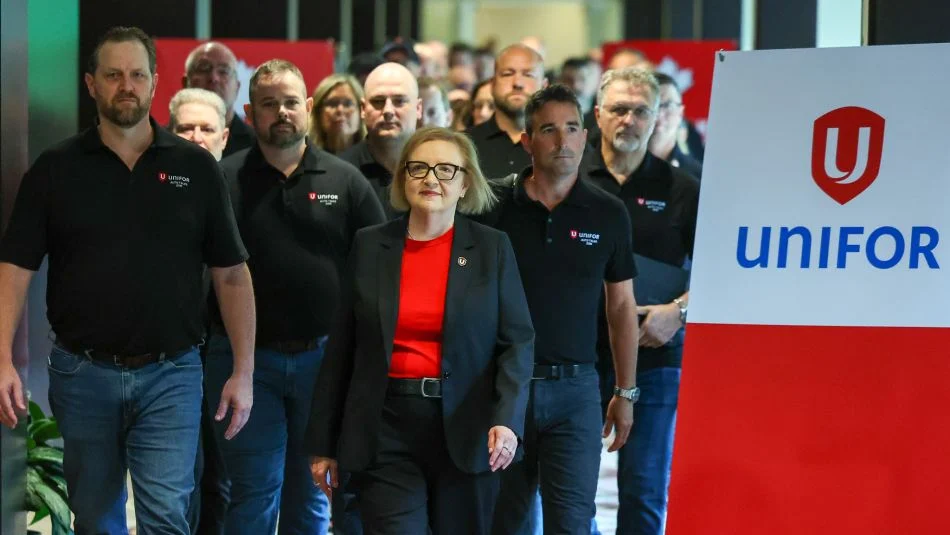
In a significant development for the Canadian automotive sector, Unifor—the nation’s largest private-sector union—has successfully reached a tentative agreement with General Motors (GM). This milestone, which affects more than 4,600 workers across five key Ontario facilities, provides a measure of certainty to an industry currently navigating the choppy waters of international trade policy and evolving manufacturing demands.
The agreement, which mirrors the pattern established during the union’s recent negotiations with Ford Motor Company, is designed to bolster income and benefits for employees while insulating the domestic workforce against the volatility of the global automotive market. As ratification votes loom, stakeholders are closely watching how this deal will influence the broader economic landscape of Ontario’s manufacturing heartland.
The Core Facts: What the Agreement Entails
The tentative deal encompasses a comprehensive range of improvements for workers at five specific GM locations in Ontario: the Oshawa Assembly Plant, the CAMI Assembly Plant in Ingersoll, the St. Catharines Propulsion Plant, and the Woodstock Parts Distribution Centre.
By securing what is known in labor relations as the “pattern agreement,” Unifor has ensured that the gains negotiated with Ford—often regarded as the benchmark for the "Big Three" automakers—are effectively transferred to the GM workforce. While full details of the contract remain under wraps until the ratification meetings, the union has characterized the deal as one that delivers "strong income and benefit gains."
For the 4,600 affected workers, this agreement represents a safeguard against the inflationary pressures and economic instability that have defined the post-pandemic industrial climate. It provides a roadmap for wage growth and job security, effectively preventing potential labor disruptions that could have crippled production lines at a time when vehicle inventory is critical to GM’s North American market share.
Chronology of Negotiations: A Compressed Timeline
The road to this tentative agreement was notably compressed, reflecting a strategic move by the union to capitalize on the momentum gained during the Ford negotiations.
- August 10: Formal bargaining between Unifor and General Motors commenced. The atmosphere was immediately characterized by a sense of urgency, given the looming expiration of existing contracts and the broader geopolitical climate.
- The Pattern Phase: The negotiation strategy was built upon the foundation of the Ford agreement, which had been ratified just weeks prior. Unifor’s leadership utilized this "pattern bargaining" approach to streamline the process, ensuring that GM employees received equivalent protections and raises to their counterparts at Ford.
- Late August: Following intensive discussions—held behind closed doors and often extending late into the night—the bargaining committees reached a breakthrough. The focus remained steadfast on navigating the specific technical requirements of GM’s Ontario operations.
- August 29–30: The union has scheduled a series of ratification meetings. During these sessions, the membership will have the opportunity to review the specifics of the contract and cast their votes. A successful ratification would finalize the agreement and secure labor peace for the duration of the new contract term.
Supporting Data and Industry Context
To understand the weight of this agreement, one must look at the broader context of the Canadian automotive industry. Unifor represents approximately 320,000 private-sector workers across Canada, making its influence on national economic policy profound.
The Trade Landscape
The union explicitly cited "tariff uncertainty" and "ongoing U.S. trade pressure" as defining features of this negotiation cycle. The Canadian automotive industry is deeply integrated with the U.S. market, relying on a complex web of cross-border supply chains. Recent political rhetoric in the United States concerning trade protectionism and the potential for new tariffs on imported vehicles have created a climate of anxiety for Canadian manufacturers.
The Economic Stakes
The five facilities involved in this agreement are not merely job sites; they are critical pillars of Ontario’s industrial economy.
- Oshawa Assembly: A site that has seen a historic revival, now serving as a hub for GM’s heavy-duty truck production.
- CAMI Assembly (Ingersoll): Central to GM’s strategy for electric vehicle production, particularly the BrightDrop commercial delivery vans.
- St. Catharines Propulsion: A vital engine and transmission plant that supplies vehicles across the continent.
By securing a pattern agreement, the union has protected these facilities from the risk of work stoppages, which could have been catastrophic given the precarious nature of global supply chains.
Official Responses: Leadership Perspectives
The leadership of both Unifor and the GM bargaining committee have framed this agreement as a victory for resilience.
Lana Payne, Unifor National President:
“Our bargaining committee worked diligently to reach these agreements, which deliver strong income and benefit gains, amid some of the most challenging times in our history,” Payne stated. Her comments reflect a recognition that the union is operating in an environment where industrial stability is no longer guaranteed, but must be fought for through strategic, high-stakes negotiation.
Trevor Longpre, Unifor GM Master Bargaining Chairperson:
Longpre highlighted the external pressures that defined the bargaining table. “We entered this round of talks in the midst of tariff uncertainty and relentless U.S. trade aggression,” he noted. “Thanks to the hard work of every member of our negotiating team, we emerged with a deal that secures the pattern set by our union with Ford.”
For Longpre and his team, the victory lies not just in the numbers, but in the parity achieved. By matching the Ford agreement, the union ensures that GM workers are not penalized for the specific market position of their employer, maintaining a standardized quality of life across the major automotive manufacturing sector in Canada.
Implications: What This Means for the Future
The ratification of this agreement, should it pass as expected, will have far-reaching implications for the Canadian labor movement and the automotive industry at large.
1. Stability in the Electric Transition
As GM pivots toward an all-electric future, the stability provided by this contract is essential. The CAMI plant in Ingersoll is a focal point for this transition. A multi-year labor agreement allows GM to invest in retooling and training without the looming threat of industrial action, providing the long-term predictability required for capital-intensive EV production.
2. A Benchmark for Future Talks
By successfully enforcing the "pattern agreement" model, Unifor has reasserted its dominance in collective bargaining. This strategy prevents automakers from pitting the workforces of different plants against one another, ensuring that workers across the "Big Three" (Ford, GM, and Stellantis) receive equitable treatment. This success will likely embolden Unifor in future negotiations, signaling to other employers that the union’s pattern-setting capabilities remain robust.
3. Buffering Against Geopolitical Volatility
While a labor contract cannot stop a tariff, it can mitigate the impact of trade volatility. By locking in labor costs, GM can better forecast its operational expenses despite the potential for fluctuations in international trade duties. This allows both the company and its employees to focus on productivity and efficiency rather than internal conflict during a period of external pressure.
4. Impact on the Canadian Workforce
For the 4,600 workers and their families, this deal is a lifeline. In an era where the cost of living has surged, the promise of income gains is a critical win. Furthermore, the agreement reinforces the importance of the manufacturing sector as a source of stable, middle-class employment in Ontario. It serves as a reminder that even in an increasingly automated and globalized world, organized labor remains a powerful mechanism for securing fair wages and working conditions.
Conclusion: A Turning Point for Ontario’s Industrial Future
As the clock ticks toward the ratification meetings on August 29 and 30, the mood among the membership is one of cautious optimism. The leadership has delivered a deal that meets the primary objectives of the rank-and-file, maintaining the hard-won standards established at Ford.
The agreement between Unifor and General Motors is a testament to the effectiveness of strategic bargaining in the face of macro-economic uncertainty. By prioritizing the pattern agreement, the union has successfully navigated a landscape characterized by U.S. trade aggression and internal economic pressure.
Whether this leads to a new era of labor stability or simply buys time in a rapidly changing industry remains to be seen. However, for the workers in Oshawa, Ingersoll, St. Catharines, and Woodstock, the message is clear: their union has successfully defended their interests during a period of immense uncertainty, securing a path forward that promises stability, fair compensation, and a continued role in the future of the North American automotive sector. As the industry continues to evolve, this agreement will likely be viewed as a foundational document that preserved the integrity of Canada’s automotive manufacturing workforce during a time of global transformation.
