
Main Facts: Federal Regulators Press Waymo on Robotaxi Safety Near School Zones
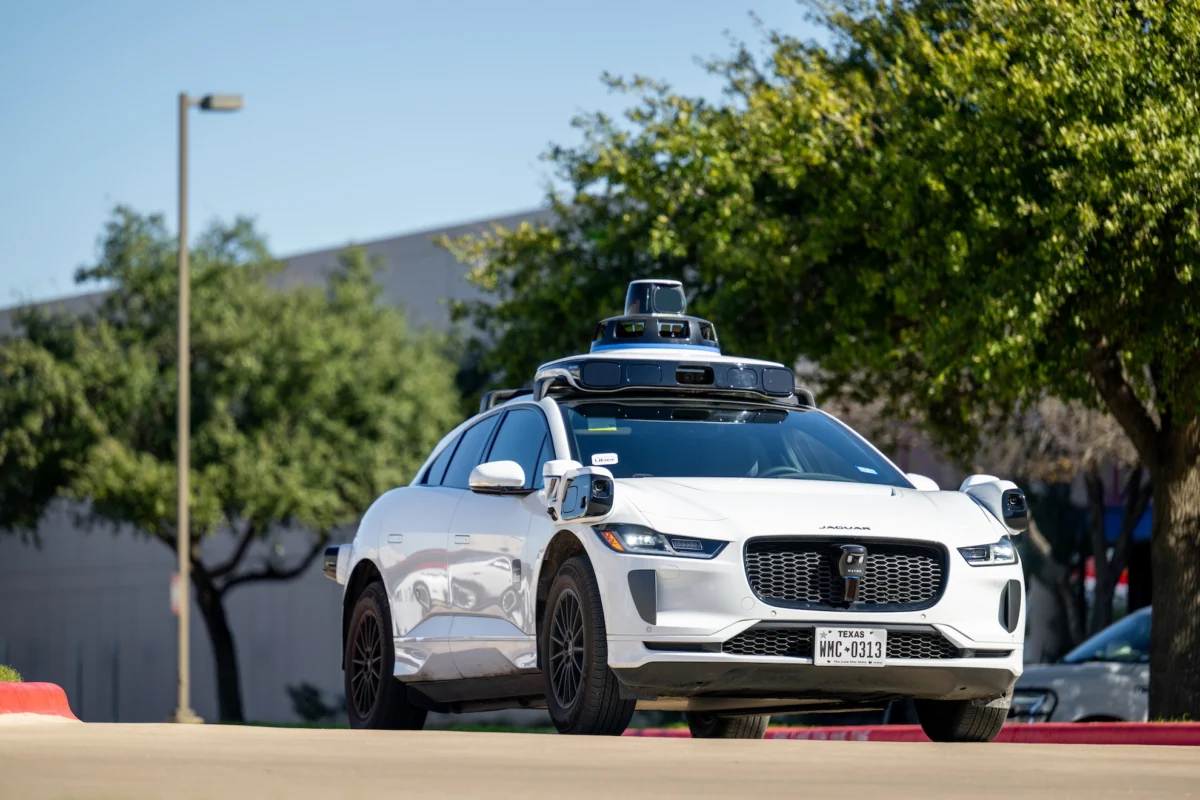
The federal government’s oversight of the autonomous vehicle (AV) sector has intensified as Waymo, the self-driving subsidiary of Alphabet Inc., officially responded to a series of detailed inquiries from the National Highway Traffic Safety Administration (NHTSA). The federal probe was launched following a January 2024 accident in Santa Monica, California, in which one of Waymo’s autonomous Jaguar I-Pace vehicles struck a nine-year-old child at a low speed.
An initial batch of documents regarding the investigation was published on NHTSA’s public database following inquiries by journalists. According to the agency, it is currently reviewing additional submissions from Waymo and plans to publish them in the public investigation file once the review process is finalized.
+----------------------------------------------------------------------+
|                     SANTA MONICA COLLISION SUMMARY                   |
+----------------------------------------------------------------------+
| Date: January 23, 2024                                               |
| Location: Near a school zone, Santa Monica, CA                       |
| Vehicle: Waymo Jaguar I-Pace (Autonomous Mode)                       |
| Initial Speed: 17 mph                                                |
| Impact Speed: 6 mph (after automated braking)                        |
| Pedestrian: 9-year-old female                                        |
| Injuries: Minor; no emergency medical transport required             |
+----------------------------------------------------------------------+
While the release of these documents signals active progress in the federal inquiry, the substance of Waymo’s answers remains shielded from public view. The documents made available on the regulator’s portal were heavily redacted, with Waymo invoking "confidential business information" (CBI) to protect proprietary software code, sensor architecture, and operational methodologies.
Despite the redactions, the procedural exchange reveals a federal government highly focused on the specific risks autonomous vehicles pose to vulnerable road users, particularly children. NHTSA’s Office of Defects Investigation (ODI) has demanded extensive documentation from Waymo regarding how its automated driving system (ADS) detects school zones, manages variable speed limits, responds to children, and processes complaints or anomalies recorded near school campuses.
Chronology of the Santa Monica Incident and the Federal Probe
To understand the trajectory of this federal investigation, it is necessary to trace the timeline of the collision, the subsequent regulatory response, and the legal maneuvering over document deadlines.
2024
├── Jan 23: Waymo Jaguar I-Pace collides with a 9-year-old child in Santa Monica.
├── Jan 30: NHTSA formally announces an investigation into the collision.
├── Mar 23: NHTSA's Office of Defects Investigation sends 12 detailed questions to Waymo.
├── Mar 27: NTSB releases its preliminary report detailing the vehicle's telemetry.
├── May 01: Waymo requests a filing extension and seeks clarification on specific questions.
├── May 08: Original deadline for Waymo to submit its formal responses.
├── Jul 08: Waymo submits responses to the remaining 10 questions after extension is granted.
└── Late Summer: NHTSA begins publishing redacted response documents.
The Collision (January 23, 2024)
On the afternoon of January 23, 2024, a Waymo-operated Jaguar I-Pace was navigating a street in Santa Monica, California. The vehicle was operating in fully autonomous mode in an area close to a local school. A nine-year-old girl stepped off the curb and into the roadway.
According to preliminary telemetry data, the Jaguar I-Pace was traveling at 17 miles per hour when its sensor suite—which includes lidar, radar, and cameras—detected the pedestrian. The vehicle’s automated braking system engaged, decelerating the car to approximately 6 miles per hour before making contact with the child near the front-right headlight assembly. The child fell to the ground, but was able to get up and walk to the curb. Emergency medical services were not requested for transport, and the child sustained only minor injuries.
The Federal Mobilization (January 30 – March 23, 2024)
Recognizing the high stakes of collisions involving children in school zones, NHTSA announced a formal investigation into the crash exactly one week later. On March 23, NHTSA’s ODI dispatched a formal information request to Waymo containing 12 complex questions, many featuring highly detailed sub-questions. These inquiries targeted the core operational logic of Waymo’s autonomous platform.
The Preliminary NTSB Report (March 27, 2024)
In late March, the National Transportation Safety Board (NTSB)—which conducts independent accident investigations separate from NHTSA’s regulatory enforcement—released its preliminary report. This document confirmed the vehicle’s speeds (deceleration from 17 mph to 6 mph) and the point of impact. The NTSB’s independent probe is ongoing, with a comprehensive final report typically expected within 12 months of the incident.
Extension Requests and Submission (May 1 – July 8, 2024)
Waymo’s original deadline to respond to NHTSA was set for May 8, 2024. However, on May 1, Matthew Schwall, Waymo’s Senior Director of Safety, sent a letter to the ODI requesting an extension. Schwall argued that an extension was necessary to compile the vast technical data requested without placing an "extraordinary production and review burden" on either the company or the regulatory agency.
NHTSA agreed to clarify several questions and granted Waymo an extension for 10 of the 12 queries. Waymo provided its initial responses on May 8, followed by a secondary, comprehensive submission on July 8. Waymo has since confirmed that all required submissions to the agency have been completed.
Supporting Data: Technical Parameters and School Zone Hazards
The Santa Monica collision highlights a critical technical challenge for autonomous vehicle developers: navigating the unpredictable dynamics of school zones. Children represent a unique category of pedestrian; they are physically smaller, making them harder for sensors to detect behind parked cars, and their behavior is statistically more erratic than that of adults.
The Physics of the Collision
The telemetry captured in the NTSB’s preliminary report illustrates both the limitations and the safety margins of Waymo’s current collision-avoidance systems:
- Initial Travel Speed: 17 mph (24.9 feet per second)
- Impact Speed: 6 mph (8.8 feet per second)
- Kinetic Energy Reduction: Because kinetic energy is proportional to the square of velocity ($E_k = frac12mv^2$), reducing the speed from 17 mph to 6 mph eliminated approximately 87% of the vehicle’s kinetic energy before impact.
This dramatic reduction in kinetic energy explains why the child suffered only minor injuries and did not require hospitalization. However, the central question for federal investigators is why the vehicle was traveling at 17 mph in that specific zone, and whether its perception system should have anticipated the pedestrian’s entry into the roadway earlier.
Kinetic Energy Comparison at Impact
=====================================================================
At 17 mph: [████████████████████████████████████████] 100% Energy
At  6 mph: [█████] 13% Energy (87% Reduction via Automated Braking)
=====================================================================
Key Areas of NHTSA’s Technical Inquiry
The 12 questions posed by NHTSA’s Office of Defects Investigation demand highly specific data points from Waymo:
- School Zone Geofencing and Mapping: How Waymo’s high-definition maps identify school zones, and how the vehicle’s software determines when variable school-zone speed limits (such as "25 mph when children are present") are active.
- Pedestrian Classification Algorithms: The specific parameters the system uses to classify a pedestrian as a "child" versus an "adult," and whether this classification alters the vehicle’s defensive driving buffer.
- Historical Performance and Complaints: A comprehensive list of all consumer, bystander, or internal safety complaints regarding Waymo vehicle behavior around school zones or educational facilities.
- Software and Hardware Redundancy: Detailed schematics of the sensor cleaning systems and perception algorithms that ensure children are not obscured by environmental noise or vehicle blind spots.
Official Responses: Corporate and Regulatory Positions
The dialogue between Waymo and federal authorities reflects a delicate balance between corporate self-protection and regulatory compliance.
Waymo’s Position on Safety and Cooperation
In his May 1 letter to NHTSA, Matthew Schwall emphasized Waymo’s commitment to safety while advocating for a structured, manageable flow of information:
"Our mutual goal is for Waymo to provide relevant information that facilitates ODI’s investigation, while avoiding extraordinary production and review burdens for Waymo and NHTSA ODI that would otherwise not benefit the agency’s investigation."
Waymo has consistently maintained that its vehicles are safer than human drivers. The company frequently points to safety data indicating that its Rider-Only technology results in a significant reduction in injury-causing crashes compared to human benchmarks. In statements regarding the Santa Monica incident, Waymo emphasized that the vehicle’s rapid braking behavior prevented a much more serious outcome.
NHTSA’s Stance on Automated Systems
NHTSA has taken a noticeably more aggressive approach to autonomous vehicle safety over the last two years. The agency’s decision to launch an investigation just seven days after the Santa Monica collision indicates a low tolerance for incidents involving vulnerable road users.
In a brief statement, a spokesperson for NHTSA confirmed that the agency is diligently "reviewing other responses and will publish them in the investigation file upon completion." The regulator’s insistence on holding Waymo to rigorous documentation standards underscores its broader initiative to treat driverless fleet operators with the same scrutiny as traditional automakers.
Implications: The Regulatory and Public Trust Landscape for AVs
The ongoing investigation into Waymo’s Santa Monica collision carries significant implications for the company, its competitors, and the broader future of autonomous transport in the United States.
                 FEDERAL & STATE REGULATORY PRESSURE
                                  │
         ┌────────────────────────┴────────────────────────┐
         ▼                                                 ▼
NHTSA Investigations                             State DMV/CPUC Permits
(Focus: Software, edge-cases, safety)            (Focus: Operating licenses, expansion)
         │                                                 │
         └────────────────────────┬────────────────────────┘
                                  ▼
                     Impact on Public Confidence
The "School Zone" Red Line
For the public, safety in school zones is a non-negotiable priority. While tech companies argue that autonomous vehicles do not drive drunk, distracted, or fatigued, the public remains highly sensitive to machine-error incidents involving children. Any safety failure in a school zone has the potential to trigger severe political backlash, leading to restrictive local ordinances or state-level operating bans.
The Challenge of Transparency vs. Proprietary Tech
The heavy redaction of Waymo’s response documents highlights a growing tension in the AV industry: the balance between public transparency and corporate intellectual property.
- The Corporate View: Autonomous driving software represents billions of dollars in research and development. Publicly releasing raw code or detailed sensor-fusion logic could expose trade secrets to competitors.
- The Public Advocacy View: Safety advocates argue that without full transparency regarding why an autonomous vehicle failed to stop in time for a child, the public cannot make an informed decision about sharing the road with driverless fleets.
Regulatory Headwinds for the AV Industry
This investigation does not occur in a vacuum. The AV industry is facing a challenging regulatory climate:
- Cruise (GM): Suffered a severe setback in late 2023 when one of its robotaxis dragged a pedestrian in San Francisco, leading to a temporary suspension of its California operating license and a restructuring of its safety leadership.
- Zoox (Amazon): Currently faces NHTSA scrutiny over sudden braking incidents.
- Tesla: Continues to be investigated by federal authorities over the safety of its Autopilot and "Full Self-Driving" driver-assist systems.
For Waymo, which is currently looking to expand its commercial ride-hailing services in major metropolitan areas like Los Angeles, San Francisco, Phoenix, and Austin, the resolution of this NHTSA probe is critical. If federal regulators conclude that Waymo’s software requires modifications to handle school zones safely, it could lead to mandatory software recalls or operational constraints that slow down the pace of commercial scaling.
Ultimately, the Santa Monica investigation represents a crucial test case for how federal regulators will govern the transition to driverless roads—proving that even minor-injury collisions can trigger deep, systemic inquiries into the algorithms running our future transportation networks.
