





Main Facts: The Automaker Pivot to Embodied AI
The global automotive industry is undergoing a profound structural shift. As electric vehicle (EV) price wars compress profit margins to razor-thin levels, the world’s leading automakers are looking beyond the chassis to secure their next wave of exponential growth. Their target: humanoid robotics and "embodied AI"—the integration of advanced artificial intelligence directly into physical, mobile machines.
While viral videos of backflipping robots have long fueled internet hype, a wave of massive capital deployments, corporate spinouts, and strategic acquisitions has signaled that the humanoid robot sector is transitioning from laboratory novelty to industrial reality. Automakers are uniquely positioned to lead this transition. They possess the capital, the advanced manufacturing infrastructure, and—most importantly—the proprietary autonomous driving software stacks that share fundamental technical DNA with robotic spatial intelligence.
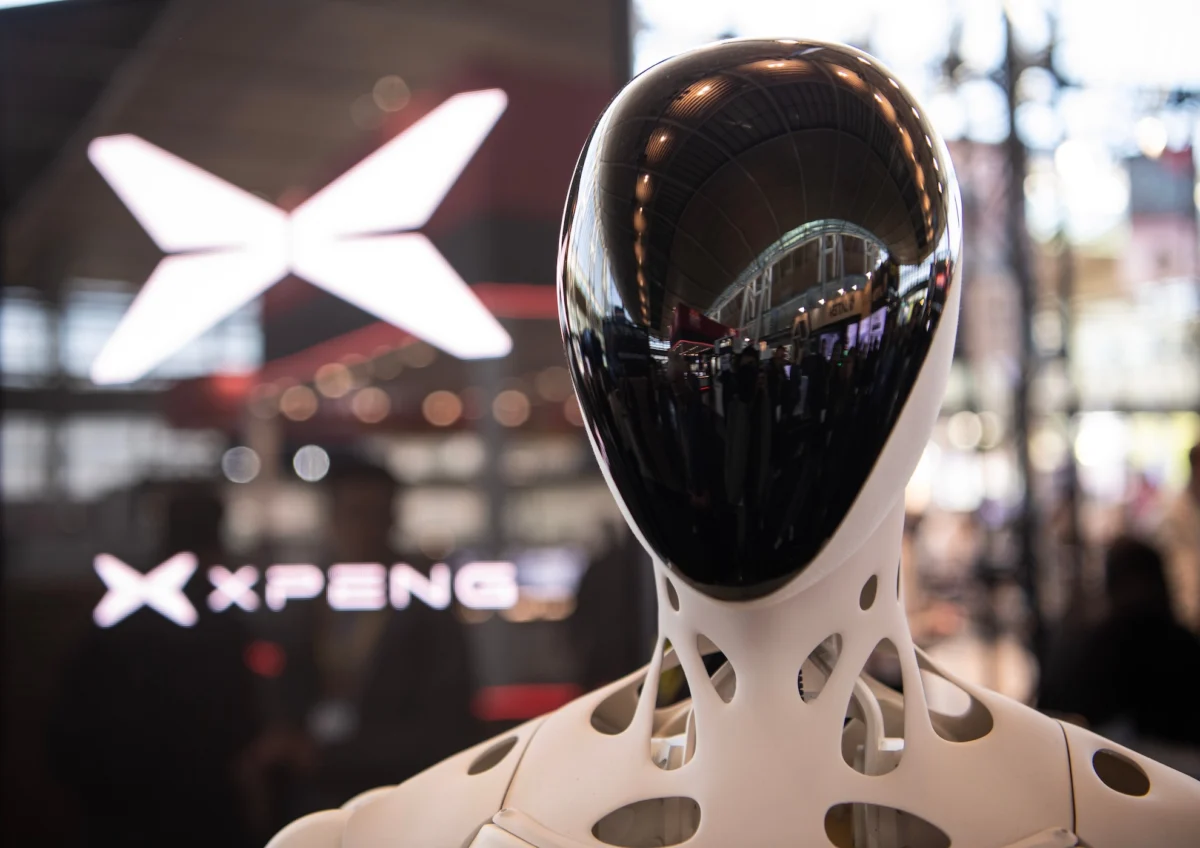
At the forefront of this movement is Chinese EV maker Xpeng. The company’s robotics unit recently closed a historic $900 million private funding round, valuing the subsidiary at more than $6.3 billion. Described as the largest single-round private financing ever recorded in China’s embodied AI industry, the round was led by IDG Capital, with participation from tech giants Tencent and Alibaba, alongside venture firm Gaorong Ventures. Notably, Xpeng’s founder, He Xiaopeng, and co-president, Brian Gu, personally backed the round with a combined $100 million of their own capital, highlighting their deep conviction in the technology.
Xpeng is far from alone. A cohort of major Chinese automakers—including BYD, Chery, Changan, GAC, Li Auto, SAIC, and Seres—have rapidly spun up or invested in humanoid robotics divisions. Simultaneously, Western and South Korean automotive giants like Hyundai (via Boston Dynamics), Mobileye, and Rivian are executing their own aggressive playbooks to ensure they are not left behind in the race for physical AI supremacy.
Chronology: The Accelerating Timeline of Robotic Commercialization
The acceleration of the humanoid robotics sector has unfolded through a rapid sequence of capital injections, product debuts, and strategic factory integrations:
[Late 2024 / Early 2025] ──> [Early 2025] ───────────────> [Mid 2025] ──────────────────> [Late 2025 / 2026] ──> [2028 Target]
Rivian spins out            Mobileye acquires             Xpeng Robotics raises          Chery's AiMOGA         Hyundai & Boston
"Mind Robotics" to          Mentee Robotics               $900M at a $6.3B valuation;    prepares for an IPO;   Dynamics deploy
explore non-traditional     for $900M to integrate        BYD unveils its humanoid       aims for overseas      Atlas for parts
robotic form factors. vision-based AI. robot, "Xiao Di." listing by 2026. sequencing.- Late 2024 – Early 2025: Rivian establishes its presence in the space by spinning out a dedicated entity called Mind Robotics. Led by CEO RJ Scaringe’s vision that traditional humanoid designs may not be the optimal form factor for every industrial task, the spinout signals a diversifying philosophy in robotic design among automakers.
- Early 2025: Autonomous driving pioneer Mobileye makes a definitive move into embodied hardware by acquiring Israeli humanoid robot startup Mentee Robotics for $900 million. The acquisition aims to merge Mobileye’s world-class computer vision and localized mapping technologies with Mentee’s bipedal hardware.
- Mid-to-Late 2025: The Chinese market reaches a boiling point. Xpeng’s robotics unit secures its historic $900 million funding round to accelerate the development of "Iron," a bipedal humanoid designed for commercial and manufacturing environments. Concurrently, BYD—the world’s largest EV manufacturer by volume—unveils its own humanoid competitor, "Xiao Di," designed to eventually work alongside humans on its massive automotive assembly lines.
- Late 2025 – 2026 (Looking Ahead): Chery Automobile’s robotics affiliate, AiMOGA, begins formal preparations for an initial public offering (IPO), targeting an overseas listing by 2026 to fund global expansion. Meanwhile, Hyundai prepares to deploy Boston Dynamics’ next-generation electric Atlas robot to its state-of-the-art manufacturing facility in Georgia, USA.
- 2028 Horizon: Hyundai and Boston Dynamics target full commercial integration, aiming to have humanoid robots performing complex, non-repetitive tasks like parts sequencing and logistics on active automotive assembly lines.
Supporting Data: Valuations, Capital Flows, and Technical Synergy
The financial commitments backing embodied AI reflect a high-stakes belief that the market for physical robots will eventually dwarf the passenger vehicle market.
Key Financial Metrics of the Robotic-Automotive Convergence
| Parent Company / Affiliate | Robot Name / Unit | Financial Transaction / Valuation | Key Investors / Partners | Target Deployment / Market |
|---|---|---|---|---|
| Xpeng | Xpeng Robotics / "Iron" | $900M Private Round ($6.3B Valuation) | IDG Capital, Tencent, Alibaba, Gaorong Ventures | Automotive assembly lines, commercial services |
| Mobileye | Mentee Robotics | $900M Acquisition | Parent company integration | Autonomous logistics, vision-based navigation |
| Chery Automobile | AiMOGA | Preparing for IPO (Targeting 2026) | Public markets (Overseas) | Manufacturing, global logistics |
| Hyundai | Boston Dynamics (Atlas) | Parent-level R&D funding | Google DeepMind (AI partnership) | Georgia "Metaplant," industrial assembly by 2028 |
| BYD | "Xiao Di" | Internal R&D / Proprietary | Proprietary internal supply chain | In-house EV manufacturing optimization |
The Technical Case for Automotive-Robotic Convergence
Automakers are not entering this space from a standing start. Modern electric vehicles are essentially specialized, wheeled robots. The engineering challenges of building an EV map directly onto the challenges of building a bipedal humanoid:
- Sensor Fusion and Perception: Autonomous driving suites rely on cameras, LiDAR, radar, and edge-computing chips to map three-dimensional space in real time. This exact technical stack is required for a humanoid robot to navigate a cluttered factory floor or recognize objects.
- Actuators and Power Electronics: The high-density electric motors, gearboxes, and battery management systems (BMS) developed to maximize EV range and performance are highly transferable to the rotary and linear actuators that power a robot’s joints.
- The LLM Paradigm Shift: Historically, programming robots required writing rigid, task-specific code. The rise of Large Language Models (LLMs) and Vision-Language-Action (VLA) models has changed the paradigm. Researchers can now train robots using "end-to-end" neural networks, allowing them to learn tasks through visual observation and natural language instruction, vastly accelerating deployment timelines.
Official Responses: Strategic Visions from Industry Leaders
Industry executives and analysts point to a mix of economic pressure and technological opportunism as the primary drivers of this robotic gold rush.
Michael Dunne, CEO of the San Diego- and Singapore-based advisory firm Dunne Insights, highlights Xpeng as the most aggressive fast-follower of Tesla’s robotic ambitions.
"Among all Chinese automakers, Xpeng is the one that most closely watches and follows Tesla’s initiatives," Dunne observed. "It’s the most focused on autonomy; it’s the first to commit in a big way to humanoid robots. Founder He Xiaopeng is a tech billionaire known for his agility and quick adjustments. He sees razor-thin profit in cars on the near horizon. Robots look much more promising."
This sentiment is backed by action. The personal $100 million investment by He Xiaopeng and Xpeng co-president Brian Gu demonstrates a willingness to risk personal capital on the premise that "Iron" will succeed where traditional automotive margins fail.
On the hardware front, Western players are focusing heavily on industrial training grounds. Hyundai is currently establishing its Robot Metaplant Application Center in the United States. This facility is designed specifically to teach next-generation bipedal platforms how to execute complex physical maneuvers—such as coordinated lifts, pivots, and turns—within a live factory environment.
By partnering with Google’s DeepMind AI research lab, Hyundai aims to inject state-of-the-art cognitive capabilities into Boston Dynamics’ electric Atlas, creating a machine that can adapt to changing environments without manual reprogramming.
Implications: How Humanoids Will Redefine Global Industry
The aggressive entry of automakers into the humanoid robotics space has deep implications for the future of manufacturing, labor economics, and global geopolitical competition.
1. Factories as the Ultimate Proving Ground
Unlike domestic environments, which are highly unpredictable and legally complex, automotive factories are structured, controlled, and capital-rich. This makes them the perfect testing laboratory for humanoid robots. By deploying humanoids to perform ergonomic, hazardous, or highly repetitive tasks—such as handling heavy parts, welding in tight spaces, or managing toxic materials—automakers can optimize their hardware in real-world scenarios before attempting to sell robots to other industries.
2. The AI vs. Hardware Geopolitical Divide
The competition in embodied AI is shaping up to be a battle between Western software sophistication and Chinese manufacturing scale:
- The Chinese Advantage: Companies like Xpeng, BYD, and Chery sit at the center of the world’s most robust hardware manufacturing ecosystem. They can source electric motors, sensors, carbon-fiber components, and battery cells at a fraction of the cost of Western competitors. This manufacturing edge allows them to iterate physical prototypes at breakneck speed.
- The Western Advantage: US and European firms, bolstered by partnerships with organizations like Google DeepMind, OpenAI, and specialized startups like Figure and Apptronik, maintain a lead in foundational AI models. The challenge for Western players will be scaling physical production to match their software capabilities. As Dunne summarized: "They [Chinese automakers] have all the hardware to get the job done. The question is if they can catch Tesla and Western players on the AI side of the equation."
3. Hedging Against Declining Automotive Margins
The global EV market is experiencing intense price consolidation. As software-defined vehicles become commoditized, the valuation multiples of traditional car companies are threatened. By positioning themselves as robotics and AI companies, automakers can tap into the premium valuations typically reserved for high-growth tech stocks. A successful robotics division provides a lucrative hedge: if passenger car margins continue to erode, the intellectual property and physical platforms developed for humanoid robots can be commercialized across logistics, eldercare, defense, and retail.
Ultimately, the convergence of automotive engineering and embodied AI represents the next frontier of industrial automation. The companies that successfully bridge the gap between digital intelligence and physical execution will not only control the future of transportation—they will define the future of physical labor itself.
