



By Dan Zukowski | Published Sept. 2, 2026
For decades, the dense urban corridors of New York City have been defined by the rhythmic hum of gridlocked traffic and the heavy, lingering scent of exhaust fumes. When the city’s landmark congestion pricing program launched on January 5, 2025, it was met with a mixture of cautious optimism and deep-seated apprehension. Critics and community advocates in outer-borough neighborhoods—many already burdened by decades of environmental injustice—feared a "spillover effect." The prevailing concern was that motorists, desperate to avoid the new toll for entering Manhattan’s central business district, would flood residential streets in the Bronx, Queens, and Brooklyn, effectively exporting the city’s air pollution crisis to its most vulnerable residents.
However, a landmark study released by the New York City Health Department suggests that these fears have not materialized. By analyzing granular data from across the five boroughs, the city has confirmed that the implementation of congestion pricing has not triggered an uptick in local air pollution. Instead, the program is proving to be a stable, effective mechanism for both traffic management and public health investment.
The Core Facts: Assessing the Impact of the Toll
The central finding of the New York City Health Department’s recent report is unequivocal: the implementation of the congestion pricing zone has resulted in no statistically significant increase in air pollution levels in the five boroughs.
The study, which utilized sophisticated monitoring technology to compare real-world 2025 data against projected "business-as-usual" air quality models, focused on four primary pollutants known to be byproducts of internal combustion engines: fine particulate matter (PM2.5), nitrogen dioxide (NO2), nitric oxide (NO), and black carbon. These pollutants are not merely environmental metrics; they are direct contributors to respiratory distress, cardiovascular issues, and pediatric asthma, particularly in dense urban environments.
Despite the skepticism surrounding the policy’s debut, the data suggests that traffic patterns have remained relatively disciplined. The "spillover" theory—that traffic would simply relocate to bypass routes—has been largely debunked by the empirical evidence observed in the months following the program’s inception.
A Chronological Perspective: From Policy to Implementation
To understand the significance of these findings, one must look at the timeline that brought New York to this pivotal moment in urban planning:
- 2019: The New York State legislature passes a historic law authorizing the Metropolitan Transportation Authority (MTA) to design and implement a congestion pricing program. The dual goals are clearly defined: reduce crippling traffic in Manhattan’s central business district and generate a sustainable, dedicated revenue stream for the MTA’s massive capital improvement projects.
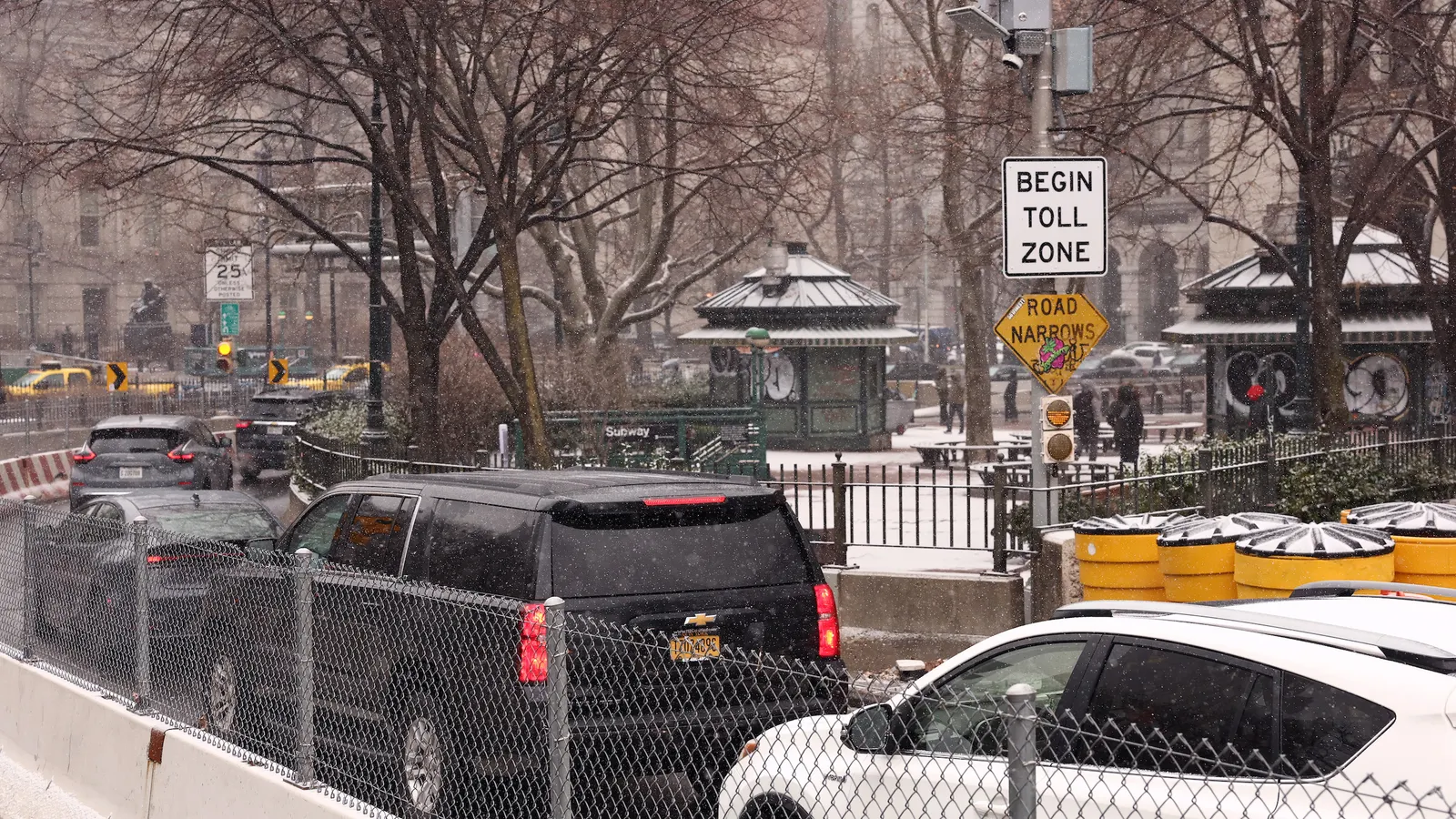
- January 5, 2025: After years of planning, legislative maneuvering, and public debate, the congestion pricing system officially goes live. Cameras and automated tolling infrastructure are activated, marking the first program of its kind in the United States.
- May 2026: In a move that signaled the tangible benefits of the program, the MTA announces a $20 million investment specifically earmarked for improving childhood asthma outcomes in the Bronx, funded directly by congestion pricing revenue.
- September 2026: The New York City Health Department publishes its comprehensive analysis, concluding that the fears of increased pollution outside the toll zone were unfounded, providing a clean bill of health for the controversial policy.
Supporting Data: Dissecting the Numbers
The study’s methodology was robust, tracking 73 distinct monitoring sites outside the congestion zone but within city limits. These sites were specifically chosen to include high-traffic corridors and areas adjacent to major highways, where the impact of vehicle displacement would be most acute.
According to the study, traffic accounts for approximately 14% of PM2.5 and 20% of nitrogen oxide (NOx) emissions within the city. Because these percentages are so significant, even a minor shift in traffic flow could have caused measurable spikes in pollution. However, the data remained steady.
A key indicator used by researchers was a control site on the Van Wyck Expressway in Queens. Because the Van Wyck acts as a vital, high-volume artery with no viable parallel alternative routes, it served as a perfect litmus test. If the congestion pricing program were forcing drivers to seek new routes through residential neighborhoods, the pressure on the Van Wyck would have shifted. The stability observed at this site further reinforced the study’s primary conclusion.
While the study did note slightly higher pollution levels at some Environmental Protection Agency (EPA) monitoring stations in parts of Connecticut and Eastern Long Island, these fluctuations were not mirrored within the city or in New Jersey, suggesting that regional weather patterns or external factors—rather than local traffic displacement—were likely the cause.
Official Responses: A Vindication of Policy
The release of the study has been met with a sense of vindication among city and transit officials.

"Before we turned the cameras on, there was concern about the potential for increased pollution caused by drivers looking to avoid the toll," said Janno Lieber, Chair and CEO of the Metropolitan Transportation Authority. "As this study confirms, that didn’t happen, and congestion pricing is already funding additional investments to further improve air quality."
For advocates of the program, the study serves as proof that environmental justice and fiscal policy can be aligned. New York State Senator Gustavo Rivera, who has long represented the Bronx and advocated for the health of his constituents, expressed relief at the findings. "I am reassured by the data showing that congestion pricing has not worsened air quality in communities with long histories of environmental injustice like mine in the Bronx," Rivera stated.
The $20 million investment in Bronx childhood asthma initiatives, announced earlier this year, serves as a direct bridge between the policy and its social benefits. By turning toll revenue into medical and environmental support for the city’s most impacted residents, the MTA is shifting the narrative from "taxation" to "public health investment."
Broader Implications: A Blueprint for the Nation
The success of the New York experiment has broad implications for other major American cities. Experts and urban planners are now looking to the NYC model as a potential blueprint for cities like Boston, Chicago, and San Francisco.
Dolphin Hammes, a leading researcher involved in the analysis, noted that while the policy is a success, its replicability depends on the existing infrastructure. "The study shows that congestion pricing could work in cities with a strong transit system," Hammes said. "These kinds of policies would serve very well hand-in-hand with excellent public transportation, which not all cities within this country actually have."
The "Transit-First" Necessity
The New York experience suggests that congestion pricing cannot exist in a vacuum. Its efficacy is inextricably linked to the quality and reliability of the public transit network. When commuters have a viable, efficient, and affordable alternative to driving, the toll acts as a "nudge" toward better choices rather than a financial penalty.

Addressing Environmental Injustice
The most profound implication of this study is the reframing of the environmental justice debate. For years, opponents of urban tolling argued that such policies were inherently elitist or harmful to the working class. By demonstrating that the program can be implemented without degrading air quality in low-income neighborhoods, New York has provided a roadmap for how cities can pursue climate goals without compromising the health of their most vulnerable populations.
Future Outlook
As the program matures, the focus will shift from the initial "spillover" fears to long-term sustainability. The MTA will continue to monitor air quality, using the current data as a baseline to track the ongoing effects of traffic reduction. If the current trends hold, the congestion pricing zone may eventually be viewed not just as a traffic management tool, but as a foundational element of the city’s strategy to combat the long-term effects of climate change and improve the daily lives of millions of New Yorkers.
In the final analysis, the story of congestion pricing in New York is a story of data-driven governance. By acknowledging the risks, conducting rigorous analysis, and investing the proceeds back into the communities that need it most, the city has successfully navigated a complex political and environmental minefield. The air over New York City remains as it was—but the path forward for the city’s transit future is now significantly clearer.
