





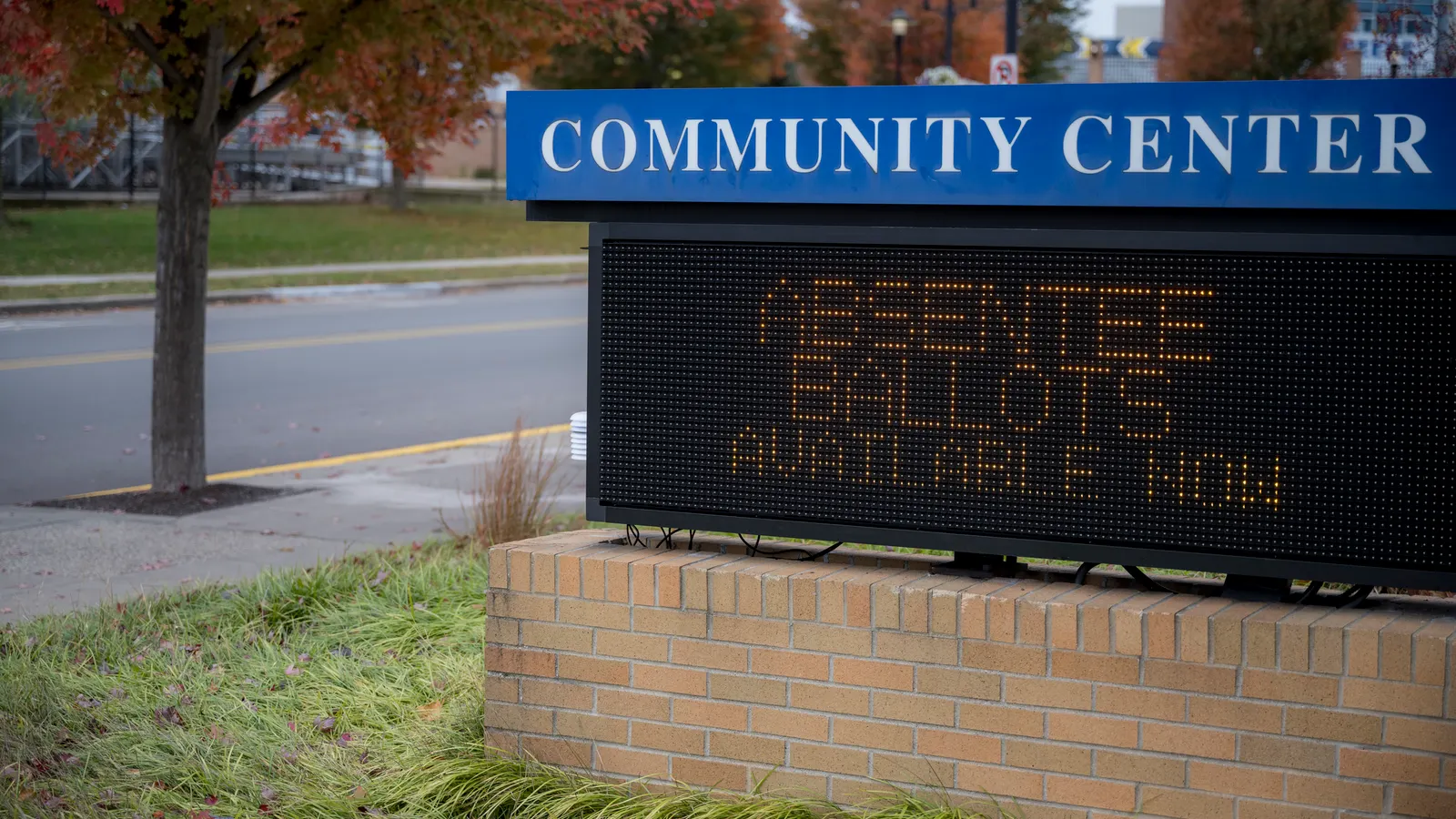
In the modern urban landscape, digital signage has become as ubiquitous as streetlights. From the lobbies of municipal offices to the corridors of hospitals and university lecture halls, high-definition screens promise a seamless flow of real-time information. However, a recent report from Kitcast suggests that the reality of digital signage is far less dynamic than its potential. Despite a massive global deployment, a significant portion of these digital canvases are effectively serving as "digital wallpaper"—displaying outdated, stagnant content that has long since lost its relevance.
As the global population of connected displays surges toward an estimated 150 million units by 2028, the industry faces a reckoning: Is the technology being utilized as a strategic communications tool, or is it merely an expensive decorative feature?
Main Facts: The Digital Stagnation Paradox
The core finding of the Kitcast research is startling: roughly 27% of all digital signage content currently in operation is over a year old. In an era where information can be updated in seconds via cloud-based content management systems, this level of inertia suggests a systemic failure in operational maintenance.
The global footprint of this technology is expanding at an aggressive clip. With approximately 100 million displays currently active, the industry is seeing double-digit growth. However, this proliferation has outpaced the human resources and digital infrastructure required to keep the content fresh. For organizations, the display itself is often treated as a "set it and forget it" asset. Once the hardware is installed and the initial set of promotional or informational slides is uploaded, the responsibility for ongoing management often falls into a "no-man’s-land" between IT departments, marketing teams, and facility management.
A Chronology of Deployment vs. Maintenance
To understand how the industry reached this point, one must look at the evolution of digital signage over the past decade.
- The Early Adoption Phase (2010–2015): Digital signage began as a high-cost luxury for corporate headquarters and high-end retail. During this era, hardware was expensive, and software was proprietary and difficult to update. Content was often static, serving as a replacement for printed posters.
- The Cloud-Based Revolution (2016–2020): The advent of affordable media players and cloud-native Content Management Systems (CMS) democratized the technology. Schools, local governments, and mid-sized businesses began mass deployments. The focus was on "getting screens on walls," with little consideration for long-term content strategies.
- The Saturation Period (2021–Present): With hardware costs reaching historic lows, the number of displays per workspace has spiked. However, organizations have struggled to scale their content production teams alongside their physical screen fleets. This is the era of the "zombie screen"—a display that is technically functional but functionally obsolete.
Supporting Data: Sector-Specific Performance
The data highlights a clear disparity in how different sectors manage their digital assets. While all industries struggle with content refreshing, the cadence of updates varies significantly.
The Education Sector: The Slowest Adopter of Change
Education institutions reported the most sluggish update rates, with a median refresh interval of 49.3 days. This is particularly problematic in a campus environment where events, room changes, and safety alerts require near-instantaneous communication. The bureaucratic nature of universities, combined with fragmented control over departmental signage, likely contributes to this inertia.
Healthcare: A Critical Delay
In healthcare environments, where signage is often used for wayfinding and patient information, a 43.1-day median update cycle is concerning. When patients and visitors rely on screens for hospital navigation or appointment status, stale information can lead to confusion, increased anxiety, and operational bottlenecks.
Technology: The High-Bar Benchmark
The technology sector, perhaps unsurprisingly, leads the pack with a 29.9-day update cycle. While still leaving room for improvement, the tech sector’s familiarity with agile workflows and automated content feeds allows it to outperform public institutions and healthcare facilities by a wide margin.
The Government Paradox
Local governments present a complex case study. While they have been praised for maintaining a more consistent update cadence than other public institutions, the raw numbers remain sobering: 28% of government-managed content is still over a year old.
Furthermore, governments are deploying more hardware than any other sector. With an average of five screens per workspace—compared to the four-screen global average—the scale of their infrastructure creates a massive administrative burden. Cities and municipalities are often tasked with managing content across multiple departments, varying geographic locations, and disparate building types, making a unified content strategy difficult to maintain.
Official Perspectives and Industry Implications
Industry experts like Kitcast’s own representatives note that while the "set it and forget it" mentality is the primary driver of stale content, there is a glimmer of hope on the horizon. The key, according to observers like Fedykovych, lies in the professionalization of content management.
"The fact that governments are deploying more screens is a good sign for public accessibility," says one industry analyst. "But the investment in hardware must be matched by an investment in human capital—specifically, content strategists who can leverage the power of these displays to engage citizens."
The implications of this stagnation are twofold:
- Audience Apathy: When viewers realize that the content on a screen never changes, they stop looking at it. This "banner blindness" effectively renders the investment useless. If a screen displays the same welcome message for 365 days, it ceases to be a communication channel and becomes part of the architecture, ignored by all who pass by.
- Reputational Risk: For local governments and public institutions, outdated information—such as incorrect office hours, contact details for services that no longer exist, or expired safety protocols—can erode public trust. It signals a lack of attention to detail and a disconnect between the institution and the community it serves.
The AI Integration Frontier
As organizations struggle to maintain content manually, many are looking toward Artificial Intelligence (AI) as the potential panacea. Currently, only 8.3% of organizations report using AI to manage or generate their digital signage content.
The potential for AI here is immense. Imagine a system that automatically pulls event data from a city’s calendar, cross-references it with weather reports, and generates a visual layout in real-time without human intervention. By automating the "boring" parts of content creation—such as updating text fields, resizing images, and scheduling—AI could potentially reduce the median update cycle from months to minutes.
However, the adoption of AI in the public sector remains tempered by concerns over data privacy, public trust, and the need for human oversight. As local governments continue to pilot AI solutions, the digital signage sector will likely be one of the first places where the public experiences this technology in their daily lives.
Conclusion: The Path Forward
The future of digital signage is not found in the resolution of the screen or the sleekness of the hardware; it is found in the relevance of the message. To move beyond the current 27% failure rate of content freshness, organizations must pivot from viewing signage as a hardware installation project to viewing it as a long-term communications program.
This requires a fundamental shift in organizational culture. Budgets for digital signage must include allocations for content creation, subscription-based CMS software, and the personnel required to keep information current. As the number of displays approaches 150 million globally, the window for organizations to professionalize their content strategy is closing. Those who fail to adapt will be left with millions of blank, outdated, and ignored glass panels—a testament to a digital revolution that stalled before it could truly communicate.
For the modern city, the goal should be clear: screens should be the heartbeat of the building, pulsing with the life and information of the community, rather than silent, outdated monuments to a project that ended the day the cables were plugged in.
