

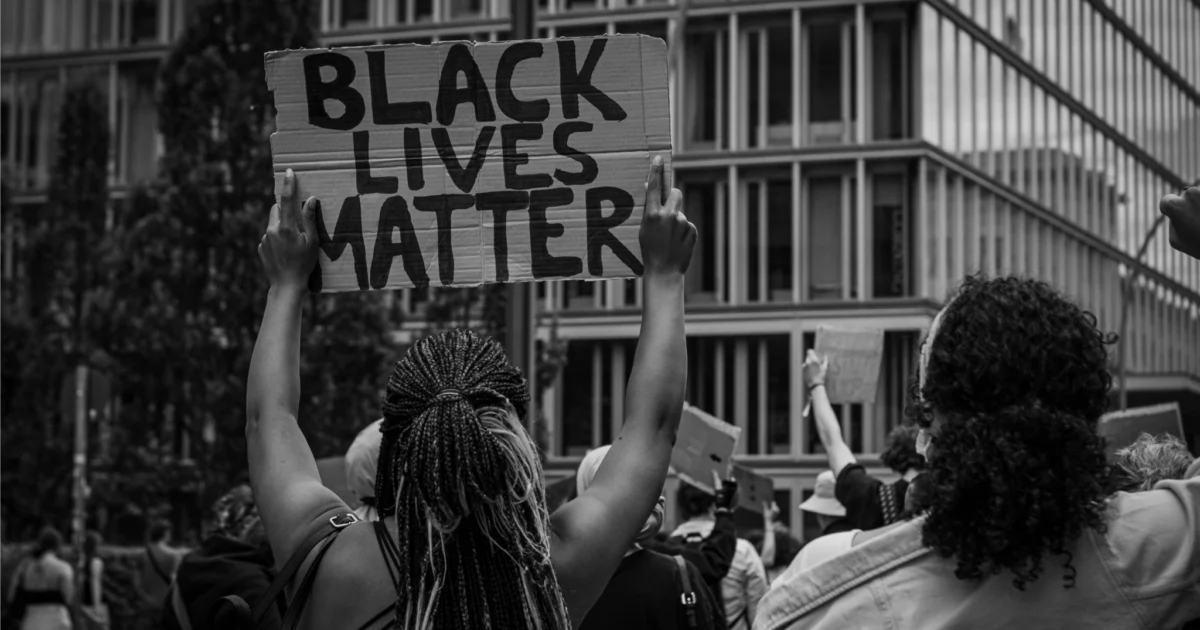
As the United States observes Juneteenth—a commemoration of the 1865 liberation of enslaved people in Galveston, Texas—the nation is invited to reflect on a paradox. While the holiday marks the end of chattel slavery, the arc of history reveals that the cessation of legal bondage did not equate to the realization of economic freedom. Today, as we stand on the precipice of an Artificial Intelligence-driven industrial revolution, the struggle for racial, social, and economic justice has taken on a new, digital dimension.
For Black Americans, the "future of work" is not merely an abstract technological evolution; it is a critical juncture that threatens to solidify existing wealth gaps. As AI integrates into the core of the American workplace, the systems that once exploited Black labor are being mirrored in algorithmic form, creating new barriers to the stability and prosperity that have been denied to Black workers for generations.
The Chronology of Inequality: From Reconstruction to the AI Era
To understand the current economic vulnerability of Black workers, one must examine the historical continuity of labor exploitation. Following the Emancipation Proclamation and the Reconstruction era, the promise of "forty acres and a mule" was systematically dismantled. In its place, oppressive policies—such as Jim Crow laws, convict leasing, and the exclusion of Black workers from the New Deal’s labor protections—ensured that Black labor remained trapped in low-wage, high-risk sectors.
The mid-20th century saw the Civil Rights Movement push for the dismantling of these legal barriers. However, the economic legacy of that exclusion remains entrenched. Wealth gaps were not bridged; they were codified through decades of discriminatory housing, education, and employment policies.
Now, in the mid-2020s, we are witnessing a new "Reconstruction" challenge. Just as industrialization transformed the 19th-century economy, Artificial Intelligence is reshaping the 21st-century workplace. The danger is that without intentional, equitable intervention, AI will act as an accelerant for the very disparities that Black Americans have been fighting to overcome since 1865.
Supporting Data: The Rising Tide of Displacement
The current economic indicators are stark. By the end of 2025, the unemployment rate for Black women had surged to 7.3 percent—a figure nearly double that of their white female counterparts. This data point is not an anomaly; it is a manifestation of systemic occupational segregation.
The Vulnerability Gap
Research from organizations such as the National Employment Law Project (NELP) and the National Partnership for Women & Families reveals that Black women are disproportionately concentrated in the job categories most susceptible to automation. These sectors include:
- Administrative and Office Support: Roles frequently targeted for AI-driven streamlining.
- Customer Service: Where chatbots and automated response systems are rapidly replacing human interaction.
- Human Resources and Training: Where predictive algorithms are increasingly used to screen candidates and manage personnel, often with embedded biases that disadvantage minority applicants.
These roles have historically provided a foothold for Black women in the professional world, yet they remain fundamentally undervalued and underpaid. When employers deploy AI to "optimize" these departments, the primary outcome is often workforce reduction rather than efficiency-driven advancement for the worker. Consequently, the burden of technological transition falls heaviest on those with the least institutional cushion.
The Quality of Work Crisis
The threat of AI extends beyond simple job loss. There is a secondary, perhaps more insidious, risk: the degradation of remaining jobs. As companies integrate AI, tasks are often broken down into fragmented, low-autonomy components. This leads to:
- Reduced Predictability: Shift-scheduling algorithms that make it impossible for workers to plan their lives or manage childcare.
- Diminished Power: Increased surveillance and algorithmic management that strip workers of their dignity and bargaining power.
- Stagnant Mobility: When entry-level roles are automated, the traditional "career ladder" is removed, effectively trapping workers in low-wage positions with no path to promotion.
Official Perspectives and the Call for Policy Reform
Rebecca Dixon, President and CEO of the National Employment Law Project (NELP), has been a leading voice in articulating the intersection of labor rights and racial justice. Her advocacy emphasizes that technological change is not a neutral phenomenon; it is a policy choice.
"Technological change should expand opportunity, not deepen inequality," Dixon notes. The perspective held by labor advocates is that the current trajectory of AI adoption prioritizes shareholder profit over human well-being. To rectify this, experts are calling for a multi-pronged policy response:
- Modernizing Unemployment Insurance: Current systems are ill-equipped for the "gig-ified" and AI-disrupted economy. Reforms must ensure that workers in transition can access benefits that are robust enough to maintain economic security during retraining periods.
- Strengthening Labor Standards: Policymakers must move to mandate transparency in how AI tools are used in hiring, firing, and performance monitoring. Without regulation, "algorithmic bias" will continue to mirror the human biases of the past.
- Investing in Worker Power: The most effective check on exploitative AI deployment is a unionized or empowered workforce. Collective bargaining allows workers to negotiate the terms of technological adoption, ensuring that AI is used to augment human labor rather than replace it.
Implications: A Vision for a "Good-Jobs" Economy
The implications of failing to act are profound. If the digital divide is allowed to harden, we risk creating a permanent underclass of workers whose economic contributions are harvested by automated systems while their access to the benefits of that prosperity is blocked.
Conversely, the proactive integration of AI could be a catalyst for a "good-jobs" economy. In this vision, the efficiency gains provided by technology would be redirected to support shorter work weeks, living wages, and universal benefits. This would allow workers—particularly those who have been historically marginalized—to thrive in a landscape where their labor is valued and their security is guaranteed.
The Moral Imperative of Juneteenth
This Juneteenth, the commitment to "freedom" must be redefined for the modern era. Just as 19th-century activists fought against the chains of chattel slavery, 21st-century advocates are fighting against the invisible, algorithmic chains that limit economic mobility.
The history of the United States is one of constant struggle to expand the definition of who is entitled to the "American Dream." As we move further into the age of artificial intelligence, we must ensure that the tools of the future do not become the shackles of the past. Recommitting to the ideals of Juneteenth means recognizing that economic justice is the necessary foundation for true freedom.
As Rebecca Dixon and her colleagues at NELP argue, the goal is not to stop technology, but to steer it. By placing the dignity of the worker at the center of the AI revolution, we can ensure that the future of work is one where opportunity is not a privilege for the few, but a standard for all. The labor that built this country deserves nothing less than a future that honors, protects, and elevates every worker, regardless of their background or the tools they use to perform their craft.
The path forward requires more than just technological literacy; it requires a radical commitment to equity. It is a commitment to ensuring that when we look back on this era, we can say that we used the power of human ingenuity to break the cycles of the past, rather than digitizing them for a new generation.
