



By Staff Reporter
August 31, 2026
As the global economy grapples with the rapid integration of artificial intelligence into the workforce, a sobering reality is beginning to take hold: the U.S. social safety net is fundamentally ill-equipped to handle the potential for mass displacement. While we have yet to see the catastrophic "AI-pocalypse" of job losses predicted by some, experts warn that waiting for a crisis to materialize before updating our systems is a recipe for disaster.
Michele Evermore, Senior Policy Fellow for Economic Security at the National Employment Law Project (NELP), argues that the current state of the U.S. Unemployment Insurance (UI) system is not just outdated—it is actively failing the workers it was designed to protect. As the labor market shifts under the weight of automation, stagnant wages, and the rise of "ghost" job postings, the urgency to overhaul the UI system has moved from a policy preference to an economic imperative.
The Core Problem: A Safety Net with Holes
At its inception, Unemployment Insurance was designed as a critical economic stabilizer. Its dual mandate was simple but profound: provide a temporary lifeline for displaced workers to maintain their standard of living while they retrain or hunt for new opportunities, and act as a countercyclical force to keep money flowing into local communities during downturns.
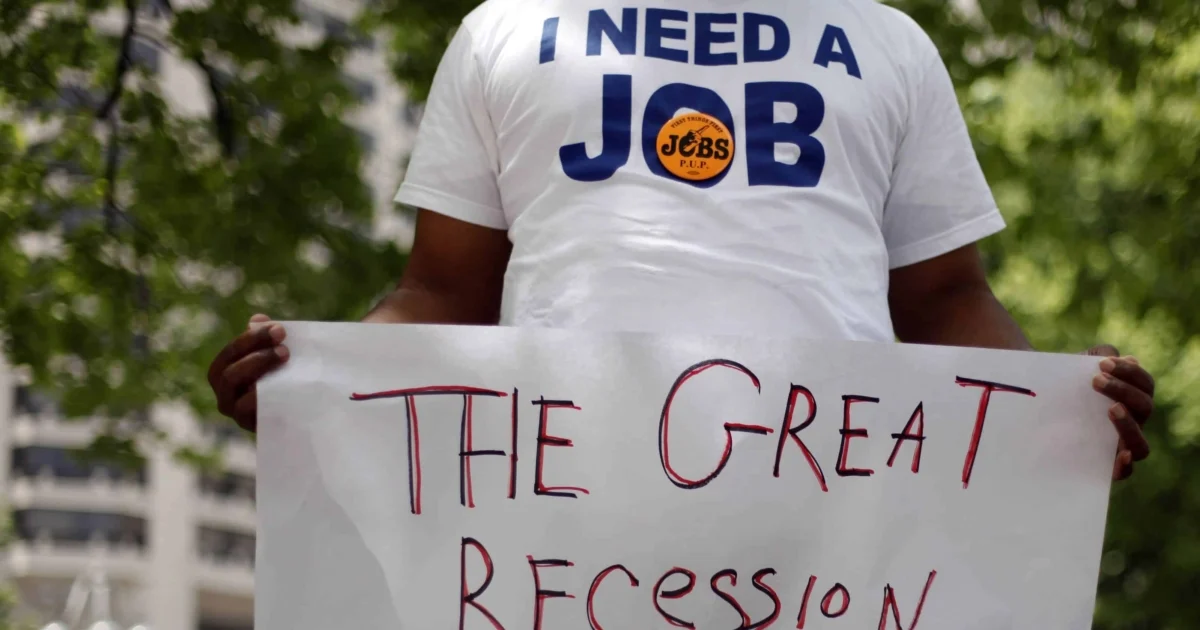
Economists have long touted the "multiplier effect" of UI benefits; every dollar paid out in unemployment insurance generates nearly two dollars of economic activity in local markets. However, in many states, the system has been hollowed out. Since the Great Recession, a "race to the bottom" has defined UI policy, with states aggressively reducing benefit amounts, narrowing eligibility criteria, and shortening the duration of support.
The consequence is a system that no longer functions as a shock absorber. When the next major economic shift—potentially driven by AI-led automation—arrives, the current UI infrastructure will likely collapse under the strain.
A Chronology of Neglect
To understand why the system is so fragile, one must look at the history of federal investment in labor infrastructure.
- 1980–1996: Bipartisan commissions were formed to analyze the future of work. Both sets of commissions identified clear, actionable improvements for the UI system. Despite these findings, the recommendations were largely shelved, left to gather dust while the economy evolved.
- The Early 2000s: Decades of budget cuts left the U.S. Department of Labor’s Employment Service division operating on a shoestring budget. Technology systems were allowed to age into obsolescence, leaving them unable to handle surges in volume.
- 2020 (The COVID-19 Stress Test): The pandemic served as a brutal, real-world audit of the UI system. As millions filed for benefits, agencies were forced to rely on "skeleton staffs" and legacy software that dated back decades. The result was a catastrophic delay in aid delivery.
- 2020–2022: Because existing systems were broken, Congress was forced to scramble, creating three brand-new, emergency programs on the fly. The delay in implementation, coupled with the reliance on outdated portals, allowed organized criminal syndicates to exploit the confusion, leading to historic levels of fraud.
- 2025–2026: Legislators, including Senators Ron Wyden and Michael Bennet and Congressman Don Beyer, reintroduced comprehensive reform bills, attempting to codify the recommendations that have been ignored for nearly half a century.
The Modern Labor Landscape: Ghost Jobs and Discouragement
The vulnerability of the modern worker is compounded by a shift in how hiring is conducted. Jobseekers today face a "low-hire economy" where the traditional signals of labor demand have become obscured.
Recent data suggests that as many as one in three job postings currently online are "ghost jobs"—postings that are either fake, expired, or never intended to result in a hire. For the average jobseeker, this creates a psychological and financial toll. Sending out hundreds of resumes with no response leads to profound discouragement, which is now reflected in historic lows for labor force participation rates.
The "Employment Service," the division of the Department of Labor tasked with helping people bridge the gap between jobs, has been systematically dismantled. What was once a proactive, local human resource network has become a hollowed-out bureaucracy. Without a revitalized Employment Service, displaced workers are left to navigate a labyrinth of algorithmic hiring and phantom job boards entirely on their own.
Supporting Data: Why Reform is Non-Negotiable
The argument for reform is not merely ideological; it is grounded in fiscal reality. When the UI system is underfunded, the administrative cost of processing claims increases, and the efficacy of the program in stimulating local economies evaporates.
The 50-year low in funding for employment agencies has meant that the "human element" of job placement has been lost. During the pandemic, the inability of agencies to provide high-touch support to claimants meant that the system could only focus on "processing" rather than "placement."
Furthermore, as AI-driven automation continues to disrupt sectors ranging from clerical work to logistics, the duration of unemployment is expected to rise. Long-term unemployment is already trending upward. If the UI system only supports the short-term friction of job switching, it will be utterly incapable of managing the structural, long-term displacement that AI is projected to cause.
Official Responses and Proposed Solutions
The legislative response to this looming crisis is finally gaining traction, albeit slowly. The bill spearheaded by Senators Wyden and Bennet and Representative Beyer represents a significant attempt to modernize the system by:
- Standardizing Benefits: Setting federal floors for benefit duration and replacement rates to prevent states from engaging in the "race to the bottom."
- Technological Upgrades: Funding the transition from legacy, 20th-century code to modern, secure, and responsive digital infrastructure.
- Reinvigorating the Employment Service: Shifting the focus from mere check-distribution to active labor market participation, including training, placement, and counseling.
"We had solutions that would address AI and mass unemployment 50 years ago, but we ignored them," Evermore notes. The current legislative push is an attempt to recover that lost time. However, the success of these bills depends on the political will to treat UI not as a "welfare" program, but as a critical piece of national infrastructure.
Implications: The High Cost of Inaction
The implications of failing to act are profound. If we continue to wait until we are "in the throes of a crisis," the next wave of unemployment will not only be economically devastating—it will be socially destabilizing.
- Erosion of Trust: When government institutions fail to provide support during times of crisis, public trust in democratic systems erodes. The chaos of the COVID-19 era remains a painful reminder of what happens when the state cannot meet its basic obligations.
- The AI Wealth Gap: If AI displaces workers and there is no safety net to facilitate their transition, the wealth gap will widen exponentially. The benefits of AI will accrue to those who own the technology, while the costs of displacement will be borne entirely by the working class.
- Economic Stagnation: A workforce that is discouraged and disconnected from the labor market is a drag on economic growth. The "Employment Service" must be restored to provide the necessary bridge for workers to learn new skills and enter new, AI-integrated industries.
As we stand on the precipice of an AI-driven economic transformation, the choice is clear. We can either proactively build a resilient system that supports workers through inevitable shifts, or we can wait for the wave to crash, hoping that we can scramble a response while the economy suffers. The lesson of the last 50 years is that the latter strategy is a failure. It is time to break the cycle of neglect and invest in the future of the American worker.
